Working in Alabama during the COVID-19 pandemic: Who faces the danger?

Many Alabamians have modified their work circumstances in recent months to reduce the risk of contracting COVID-19. But tens of thousands of people still must work in public-facing jobs that put them at increased risk of illness.

Front-line workers in grocery stores, hospitals and pharmacies perform necessary tasks to keep our communities functioning during the pandemic. The burden of facing those health risks is unevenly distributed, though. Workers in jobs like health care, food service and child care are disproportionately likely to be people of color or women. And state and national policy failures on COVID-19 are more likely to hit them the hardest.

Gender disparities and low wages increase risk

Differing employment levels in the health and retail fields particularly have forced more women to risk coronavirus infection. Two-thirds of Alabama’s essential workers are women, though women comprise just under half of the state’s total workforce.

Health care workers overall are much more likely to be women, and they face drastically heightened risk of infection at work. Among Alabama workers, women comprise 81% of health care workers and 89% of child care and social services workers. Jobs in these fields often require consistent exposure to large numbers of people.

Pie charts: Alabama front-line workers are much more likely to be women. Women are 66.4% of all Alabama front-line workers and 80.6% of Alabama health care workers.

Health care accounts for more than one in 10 jobs in Alabama. And the higher proportion of women in this field contributes to a gender-based disparity for COVID-19 exposure. In many cases, personal protective equipment (PPE) has run short for doctors, nurses and other health care professionals. This structural failure has forced many of these workers to reuse PPE, posing potentially severe health risks.

The wages and work conditions for essential front-line workers often don’t reflect the importance of their work. Many workers received higher hourly wages early in the pandemic, but now some employers have begun eliminating hazard bonuses. In the retail sector – already filled with low-wage jobs with sparse benefits – major employers like Amazon, Kroger and Target have stopped their wage bonuses.

Returning to work at unsustainably low wages amid a pandemic isn’t the only way many hard-working Alabamians are being squeezed. The state also has placed workers at risk of homelessness with an ill-timed wave of unemployment insurance (UI) benefits cutoffs coupled with the lifting of a two-month moratorium on evictions for nonpayment of rent. And a federally funded $600 weekly UI benefit increase during the pandemic will expire this month unless Congress renews it.

Racial disparities in employment and health coverage shape risk

Structural factors leave Black and Latino Alabamians at increased risk from COVID-19. Black and Latino people account for a disproportionate share of workers in essential jobs. And because of long-term, systemic racism that creates barriers to regular health care, Black people are more likely to have underlying conditions that worsen coronavirus outcomes.

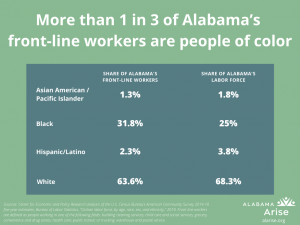
Table: More than 1 in 3 of Alabama's front-line workers are people of color. 31.8% of Alabama front-line workers are Black, compared to 25% of the labor force. 2.3% of front-line workers are Latino and 1.3% are Asian Americans or Pacific Islanders.

Even among essential workers, people of color are more likely to face heightened exposure in certain public-facing industries. In Alabama, the share of Black people working in grocery or convenience stores is two and a half times larger than in the U.S. workforce overall. The share of Asian Americans and Pacific Islanders who work in grocery and convenience stores is double their percentage of Alabama’s overall population.

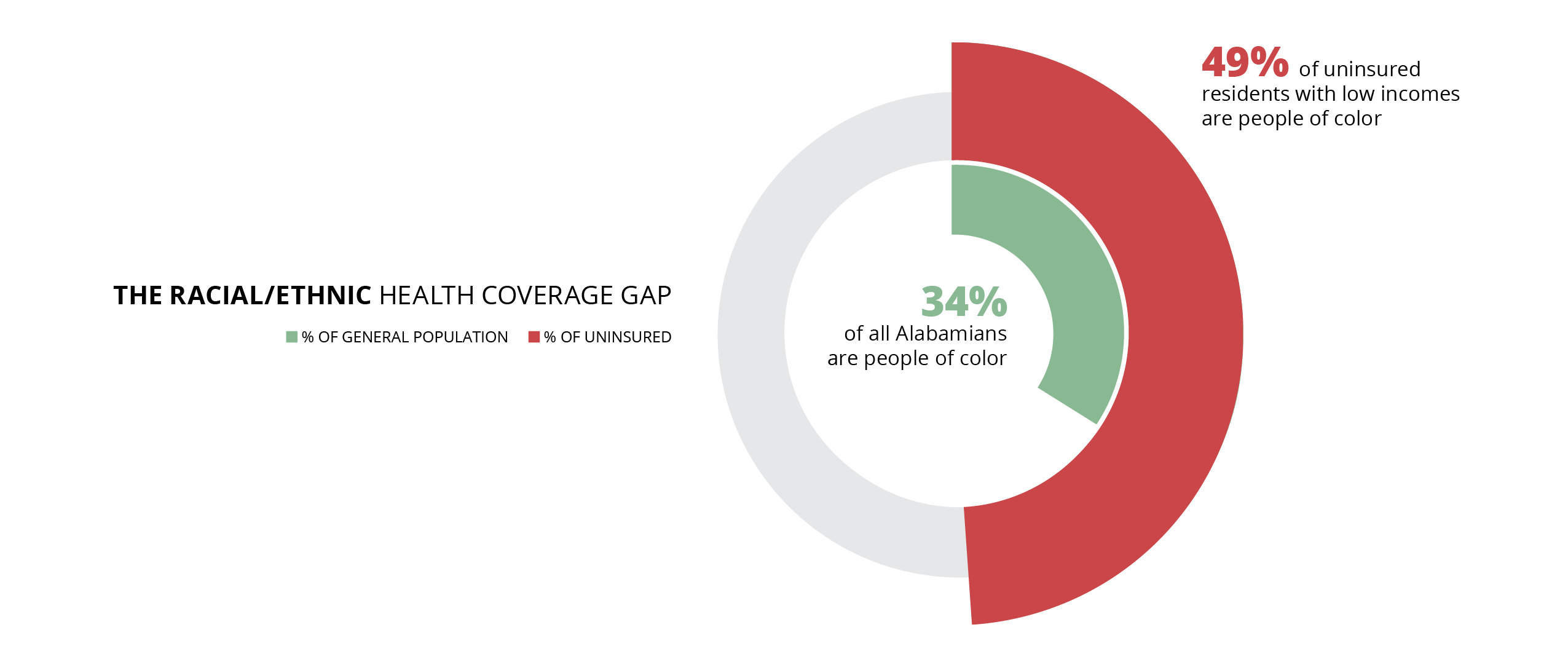
Despite these elevated risks, Black and Latino Alabamians are far more likely than white people to lack health insurance coverage. And because Alabama hasn’t expanded Medicaid, Black and Latino residents are more likely to fall into the health coverage gap, earning too much to qualify for Medicaid but too little to afford insurance. People of color make up 34% of Alabama’s population but comprise 49% of uninsured Alabamians with low incomes.

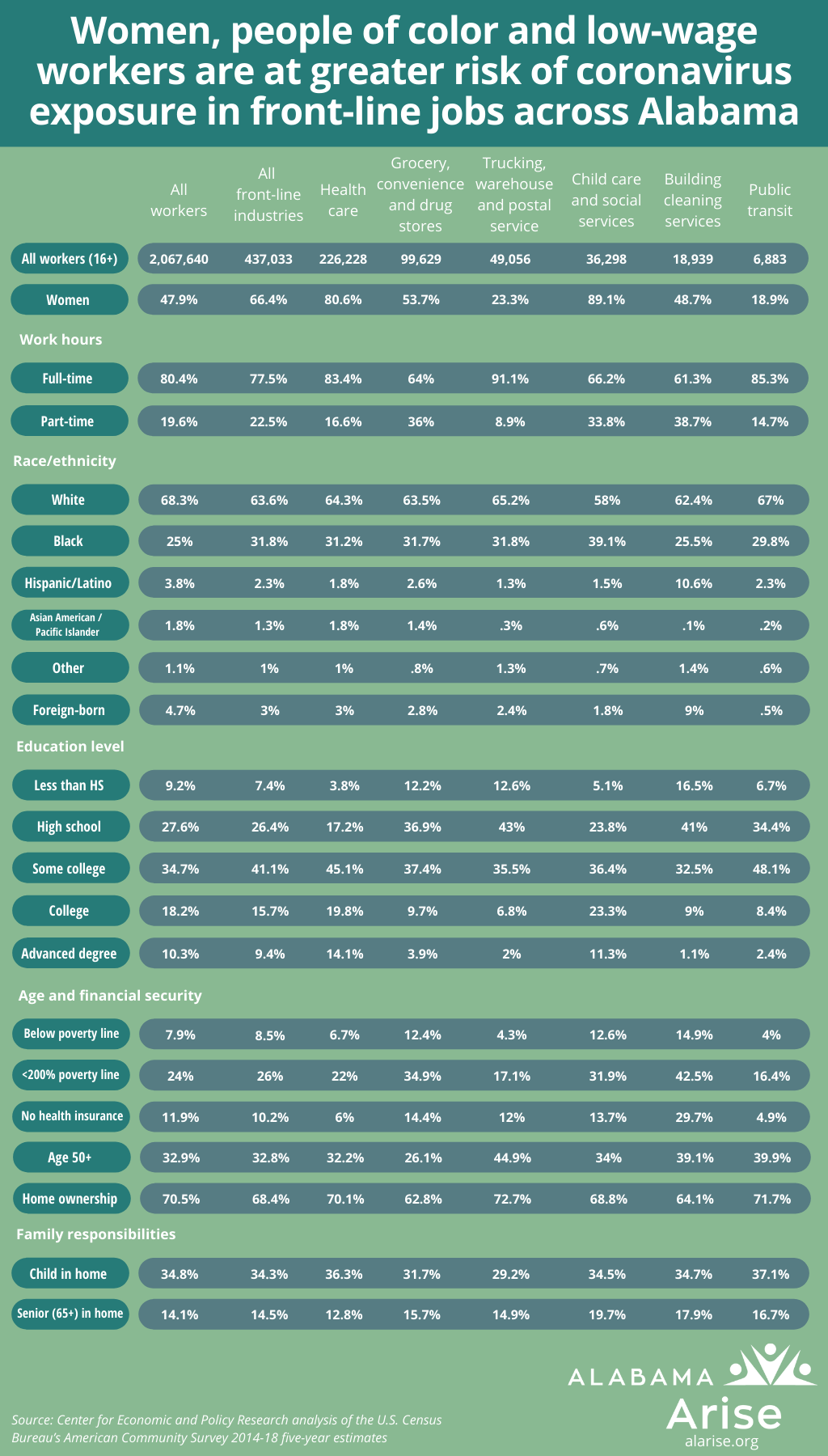
This table shows the disproportionate burden that women, people of color and low-wage workers face across several essential employment fields:

Table: Women, people of color and low-wage workers are at greater risk of coronavirus exposure in front-line jobs across Alabama. Women are 47.9% of total workers in Alabama but 66.4% of front-line workers. People of color are 31.7% of all workers but 36.4% of front-line workers. 34.5% of front-line workers have incomes below 200% of the poverty line, compared to 31.9% of all workers.

Unfortunately, the chart’s data cannot account for differing exposure rates based on specific jobs within those career fields. But given that women in medical fields often face bias inhibiting their promotion into supervisory roles, women are likely at greater risk of coronavirus infection than their high proportion in the health care industry indicates. And overall, people of color are more likely to work non-supervisory jobs with higher public exposure in many front-line fields.

Shortsighted policy choices harm the economy and virus containment

Refusal to expand Medicaid and attempts to slash UI benefits are harmful policy decisions that fly in the face of the reality of the pandemic. And the burden of these cruel choices falls more heavily on people who already face disadvantages in the labor market.

More than 600,000 people have filed UI claims in Alabama since the pandemic reached the state in March. Thousands of Alabamians are already losing UI benefits for refusing to return to work in conditions they see as unsafe. Each person prematurely knocked off the UI rolls loses not only the $275 monthly state benefits, but also the $600 monthly federal supplement guaranteed through July. Alabama is forfeiting millions of federal dollars as a result.

That money would help shore up flagging state revenues for education, health care and other vital services. It also would help people meet basic needs and limit the coronavirus’s spread during an unprecedented economic and health crisis. Forcing people back to workplaces while COVID-19 is still rampant is a dangerous attempt to restore Alabama’s inequitable economic structure.

Alabama should move forward, not return to past failures

The pandemic has shined a light on many of Alabama’s policy mistakes. The state can take this opportunity to fix harsh, shortsighted policies that devalue and harm Alabamians. And our leaders must take the lead on implementing helpful policies because of a lack of comprehensive federal action. The U.S. Department of Labor has issued no guidance allowing workers in high-risk groups to stay home and retain benefits. And the department has not reinforced health and safety protections for workers whose employers don’t take proper coronavirus precautions.

As a result, many older adults, cancer survivors and immunocompromised people face a stark choice between their lives and livelihoods. They must either subject themselves to a higher chance of death from COVID-19 or risk hunger and homelessness when the state cuts off UI benefits. Black and Latino people, women and struggling families will bear the brunt of this callous undermining of the safety net.

Alabama can and should do better. Instead of forcing people back into workplaces prematurely, lawmakers should fix failed policies like the 2019 cuts to UI benefits. Gov. Kay Ivey should expand Medicaid to ensure everyone can get the life-saving health care they need. And our state should abandon the impulse to punish people for inability to find work, especially during a deep recession. Instead, Alabama should enact policies that support and value people both while they work and when they lose their jobs.

69,000 Alabama workers lost coverage when they may need it most, new report finds

Job losses during the COVID-19 economic crash kicked 69,000 Alabamians off their health insurance between February and May, according to a new report by Families USA, a nonprofit research organization based in Washington, D.C.

Those coverage losses increased Alabama’s uninsured rate for non-elderly adults to 19%, the report finds. That is the ninth highest rate in the nation and 3 percentage points higher than in 2018. As workers and their families lose comprehensive health insurance, their risk of delayed care and complications from the virus increases. So does their risk of financial devastation.

“Even before COVID-19, Alabama’s failure to expand Medicaid left more than 220,000 adults uninsured,” Alabama Arise campaign director Jane Adams said. “Further coverage losses during the recession will bring health and financial suffering for even more families across our state. More people will go without needed health care. More hospital bills will go unpaid. And all Alabamians will bear the additional strain on our health care system. This report’s findings should be a blaring emergency siren for our state leaders.”

The number of uninsured adults jumped by 5.4 million nationally between February and May. The increase in those few months was 39% higher than any annual increase ever recorded, Families USA finds. The report also shows a disturbing overlap between states with the highest adult uninsured rates and the worst COVID-19 case trends.

“COVID-19 is putting lives, livelihoods and economic security at risk for thousands of Alabama workers. And many communities face long-term challenges for health care capacity and economic recovery,” Adams said.

“Alabama Arise and Cover Alabama urge Gov. Kay Ivey to save lives and stabilize our local hospitals by expanding Medicaid. We ask the Legislature to provide the needed state share of this pro-family, pro-health, pro-community investment in our future. And we ask Congress to strengthen Medicaid funding and help Alabama shore up our health care infrastructure.”

Adams directs Cover Alabama, a coalition of more than 90 organizations pushing for Medicaid expansion in Alabama. Arise is a founding member of the coalition.

Medicaid Matters: Charting the Course to a Healthier Alabama

The cover page of the report - Medicaid Matters: Charting the Course to a Healthier Alabama

Introduction

ALABAMA MEDICAID supports the health care system that serves us all. Whether you have employer health coverage, a private plan, public insurance like Medicaid or Medicare, or no coverage at all, you will likely benefit at some point from facilities and services that Medicaid makes possible.

More than a million Alabamians — mostly children in families with low incomes, seniors in long-term care and people with disabilities — have Medicaid coverage that allows them to get the regular, timely medical care they need. By building on this foundation to make affordable coverage more widely available, we can strengthen our health system, our workforce, our communities and our economy.

This report looks at Alabama Medicaid from four angles: how it works now, how it’s improving coverage, who’s still left out and how we can make it stronger.

Click on the icons below to read each section of our report. Please continue below the icons for our conclusion, editor’s note and acknowledgments. You can click any image in this report to enlarge it. To read our news release on the report, click here.

How does Medicaid work in Alabama? (Section 1)
How is Medicaid improving coverage? (Section 2)
Who’s still left out of health coverage? (Section 3)
How can we make Alabama healthier? (Section 4)

Conclusion

All Alabamians deserve the opportunity to get the health care they need to survive and thrive. Medicaid is a lifeline for one in four Alabamians and an economic engine for communities across our state. Extending Medicaid coverage to adults with low incomes would make life better for Alabamians of all races, genders, hometowns and incomes — and it would only cost the state a dime on the dollar. Here’s why Medicaid expansion is a bargain Alabama can’t afford to pass up:

Medicaid expansion would ensure health coverage for:

  • People who work low-wage jobs and can’t afford private coverage
  • Workers who are between jobs
  • Adults caring for children or other family members at home
  • People who have disabilities and are awaiting SSI determinations
  • College students
  • Uninsured veterans
  • People harmed by racial and ethnic health disparities

Medicaid expansion would help more Alabamians have:

  • Regular primary care and preventive checkups
  • Earlier detection and treatment of serious health problems
  • Regular OB/GYN visits without referral
  • Less dependence on costly emergency care
  • Better health and greater financial peace of mind

Medicaid expansion would bring our federal tax dollars home to support:

  • Better outcomes on critical health challenges like infant mortality, obesity and substance use disorders
  • Stronger rural hospitals and clinics
  • A stronger network of community mental health and substance use disorder services
  • A needed boost in jobs and revenue for state and local economies

Editor’s note

As we publish this report, Alabama and the world are facing the public health emergency of the COVID-19 pandemic. The duration and fallout of the crisis are impossible to predict, but every level of our health care system will be severely tested in the months ahead. The pandemic is taking a disproportionate toll on African American and Latino communities where people are more likely to live in poverty and without health insurance. And the number of uninsured Alabamians — already shockingly high before the pandemic — will continue to grow as unemployment mounts.

In times like these, state leaders play a crucial role in protecting the public from physical, mental and financial harm. One of the most important tools available to both elected officials and their constituents is accurate information about how state services promote the common good — and how we can make them stronger.

While this report took shape before the COVID-19 crisis erupted, we hope it will help Alabamians understand the available health care solutions and their important economic benefits. Emergencies demand rapid response, and an understanding of the “preexisting conditions” in our state’s health care system can make those responses more appropriate and more effective.

Through this pandemic and the next one — and the more ordinary times in between — all Alabamians will depend on a health care system with Alabama Medicaid at its core. The stronger Medicaid is, the better the prognosis for all of us will be.

The COVID-19 emergency has brought several temporary changes to the information in this report, including the following:

Section 1

Silvia Hernandez has suspended services at Go Play Therapy but hopes to reopen after the economy stabilizes.

Section 1

Congress has increased the federal share of Medicaid funding for all states by 6.2 percentage points for the length of the pandemic. Some lawmakers have proposed further increases.

Section 2

If someone had Medicaid coverage during March 2020, Alabama will not end that coverage during the pandemic unless the person cancels it or moves out of state. This temporary halt to coverage cuts includes people receiving postpartum coverage that normally ends after 60 days.

Acknowledgments

This Alabama Arise report was made possible by a generous grant from The Women’s Fund of Greater Birmingham. The findings and conclusions presented in this report are those of Arise and do not necessarily reflect the opinions of The Women’s Fund.

Arise policy director Jim Carnes was the primary author of this report, and Valerie Downes of Montgomery designed it. Arise communications associate Matt Okarmus interviewed many of the individuals profiled in this report. Other report editors and contributors included Arise executive director Robyn Hyden; communications director Chris Sanders; policy analyst Carol Gundlach; organizing director Presdelane Harris; organizers Stan Johnson, Mike Nicholson and Debbie Smith; and intern Kayla Thompson.

Special thanks to Jesse Cross-Call and Tammie Smith at the Center on Budget and Policy Priorities and Stephen Eisele and Paul Gels at Community Catalyst for their guidance and support.

Medicaid Matters – Section 1: How does Medicaid work in Alabama?

MEDICAID BASICS

What you need to know …

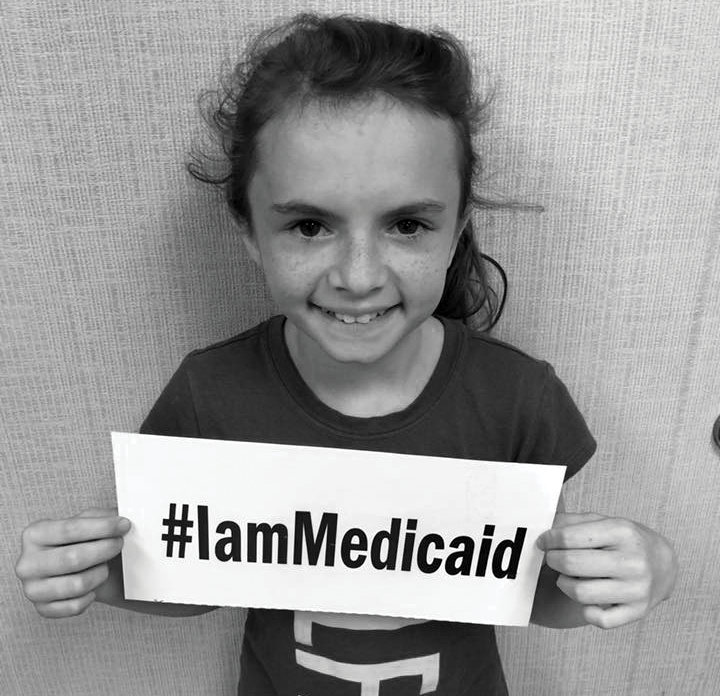
Young girl holding sign reading #IamMedicaid
(Photo: #IamMedicaid)
  • Medicaid is a joint federal/state program providing health coverage for certain categories of people with low incomes and limited resources.
  • More than 1.2 million Alabamians qualify for Medicaid coverage.
  • Medicaid payments support doctors’ offices, hospitals, clinics and nursing homes that serve all Alabamians.
  • Children make up more than half of Alabama Medicaid beneficiaries.
  • Medicaid also provides essential coverage for seniors, pregnant women, and people with disabilities.
  • Alabama Medicaid’s eligibility limits are among the nation’s most restrictive.

Medicaid is the backbone of our health care system

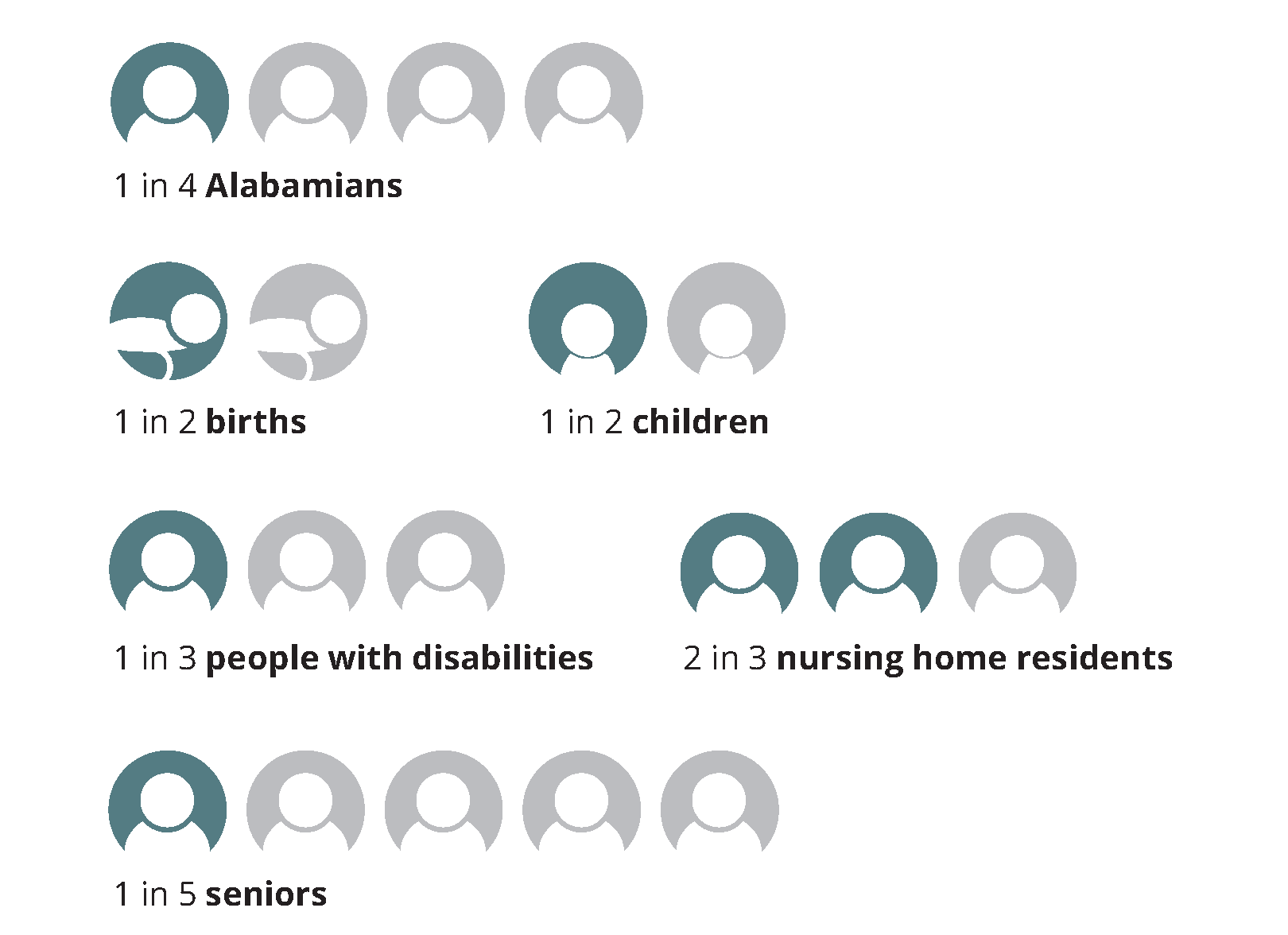
More than 1.2 million Alabamians, or 25% of our state’s population, qualified for Medicaid coverage in fiscal year 2017. Looking closer, that’s:

Infograph visualizing who qualified for Medicaid coverage in fiscal year 2017: 1 in 4 Alabamians, 1 in 2 births, 1 in 2 children, 1 in 3 people with disabilities, 2 in 3 nursing home residents, 1 in 5 seniors

Medicaid pumps $7 billion in federal and state money into our health care system every year. Without Medicaid funding, many of the doctors’ offices, clinics, hospitals and other medical facilities that all Alabamians depend on would have to cut services or close.

SPOTLIGHT

Meet Silvia Hernandez

A portrait of Silvia Hernandez
Silvia Hernandez of Fort Payne opened Go Play Therapy after her son’s speech challenges revealed a shortage of therapists in her area. (Photo: Matt Okarmus)

To get her son the speech therapy he needed a few years ago, Silvia Hernandez of Fort Payne had to drive him two hours each way to the recommended therapist in Birmingham. Her top priority was her son’s health care, but Silvia saw firsthand the hurdles of time and resources that some parents in her area would have trouble getting over.

When Silvia encounters a problem, she goes to work — this time literally. Today, she is the owner of Go Play Therapy, a practice she built and opened in response to the provider shortage in her area. Go Play specializes in occupational, physical and speech therapy for children up to age 18. There are two Go Play locations, in Fort Payne and Centre.

Hernandez estimates 90% of her clients have Medicaid.

If Medicaid didn’t exist, we’d have to shut our doors,” Silvia says. She adds that extending Medicaid coverage to adults with low incomes — not just their children — would help even more people gain access to the care they need. As a business owner, she sees another advantage to Medicaid expansion: It would allow her to expand her therapy office and hire additional employees.


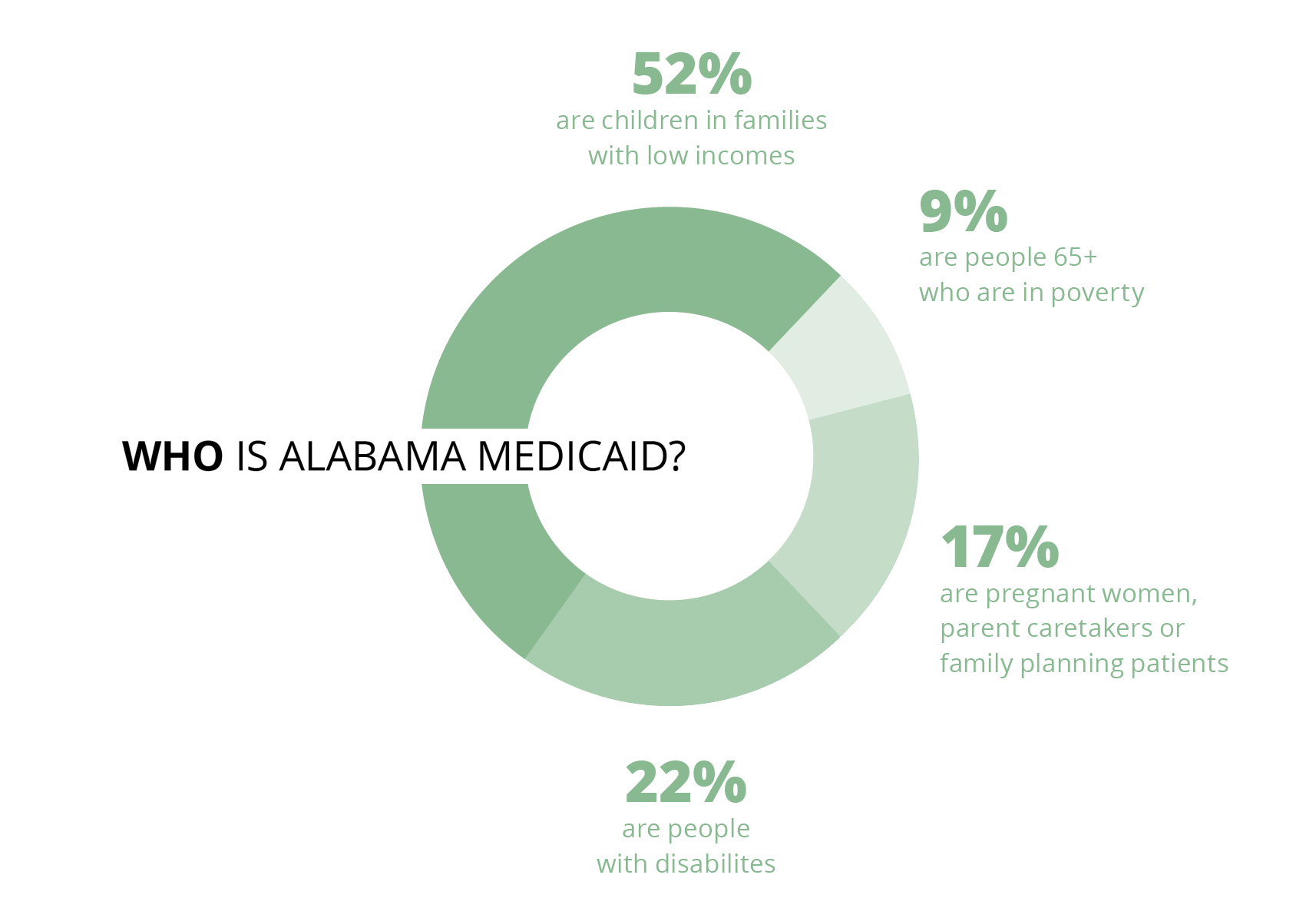
Who is Alabama Medicaid?

A circle graph with the question of "Who is Alabama Medicaid?" Different shades filled in are: 52% are children in families with low incomes; 9% are people 65 and older who are in poverty; 17% are pregnant women, parent caretakers or family planning patients and 22% are people with disabilities.
Source: Alabama Medicaid

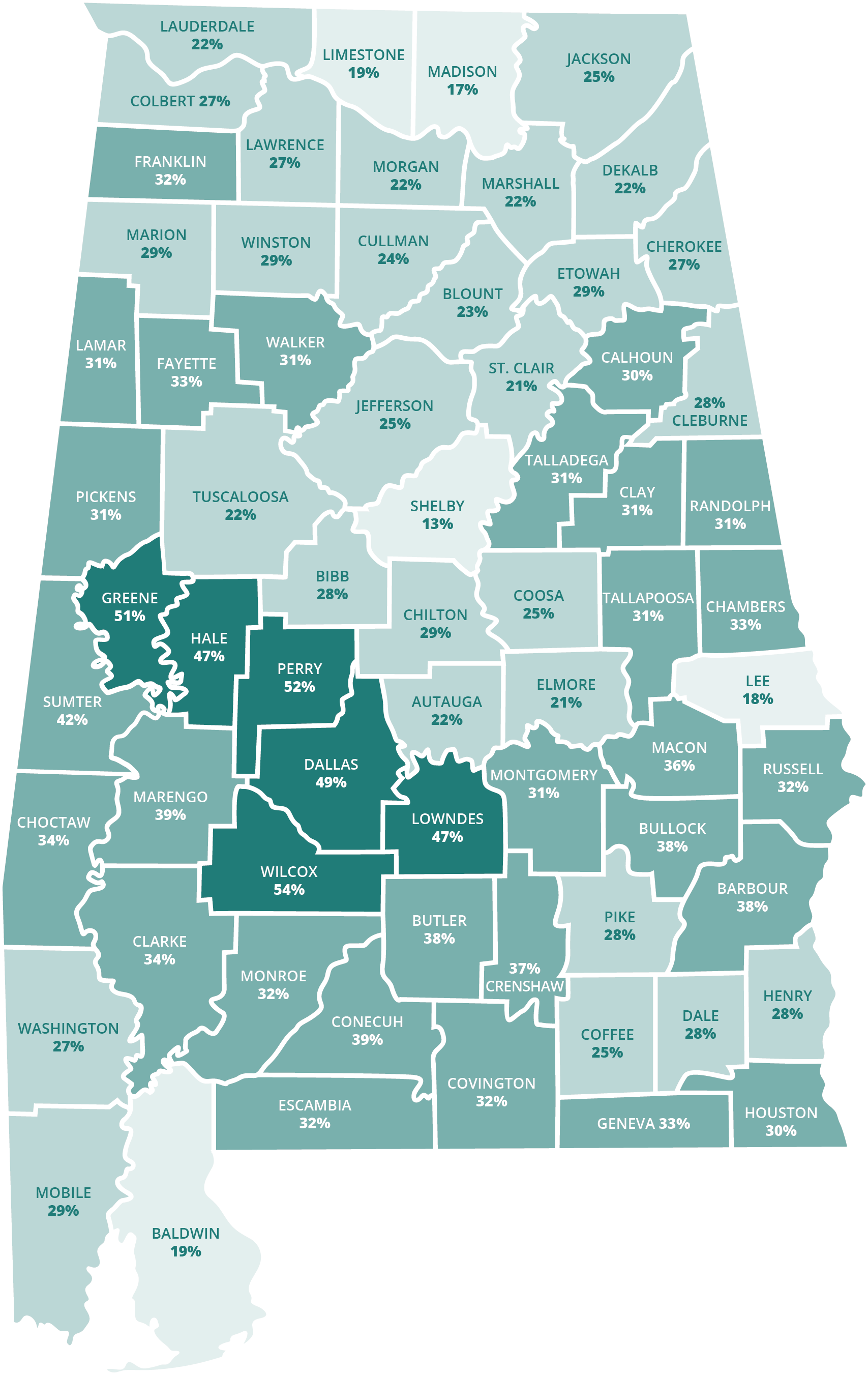
Alabamians in every county qualify for Medicaid

About one in every six Alabamians lives in poverty. For children, the rate is nearly one in four. Even Alabama’s most prosperous counties have significant numbers of households living below or near the poverty level. That means Medicaid is a lifeline for families across the entire state.

A map of Alabama that shows the percentage of people in each county who qualified for Mediacid in 2017: Autauga - 22% Baldwin - 19% Barbour - 38% Bibb - 28% Blount - 23% Bullock - 38% Butler - 38% Calhoun - 30% Chambers - 33% Cherokee - 27% Chilton - 29% Choctaw - 34% Clarke - 34% Clay - 31% Cleburne - 28% Coffee - 25% Colbert - 27% Conecuh - 39% Coosa - 25% Covington - 32% Crenshaw - 37% Cullman - 24% Dale - 28% Dallas - 49% DeKalb - 22% Elmore - 21% Escambia - 32% Etowah - 29% Fayette - 33% Franklin - 32% Geneva - 33% Greene - 51% Hale - 47% Henry - 28% Houston - 30% Jackson - 25% Jefferson - 25% Lamar - 31% Lauderdale - 22% Lawrence - 27% Lee - 18% Limestone - 19% Lowndes - 47% Macon - 36% Madison - 17% Marengo - 39% Marion - 29% Marshall - 22% Mobile - 29% Monroe - 32% Montgomery - 31% Morgan - 22% Perry - 52% Pickens - 31% Pike - 28% Randolph - 31% Russell - 32% St. Clair - 21% Shelby - 13% Sumter - 42% Talladega - 31% Tallapoosa - 31% Tuscaloosa - 22% Walker - 31% Washington - 27% Wilcox - 54% Winston - 29%
Source: Alabama Medicaid
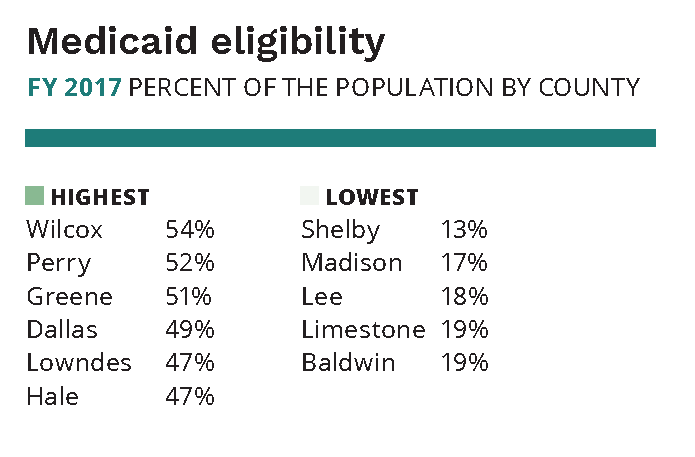
A graph showing Medicaid eligibility through fiscal year 2017 as represented by the percent of population by county. The highest were Wilcox (54%), Perry (52%), Greene (51%), Dallas (49%), Lowndes (47%) and Hale (47%). The lowest were Shelby (13%), Madison (17%), Lee (18%), Limestone (19%) and Baldwin (19%).
Source: Alabama Medicaid

How do people qualify for Medicaid coverage in Alabama?

When an individual or family applies for Medicaid, a number of factors determine whether they’re eligible and which program would best serve their needs. Age, income, family size and certain health conditions like pregnancy or disability all play a part.

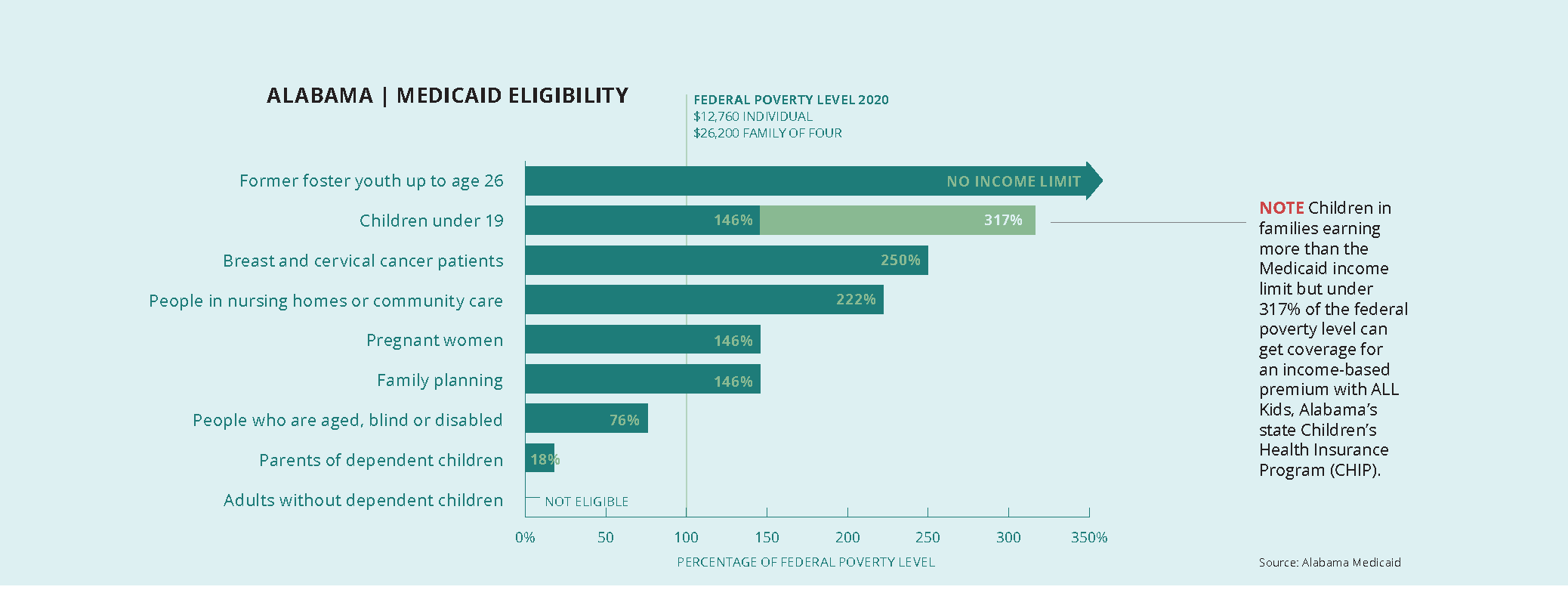
The household income limit for a particular program is expressed as a percentage of the federal poverty level (FPL) — often in shortened form, such as “146% of poverty.” The higher the percentage, the more income an individual or family may have and still qualify for Medicaid.

The income limits for Alabama Medicaid’s eligibility groups are shown below. In 2020, the FPL was $12,760 for an individual and $26,200 for a family of four.

Graph showing Medicaid eligibility in Alabama. The percentage noted for each is its percentage of the federal poverty level in 2020 ($12,760 for an individual and $26,200 for a family of four). Former foster youth up to age 26 (no income limit), Children under 19 (146% - Note: Children in families earning more than the Medicaid income limit but under 317% of the federal poverty level can get coverage for an income-based premium with ALL Kids, Alabama's state Children's Health Insurance Program (CHIP)), Breast and cervical cancer patients (250%), People in nursing homes or community care (222%), Pregnant women (146%), Family planning (146%), People who are aged, blind or disabled (76%), Parents of dependent children (18%) and adults without dependent children (not eligible). Source: Alabama Medicaid
How does Alabama’s Medicaid eligibility compare?

Children’s health coverage has long been a point of pride for Alabama. We were the first state to launch a Children’s Health Insurance Program (CHIP) after Congress created that option in 1997. While our family income limit for children in Medicaid is the third lowest in the country at 146% FPL, ALL Kids covers children above the Medicaid limit up to 317% FPL. That puts Alabama among the top 10 states for CHIP eligibility. For working-age adults, however, Alabama Medicaid’s income limits tell another, far more troubling story.

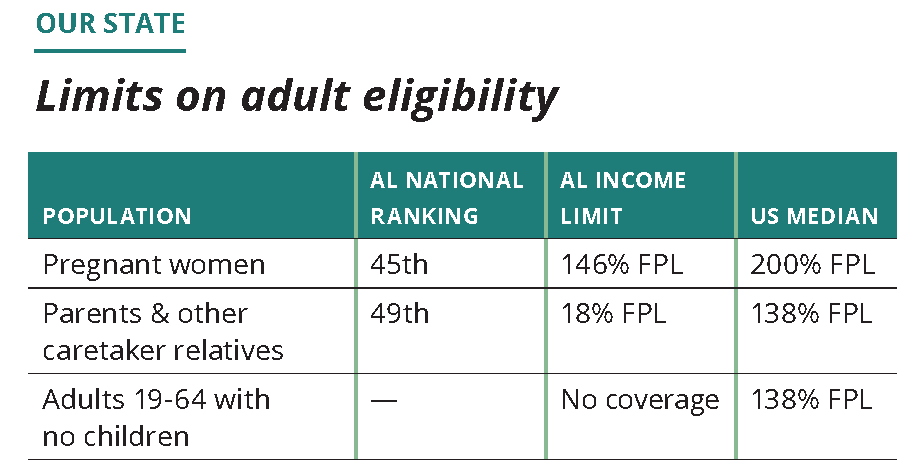
Graph showing income limits on adult Medicaid eligibility. FPL means federal poverty level. For pregnant women, Alabama's 146% FPL income limit ranks 45th nationally. The U.S. median is 200% FPL. For parents and other caretaker relatives, Alabama's income limit of 18% FPL ranks 49th nationally. The U.S. median is 138% FPL. For adults 19-64 with no children, Alabama provides no coverage. The U.S. median is 138% FPL.

National ranking: 49th

For adults without children or a disability, we’re one of 14 states that offer no Medicaid coverage. And only Texas makes it harder than Alabama for parents of dependent children to get Medicaid coverage.

How does Medicaid funding work?

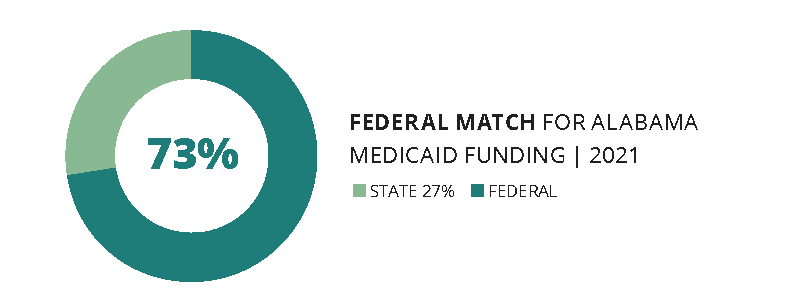
A circle graph representing the 73% federal match for Alabama Medicaid funding in 2021 and the states responsibility of 27%.

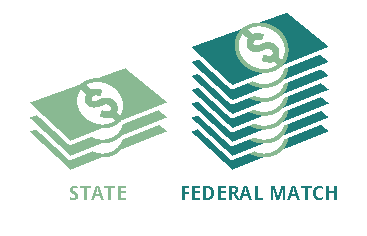
The federal government pays at least half of each state’s Medicaid costs. The percentage (called the Federal Medical Assistance Percentage, or FMAP) is set annually through a complicated formula based on per capita (or per person) income. The lower the state’s per capita income, the higher the FMAP, up to a maximum 83%. Alabama’s FMAP for FY 2021 will be 72.58%. This means we get roughly $7 in federal money for every $3 Alabama pays for Medicaid. Alabama Medicaid’s total annual budget is about $7 billion.

Two stacks of money showing the roughly 30% state vs. 70% federal match for Medicaid.

State money for Medicaid comes from a number of sources, including the General Fund (GF), special trust funds, and transfer payments from public hospitals. Because the revenues earmarked for the GF come from minor taxes, fees and interest payments that grow slowly, Medicaid and other GF services remain permanently shortchanged.

How does Alabama’s Medicaid investment compare?

One simple way to compare Medicaid programs across states (and the District of Columbia) is to rank their spending per enrollee in major Medicaid eligibility groups. Spending is only one factor in the delivery of care, but it does indicate the investment that the state is willing to make in the health of residents with low incomes. Here’s how Alabama measures up on that count:

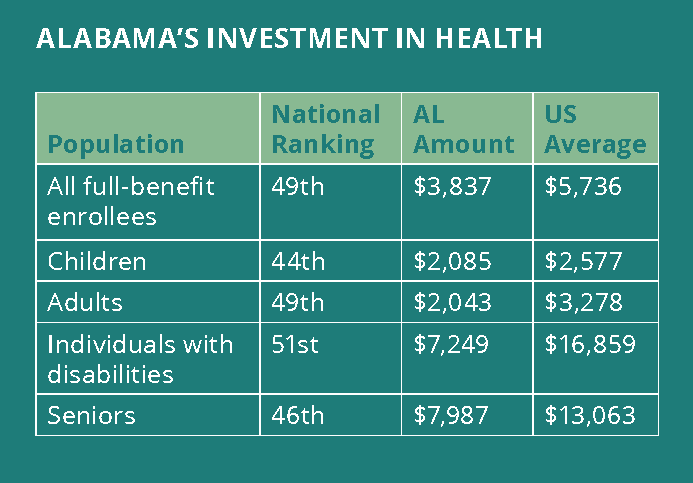
A graph showing Alabama's investment in health per Medicaid enrollee. For all full-benefit enrollees, Alabama's spending of $3,837 ranked 49th nationally. The U.S. average was $5,736. For children, Alabama's spending of $2,085 ranked 44th nationally. The U.S. average was $2,577. For adults, Alabama's spending of $2,043 ranked 49th nationally. The U.S. average was $3,278. For individuals with disabilities, Alabama's spending of $7,249 ranked 51st nationally. The U.S. average was $16,859. For seniors, Alabama's spending of $7,987 ranked 46th nationally. The U.S. average was $13,063.
Source: Kaiser Family Foundation, State Health Facts 2014

What services does Medicaid cover?

To qualify for federal funding, state Medicaid programs must cover:

  • Well-child check-ups, known as EPSDT (Early Periodic Screening, Diagnosis and Treatment, including dental services), for all Medicaid-eligible children under age 21. Because most Medicaid beneficiaries (also known as members) are children, EPSDT is the most wide-reaching Medicaid service.
  • Inpatient and outpatient hospital care.
  • Doctor services.
  • Laboratory and X-ray services.
  • Skilled nursing.
  • Family planning services.
  • Pregnancy-related services.
  • Ambulance services.

Alabama is one of only three states where Medicaid does not cover any dental care for adults.

The federal government also identifies optional Medicaid services that states may offer. Alabama offers only a few of these, including adult prescription drug coverage, adult prosthetics and community-based hospice care. In addition, Alabama has waivers, or special permission, to offer home- and community-based long-term care and regionally based coordinated primary care.

IN FOCUS

Children with special health care needs

Alabama Medicaid and ALL Kids together cover more than 105,000 children with special health care needs. These children are at increased risk for chronic physical, developmental, behavioral or emotional conditions. They require services tailored to these needs.

The Medicaid portion of this population includes more than 21,000 children who received Supplemental Security Income (SSI) in 2018. A child receiving SSI has a medically determinable physical or mental impairment, including emotional or learning problems, that results in marked and severe functional limitations and has lasted or can be expected to last for a continuous period of at least 12 months.

An image of Bryant-Denny Stadium in Tuscaloosa, Alabama.
A SENSE OF SCALE: 105,000 children are more than the capacity of Bryant-Denny Stadium (101,821). (Photo: AP Images)

SPOTLIGHT

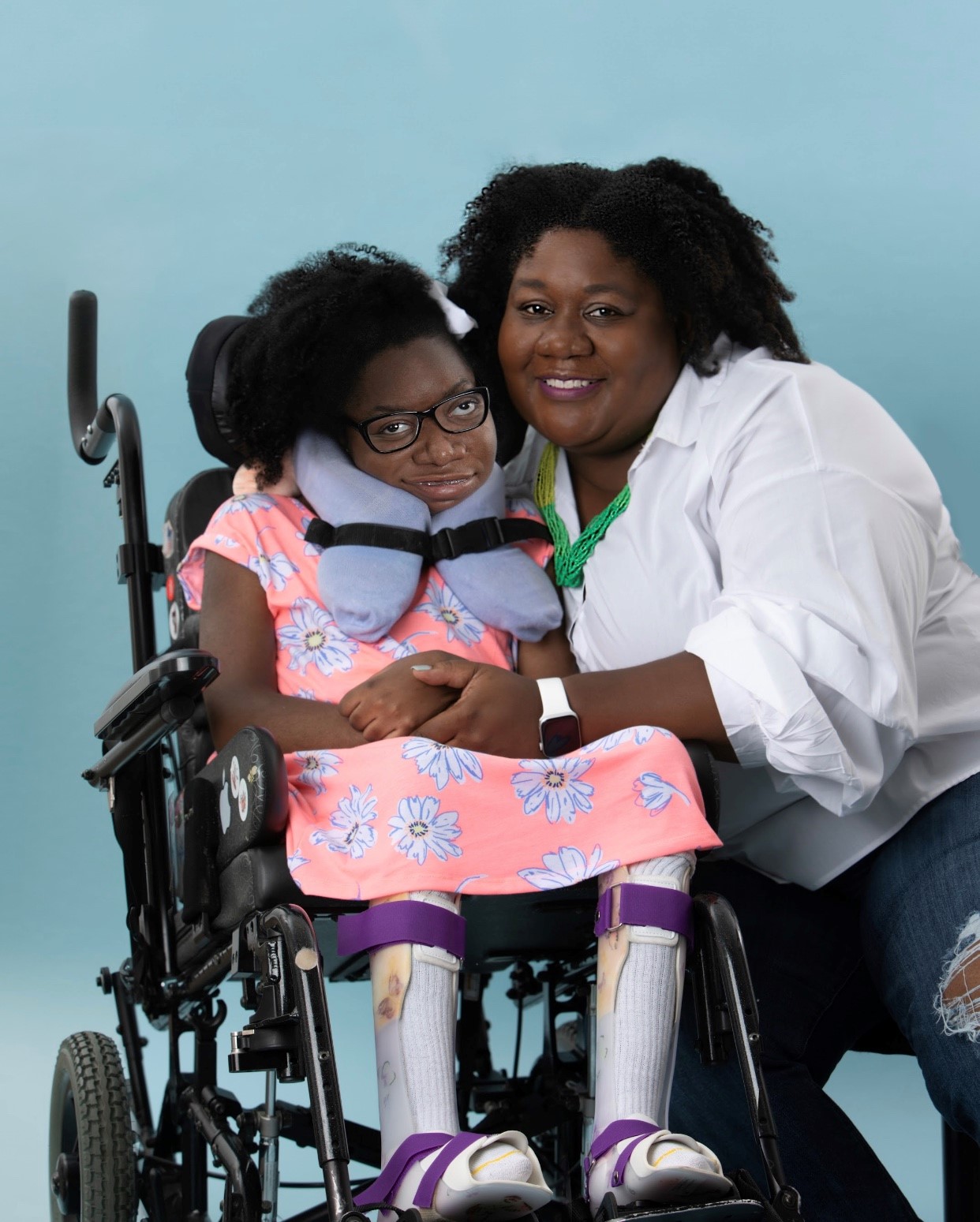
Meet Mattisa Moorer and Kerstin Sanders

A portrait of Kerstin Sanders and her mother, Mattisa Moorer.
Kerstin Sanders and her mom, Mattisa Moorer, have become champions for special education services in Lowndes County schools. (Photo: Judy Barranco)

Like many teenagers, Kerstin Sanders enjoys movies, being out in the crowd, chilling out and sleeping in. Cerebral palsy, Dandy Walker Syndrome, epilepsy, scoliosis and restrictive lung disease are facts of her life, but they aren’t her life.

Kerstin is a treasure to anyone who takes the time and effort to know her, says her mother, Mattisa Moorer.

As Kerstin ages, her care becomes more complex. For example, multiple surgeries and procedures have made it necessary to change her feeding tube more frequently. Medicaid pays for most of the medications and supplies that Kerstin needs every month.

“It’s been a life-saver,” Mattisa says.

The Lowndes County single mom realized she would need to be an advocate for her daughter when Kerstin entered Head Start. At first, the school’s special education coordinator listened carefully and designed a plan that allowed Mattisa to be a classroom aide. But a change of administration caused the plan to unravel.

“I saw that I need to continuously advocate for Kerstin’s inclusion and, at middle school, her access,” Mattisa says. That calling now has expanded to include working part-time as a parent consultant with Family Voices of Alabama and serving as a consumer representative with her local Alabama Coordinated Health Network (ACHN).

While patient advocacy has come with struggles — waiting lists, paperwork, hard-to-obtain information — Mattisa values her successes. She considers the camaraderie of others in similar situations to be one of her biggest wins.


Medicaid Matters (Main Section)
How is Medicaid improving coverage? (Section 2)
Who’s still left out of health coverage? (Section 3)
How can we make Alabama healthier? (Section 4)

Medicaid Matters – Section 2: How is Medicaid improving coverage?

MEDICAID IMPROVEMENTS

What you need to know…

A woman and child with a sign reading #IamMedicaid
(Photo: #IamMedicaid)
  • New Medicaid changes seek to improve health and cut costs by rewarding timely and preventive care.
  • The statewide Integrated Care Network (ICN) is coordinating long-term care for about 23,000 Alabamians.
  • Seven regional Alabama Coordinated Health Networks (ACHNs) are coordinating primary and specialty care for about 750,000 Alabamians.
  • The ICN and ACHNs have Consumer Advisory Committees and consumer representatives on their boards.
  • ACHNs have identified infant mortality, obesity and substance use disorders as top priorities for improvement.

Steps in the right direction

Recent changes in the way Medicaid members get their care are promising moves in the right direction. By rewarding prevention and appropriate, timely care, Medicaid hopes to improve health outcomes, while bringing costs down in the process.

The new plans can be a significant improvement over the old Medicaid system, if they keep the focus on better health. One way to improve the chances for success is to have a strong consumer voice at the policy table. The changes are happening on two tracks:

  1. Long-term care for people who need assistance with activities of daily living.
  2. Primary care for children and pregnant mothers.

Public policy is better and more responsive when people have a say in decisions that affect their health and well-being. And Alabama Medicaid reforms are lifting those voices.

Rethinking Medicaid long-term care

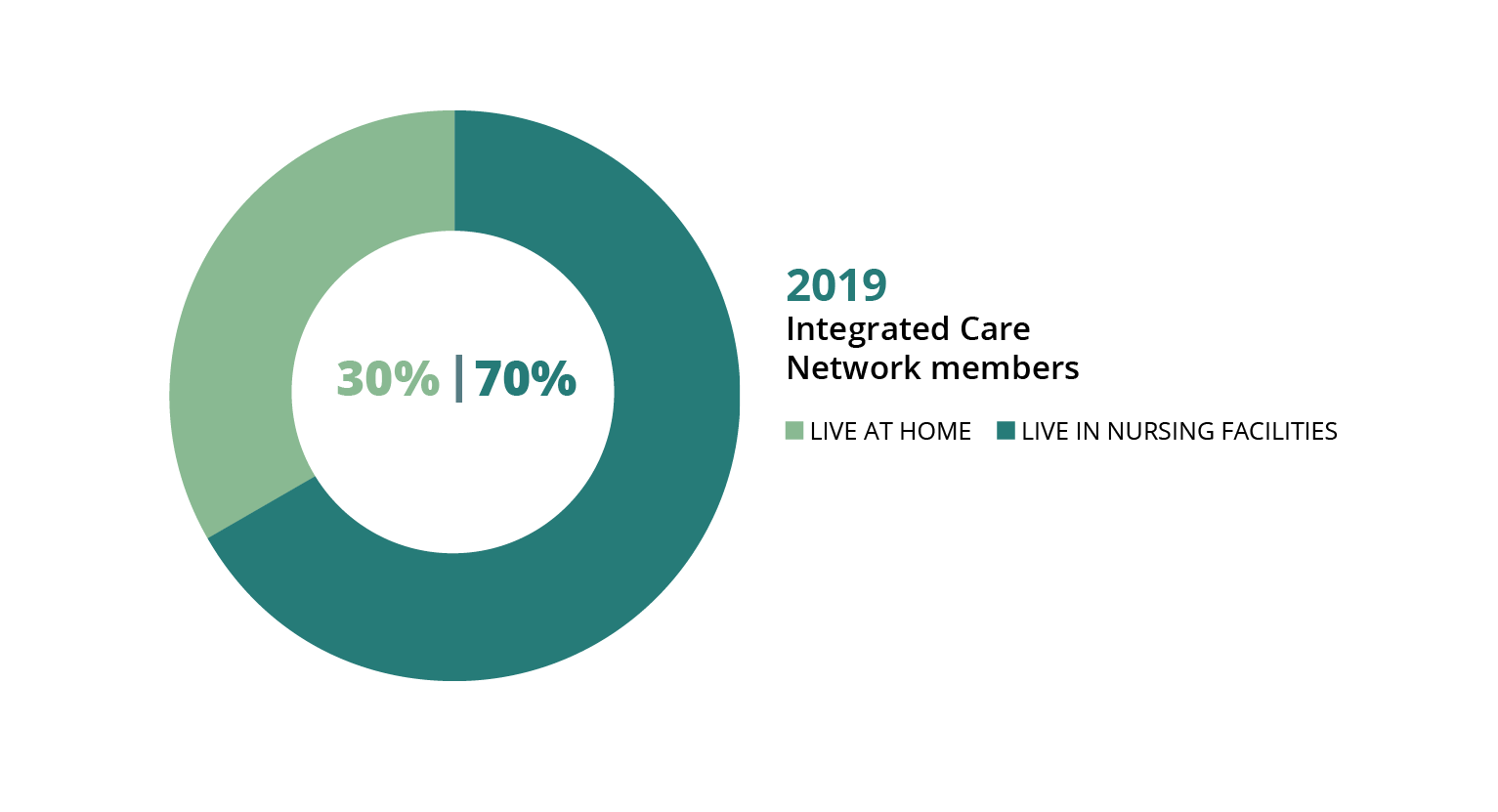
A circle graph showing that 70% of Integrated Care Network members lived in a nursing facility in 2019 while 30% lived at home.For long-term care patients, Medicaid has a new plan called the Integrated Care Network (ICN). The ICN coordinates care for Medicaid members who live in nursing facilities or receive certain home- and community-based waiver services. There are only about 23,000 of these members across Alabama, so one statewide ICN serves all of them.

In 2019, roughly two-thirds of people served by the ICN lived in nursing facilities, and about one-third were living at home. The goal of the program is to help more people get long-term care services in their home and community, if that’s what they want. The ICN works with the 13 Area Agencies on Aging across the state to coordinate long-term care for Medicaid members who qualify.

The ICN also has a strong consumer voice at the policy table. Four consumer advocates serve on the governing board. And the Consumer Advisory Committee (CAC) includes eight consumer representatives. The chairperson of the CAC (Dr. Eric Peebles, featured below) receives home-based long-term care services through a Medicaid waiver.

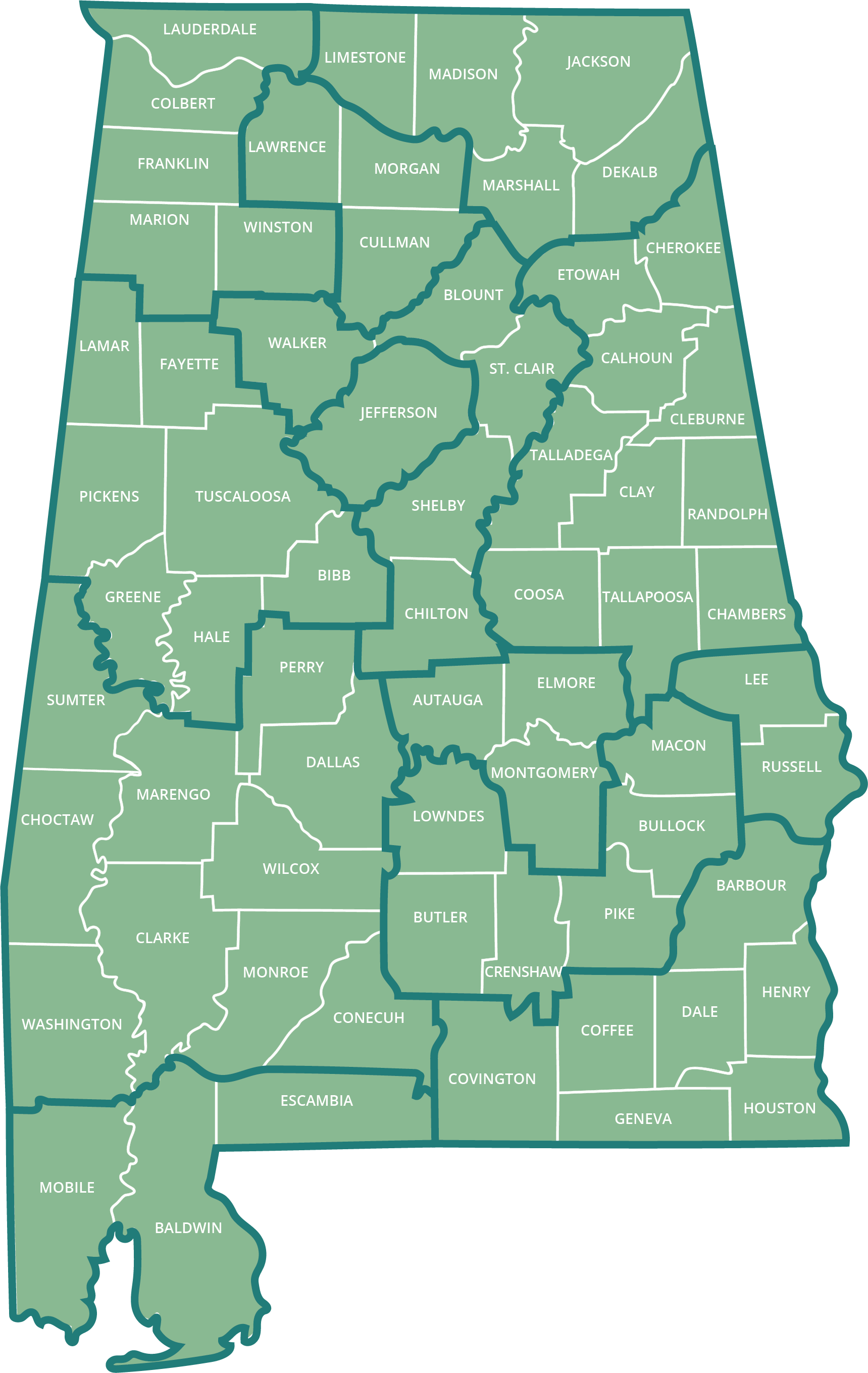
A map showing the coverage area for each of Alabama's 13 Area Agencies on Aging (plus the Regional Planning Commission of Greater Birmingham). Visit alabamaselect.com to learn more about the regional organization in your area.
AREA AGENCIES ON AGING: Thirteen Area Agencies on Aging (plus the Regional Planning Commission of Greater Birmingham) provide care coordination for ICN members. Visit the ICN website at alabamaselect.com to learn more about the regional organizations. (Source: Alabama Department of Senior Services)

SPOTLIGHT

Meet Dr. Eric Peebles

A portrait of Dr. Eric Peebles
For Dr. Eric Peebles of Auburn, the path of advocacy for independent living began in an upstate New York elementary school. (Photo: Matt Okarmus)

School officials in the New York community where Eric Peebles grew up tried every excuse in the book to prevent him from starting school. “We can’t find him an appropriate classroom aide,” they said. Or “his power wheelchair is a danger to the other students.”

It was the mid-1980s, and federally mandated special education was still a relatively new policy. But those officials didn’t know what they were getting into when they threw roadblocks in the path of Eric and his mom, Pat. Two years, multiple runarounds and a lawsuit later, Eric’s school district found itself under federal supervision, and all district administrators involved in his case lost their jobs. His mother was appointed to the search committee for their replacements.

Thanks to his mom, Eric got an early education in self-advocacy. That groundwork served him well 25 years later when he moved to Alabama to complete his doctorate and join the undergraduate faculty in rehabilitation and disability studies at Auburn University. His personal experience with spastic cerebral palsy (resulting from oxygen deprivation at birth) gives him an insider’s perspective on disability policy and services — and on stereotypes. One misconception he fights hard to dispel is the assumption that his advocacy is aimed solely at asserting his own rights and opportunities, rather than those of all people with disabilities.

‘Greater things to come’

When Eric moved here nearly 10 years ago, Alabama Medicaid’s long-term care services were so sparse that he maintained his residency in another state until the menu of services expanded. Today, he enjoys community self-sufficiency through his participation in the Alabama Community Transition (ACT) waiver. In addition to running his own research and consulting business, Accessible Alabama, Eric serves on the board of the Disabilities Leadership Coalition of Alabama and chairs the Medicaid Integrated Care Network (ICN) Consumer Advisory Committee. In 2019, Gov. Kay Ivey appointed him to the State of Alabama Independent Living Council.

Those long-ago school officials left a mark they couldn’t foresee. Among all his achievements, Eric counts the success of his own former students as a special point of pride. But his advocacy story is still being written, he says. “It feels like these accomplishments are forerunners of greater things to come.”


A regional approach to Medicaid primary care

Under Alabama Medicaid’s new structure, seven regional Alabama Coordinated Health Networks (ACHNs) coordinate primary care for Medicaid children, pregnant mothers and people who receive family planning services. Primary care includes well-child visits; EPSDT (Early Periodic Screening, Diagnosis and Treatment) for children; adult screening, diagnosis and treatment; and preventive care.

Each member can choose a primary care doctor to be their “patient-centered medical home.” Each ACHN has a phone line to call when a Medicaid participant has a health problem. The basic idea is that nurses, social workers and care coordinators working with the primary care doctor can help people get the right care for the right problem without going to the emergency room whenever they get sick.

A map of Alabama showing the coverage areas of the seven regional networks that provide primary coordination for ACHN members: Northwest, Northeast, East, Jefferson-Shelby, Central, Southwest and Southeast.
Seven regional networks provide primary care coordination for ACHN members. Visit medicaid.alabama.gov to learn more about the ACHNs.

Medicaid ACHNs bring a new focus on consumer engagement and better health

The regional network plan gives Medicaid new tools for improving health outcomes. The ACHN can help patients identify health goals, create a care plan and connect with community resources that promote better health. The new plan serves about 750,000 Medicaid members across seven regions. Each ACHN has a consumer representative on its board, in addition to a Consumer Advisory Committee (CAC).

Bonus payments for doctors who reach quality benchmarks are another feature aimed at improving care. Each ACHN also is conducting Quality Improvement Projects (QIPs) targeting three health measures for improvement:

  • Infant mortality
  • Obesity
  • Substance use disorders
A group photo of Medicaid consumer representatives and other advocates.
Medicaid consumer representatives in Alabama have teamed up for training and peer support. (Photo: Renée Markus Hodin)

SPOTLIGHT

Meet Audrey Trippe

A photo of Audrey Trippe and her child.
Navigating the complicated system of mental health and substance use services motivated Audrey Trippe of Attalla to step up and serve as a Medicaid consumer representative. (Photo: Courtesy of Audrey Trippe)

Audrey Trippe, a resident of Attalla in Etowah County, has worked in mental health care since 2013, serving as a peer support specialist, peer supervisor, youth peer and certified addiction counselor. She and her husband are the proud parents of two boys, one of them a newborn.

Audrey considers herself in long-term recovery from major depression and substance use disorder. She has spent most of her young adulthood in the coverage gap, relying on urgent care clinics and the ER. Being heard has been a challenge.

“There have been times I’ve felt like a chart and not a person,” she says. “I’ve felt overmedicated at times because I couldn’t communicate what feelings were from my mental issues and what feelings were normal for substance use recovery.”

For a while, Audrey and her husband had enough income to purchase Marketplace insurance, which covered her first pregnancy. But a series of financial setbacks put her back in the gap — and her baby into Medicaid coverage. She qualified for Medicaid herself with her second pregnancy. Now that the baby is born, Audrey’s coverage will expire 60 days after delivery.

‘Great hope for the future’

Navigating these ins and outs, ups and downs has motivated Audrey to help others find their way. That’s why she said yes when a friend at the Alabama Disabilities Advocacy Program asked her to be a consumer representative for her local Alabama Coordinated Health Network (ACHN). She wants to be an “authentic voice” for consumers.

“I want to educate individuals about the options they have and teach them how to have helpful conversations with their own care providers,” she says.

While Audrey faces returning to the coverage gap when her pregnancy coverage expires, she maintains a positive outlook.

“I believe things are getting better all around, and I have great hope for the future,” she says. “There are still things that need to change, but change — like recovery — takes time.”


Priority for improvement

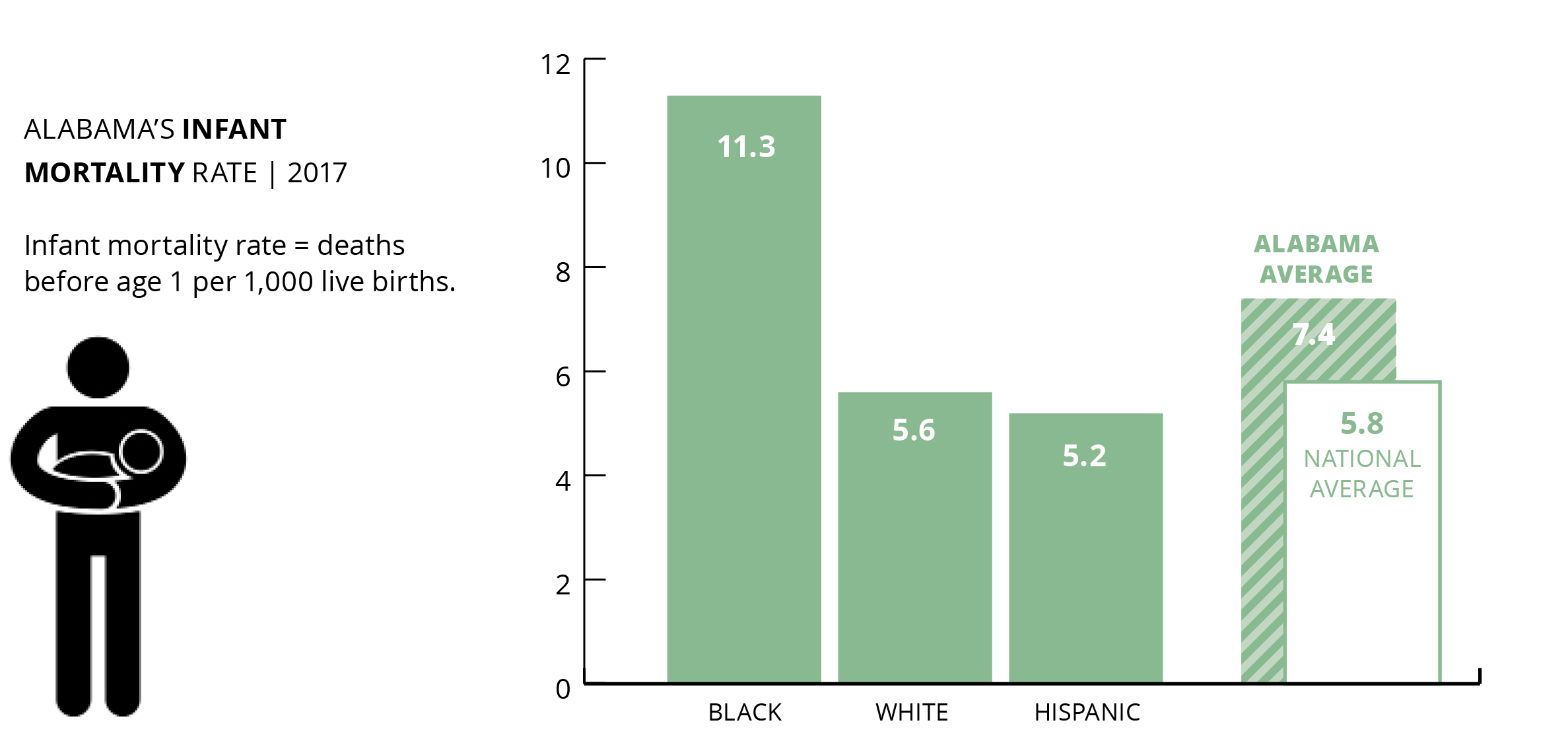
Infant mortality

Alabama’s regional Medicaid networks have identified infant mortality as a key target for improving health outcomes. That’s a promising step. Evidence from Medicaid expansion states shows that providing women continuous health coverage — not just during pregnancy — would make a life-saving difference. Lowering the high rate of African American infant deaths is the key to overall improvement.

National ranking: 45th
A bar graph showing infant mortality rates by race in Alabama in 2017. Infant mortality rate = deaths before age 1 per 1,000 live births. The rates were 11.3 for black Alabamians, 5.6 for white Alabamians and 5.2 for Hispanic Alabamians. The Alabama average was 7.4, while the national average was 5.8.
Source: VOICES for Alabama’s Children, 2019 Kids Count Data Book

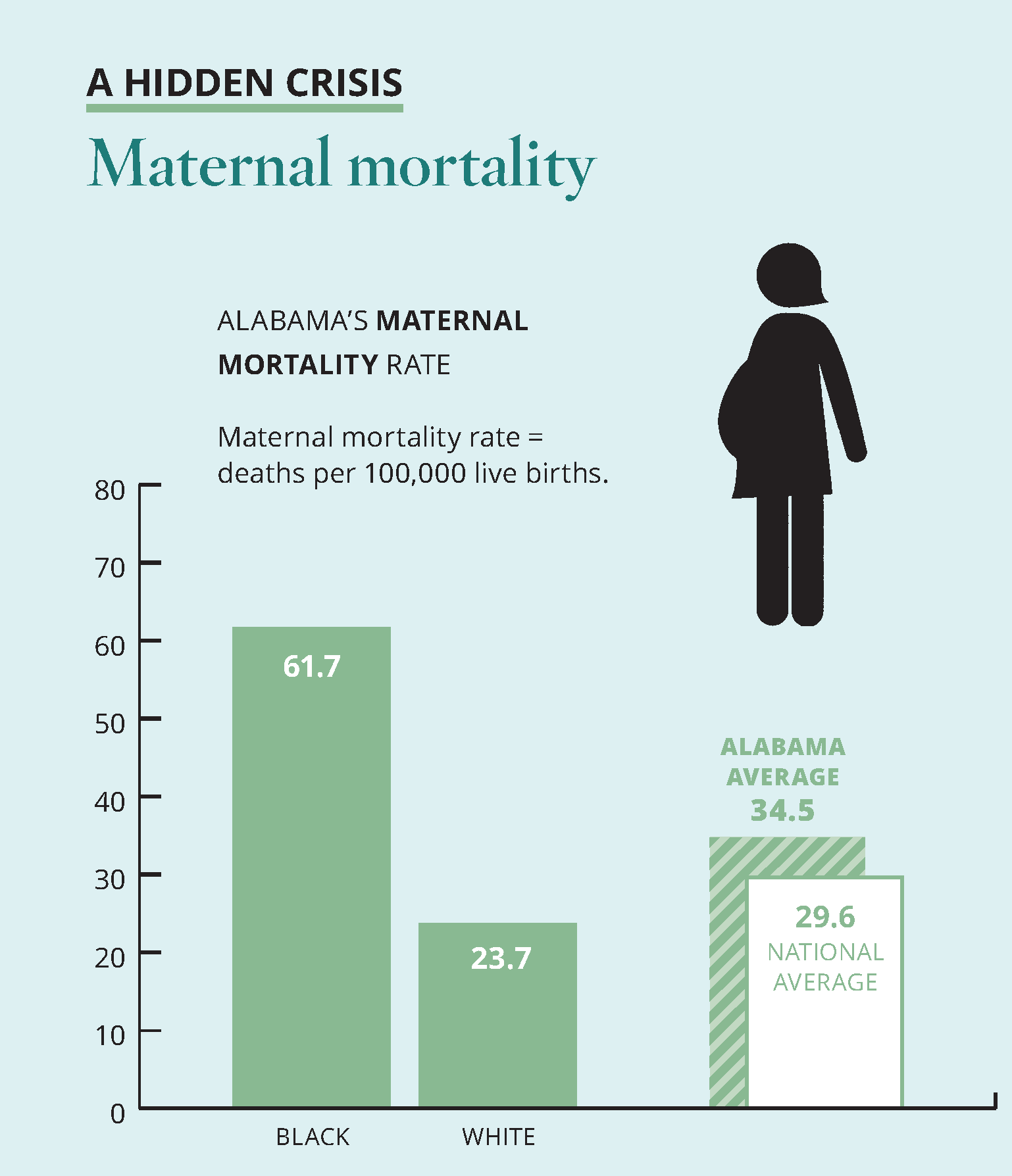
A hidden crisis: Maternal mortality

In late 2019, the Alabama Department of Public Health (ADPH) announced the infant mortality rate for 2018 at a record low 7.0 per 1,000 live births. National comparisons are not yet available. Alabama’s infant mortality rate is improving but remains one of the highest in the country, and racial disparity in birth outcomes is widening.

A particular concern is the continuing increase in the percentage of births with no prenatal care, which rose to 2.4% in 2018, ADPH reports.

A bar graph showing Alabama's maternal mortality rate, defined as deaths per 100,000 live births. The rate is 61.7 for black Alabamians and 23.7 for white Alabamians. Alabama's average is 34.5. The national average is 29.6.
Source: America’s Health Rankings, 2019 Health of Women and Children Report

The chief medical causes of infant death include congenital abnormalities, low birth weight and preterm births, Sudden Infant Death Syndrome (SIDS) and bacterial sepsis, according to ADPH. Health researchers are discovering how social factors like place of residence, environmental influences and available resources play a role in determining different outcomes for different racial groups.

Maternal deaths in childbirth occur more rarely than infant deaths, but they are a stark indicator of racial disparities in health care. Black mothers in Alabama die in childbirth at nearly three times the rate of white mothers, and nearly double the overall statewide rate.

Priority for improvement

Obesity

Alabama’s regional Medicaid networks are working to reduce the state’s obesity rate. Extending Medicaid coverage to adults with low incomes would allow thousands more Alabamians to benefit. That would mean healthier families and a healthier workforce.

National ranking: 45th
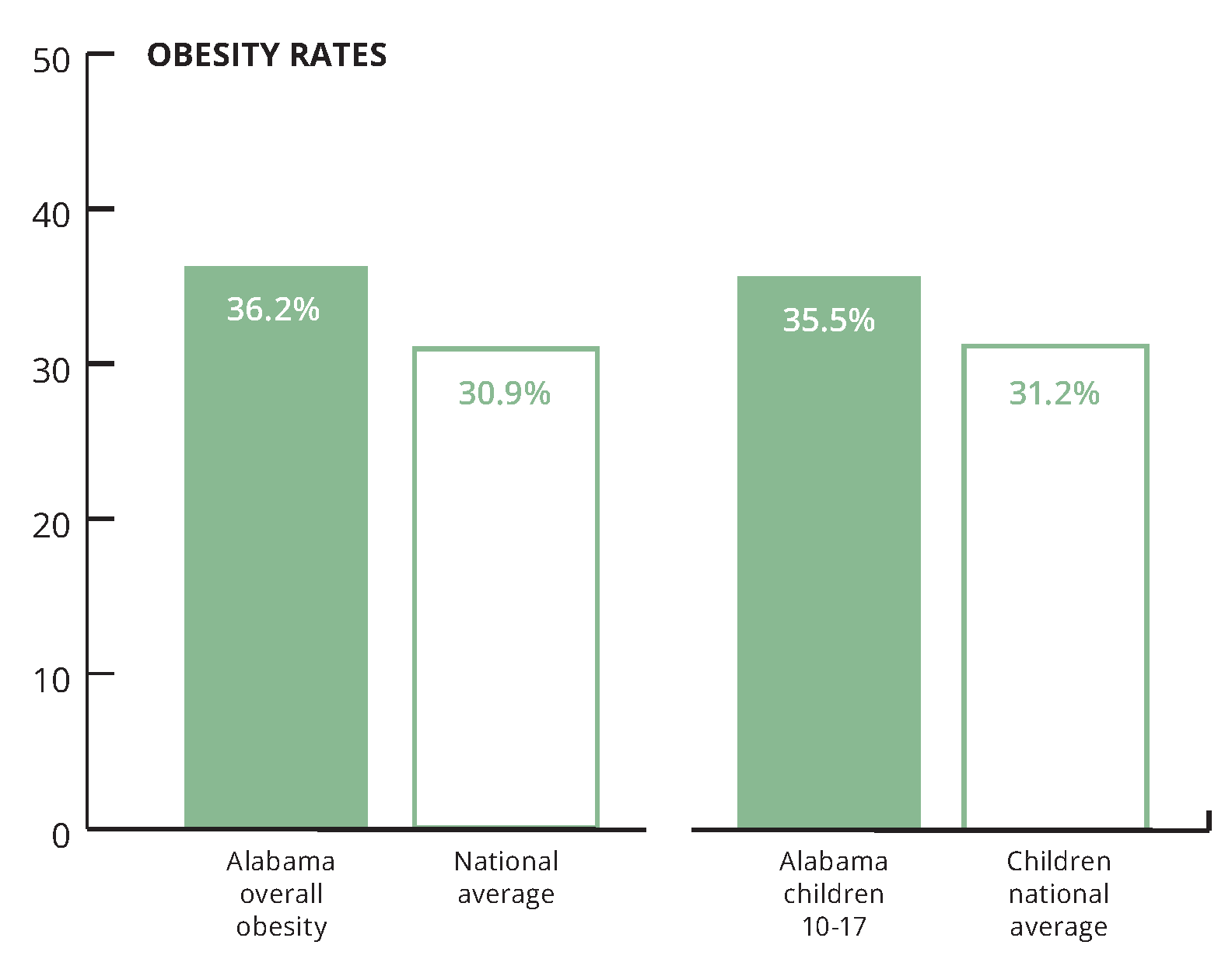
Bar graphs showing Alabama's obesity rates. Alabama's overall rate is 36.2%, compared to the 30.9% national average. The rate for Alabama children ages 10-17 is 35.5%, compared to the national average of 31.2%.
Source: America’s Health Rankings, 2019 Annual Report

A leading cause of obesity is food insecurity, or the inability to provide adequate food for one or more household members because of lack of resources. Families experiencing food insecurity may rely on low-cost, high-energy foods and beverages, which can lead to overconsumption of calories and result in obesity.

16.3% of Alabama households experienced food insecurity in 2019, for a national ranking of 46th. The national average was 12.3%.

Healthy foods, such as fresh fruits and vegetables, are more expensive and less available in some communities than in others. A CDC study found that only 6.1% of Alabama adults meet the daily vegetable intake recommendation. And only 8.8% of Alabama adults meet the daily fruit intake recommendation. Medicaid programs in other states are exploring ways to make healthy foods more accessible and affordable where people live, work, learn and play. (Source: America’s Health Rankings, 2019 Health of Women and Children Report)

Priority for improvement

Substance use disorders

Alabama’s regional Medicaid networks seek to boost the availability of treatment for
substance use disorders. In the past five years, drug deaths in Alabama increased 37%, from 11.7 to 16.1 deaths per 100,000 people. Despite the increase, Alabama’s drug death rate remained below the national average of 19.2 deaths per 100,000. (Source: America’s Health Rankings, 2019 Annual Report)

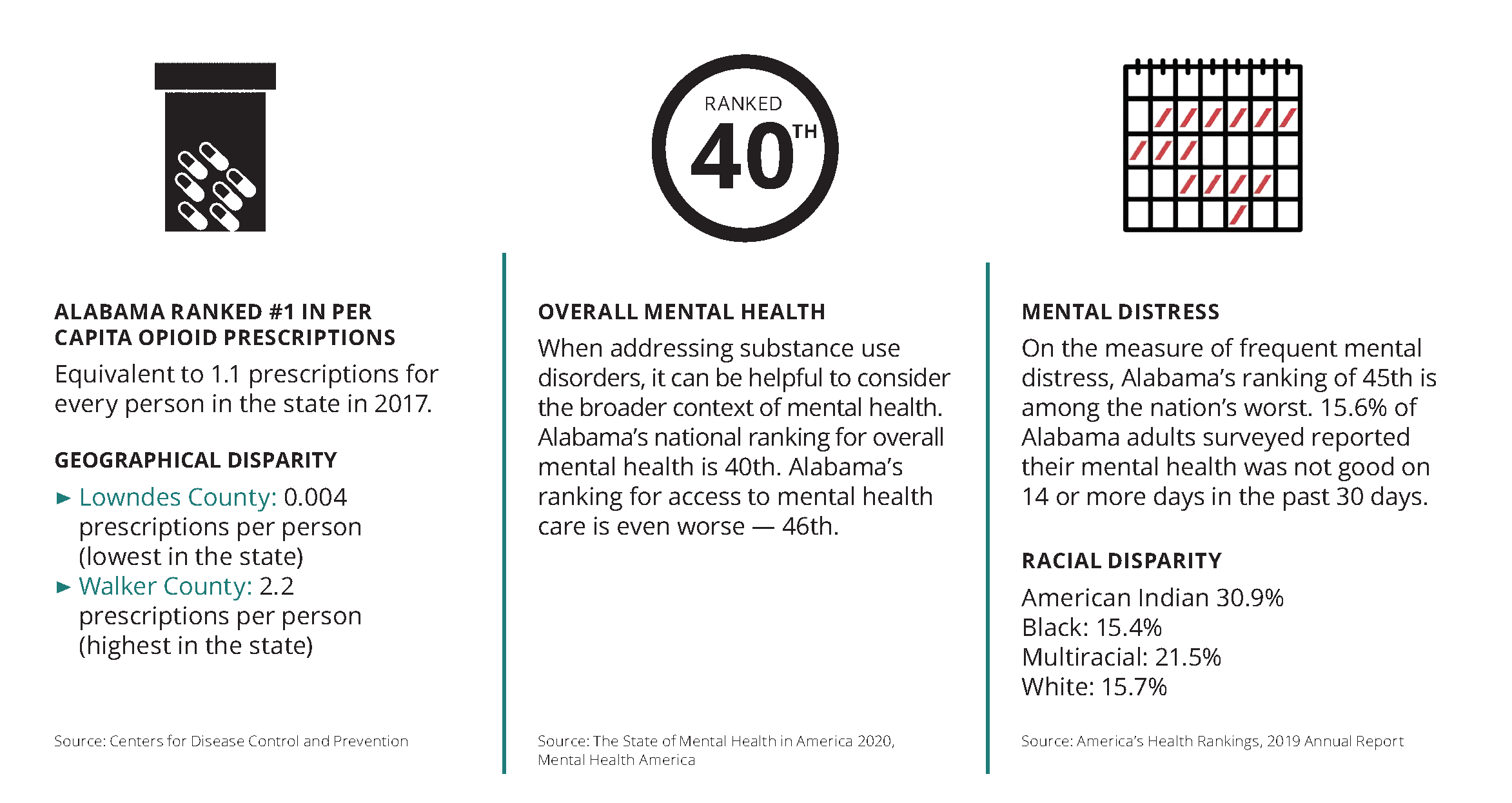
Infographic states the following: Alabama ranked #1 in per capita opioid prescriptions, equivalent to 1.1. prescriptions for every person in the state in 2017. Geographical disparity: Lowndes County has 0.004 prescriptions per person, which is the lowest in the state, while Walker County has 2.2 prescriptions per person, which is the highest in the state. Alabama's overall ranking for mental health is 40th. When addressing substance use disorders, it can be helpful to consider the broader context of mental health. Alabama's national ranking for overall mental health is 40th. Alabama's ranking for access to mental health care is even worse - 46th. On the measure of frequent mental distress, Alabama's ranking of 45th is among the nation's worst. 15.6% of Alabama adults surveyed reported their mental health was not good on 14 or more days in the past 30 days. Racial disparity: American Indian (30.9%), Black (15.4%), Multiracial (21.5%), White (15.7%). Sources: Centers for Disease and Prevention; The State of Mental Health in America 2020, Mental Health America; America's Health Rankings, 2019 Annual Report.


Medicaid Matters (Main Section)
How does Medicaid work in Alabama? (Section 1)
Who’s still left out of health coverage? (Section 3)
How can we make Alabama healthier? (Section 4)


Medicaid Matters – Section 3: Who’s still left out of health coverage?

MEDICAID COVERAGE GAP

What you need to know …

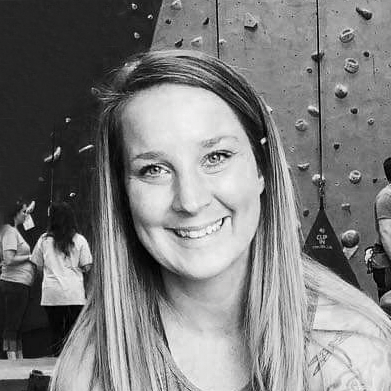
A smiling woman's face.
(Photo: Courtesy of Audrey Trippe)
  • More than 220,000 Alabamians are caught in the state’s health coverage gap, earning too much to qualify for Medicaid and too little to afford private insurance.
  • Another 120,000 Alabamians are stretching to pay for coverage they can’t afford.
  • Tens of thousands of Alabamians in the coverage gap are between jobs or are working in essential, low-paying fields like child care, construction and food service.
  • 13,000 Alabama veterans and adult family members have no military insurance and can’t afford private plans.
  • Nearly 65,000 rural Alabamians are caught in the coverage gap.
  • Eight rural Alabama hospitals have closed since 2011.
  • 88% of the state’s rural hospitals operate at a loss.

Alabama’s ‘bare bones’ Medicaid leaves out more than 340,000 people

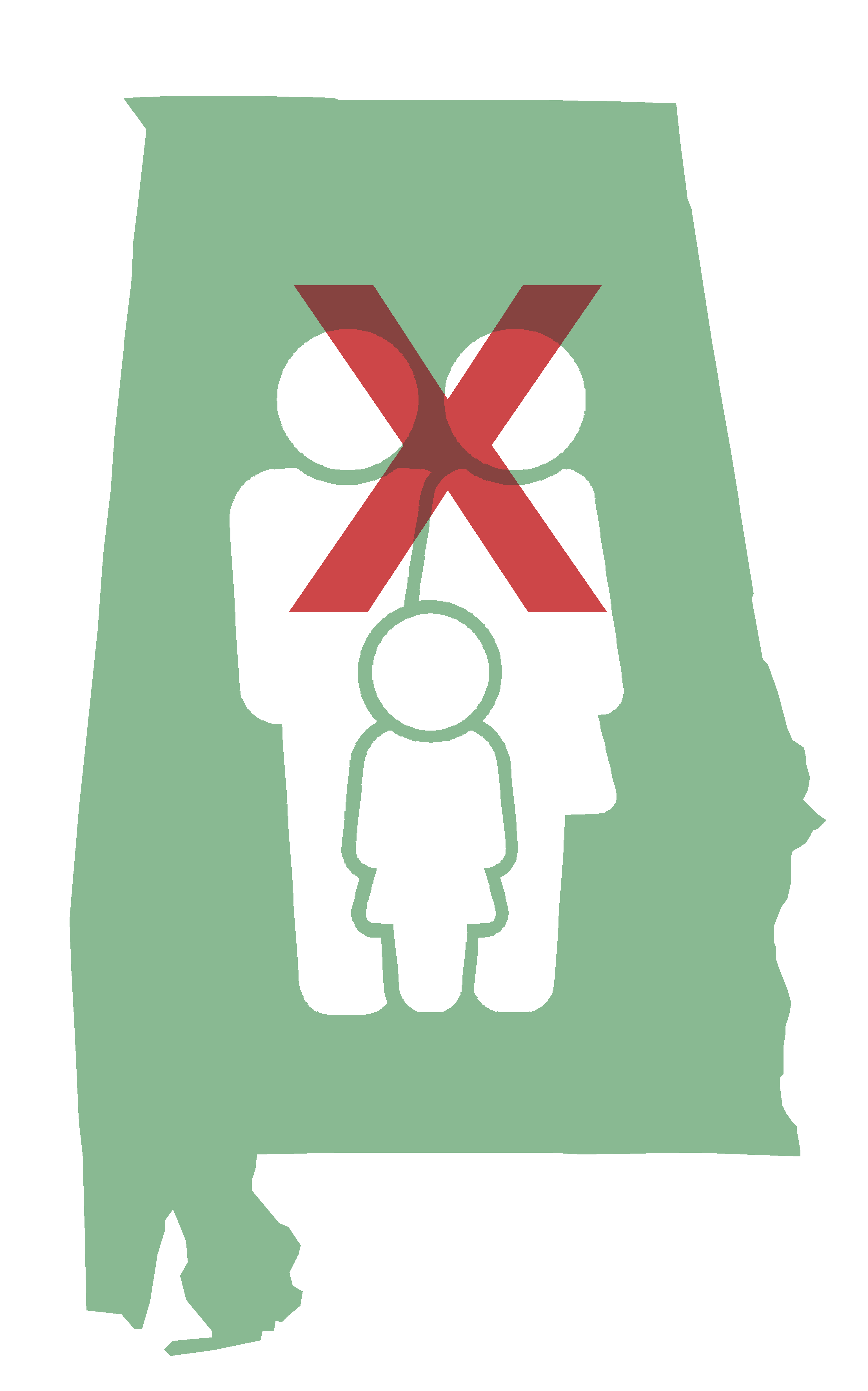
A family of three with countable income of just $3,841 a year earns too much for the parents to get Medicaid coverage.

As we’ve seen, Alabama Medicaid serves mostly children and people with special health care needs. Only Texas makes it harder for working-age adults without a disability to get Medicaid. First, you have to be a parent of a dependent child. Second, you can’t earn more than 18% of the federal poverty level.

Because of our state’s stringent limits, about 223,000 Alabamians are caught in the coverage gap. Working low-wage jobs that often don’t offer health insurance, they earn too much to qualify for Medicaid and too little to afford private insurance. Some are caught because they’re family caregivers, students, waiting for a disability determination, or working part-time. About 120,000 more are stretching to pay for coverage they can’t afford.

Alabama’s working families need health security

They’re the folks who keep things going — the people who serve our food at restaurants, bag our groceries, patch our roofs and repair our cars. They work hard at economically essential jobs that pay low wages. Yet many of these Alabamians have no affordable health coverage option. As a result, they often struggle to work while dealing with health problems that sap their productivity, add stress to their households and worsen without timely care.

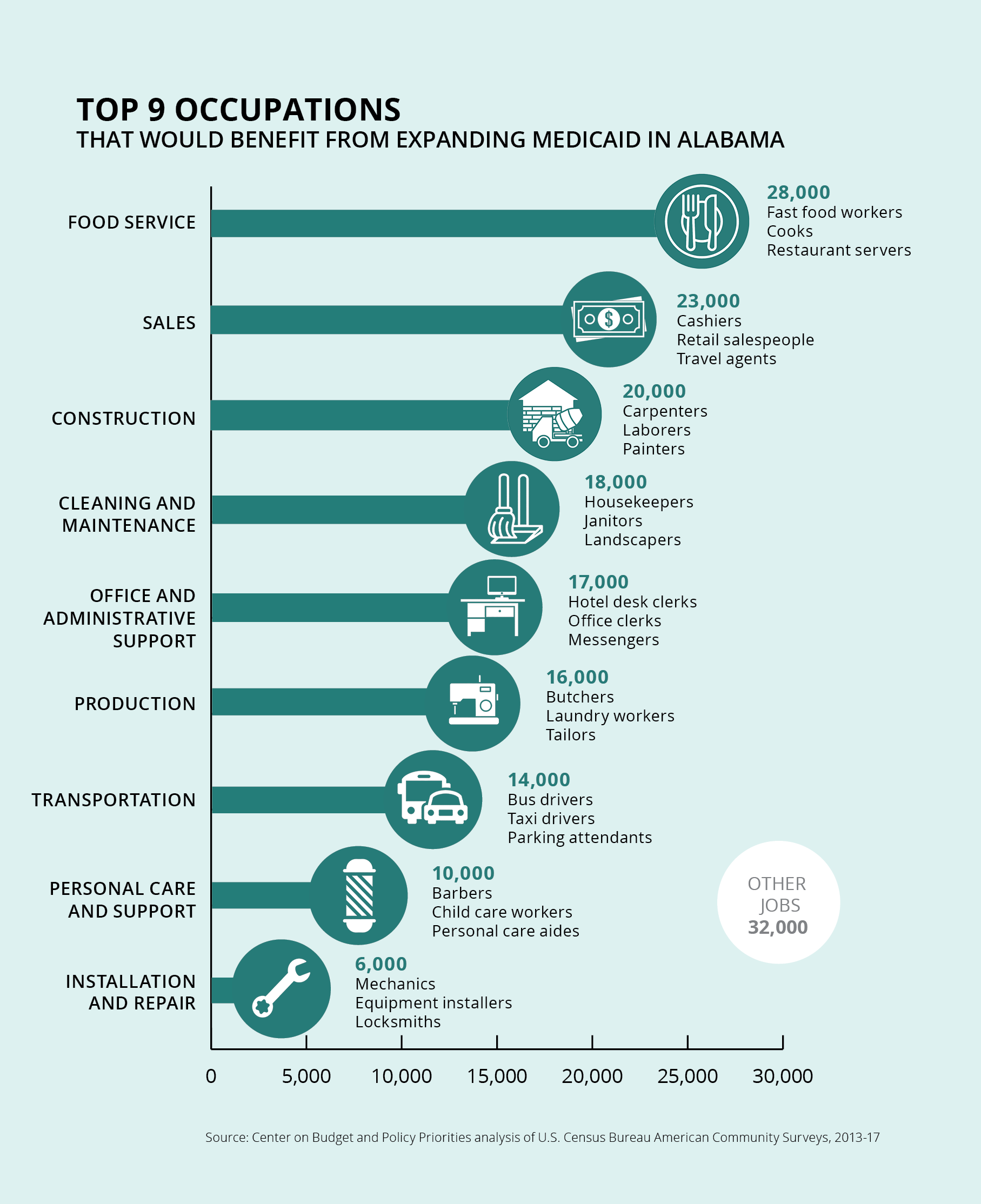
A graph that shows the top 9 occupations that would benefit from expanding Medicaid in Alabama and the number of people in each. Food service (fast food workers, cooks, restaurant servers) 28,000. Sales (cashiers, retail salespeople, travel agents) 23,000. Construction (carpenters, laborers, painters) 20,000. Cleaning and maintenance (housekeepers, janitors, landscapers) 18,000. Office and administrative support (hotel desk clerks, office clerks, messengers) 17,000. Production (butchers, laundry workers, tailors) 16,000. Transportation (bus drivers, taxi drivers, parking attendants) 14,000. Personal care and support (barbers, child care workers, personal care aides) 10,000. Installation and repair (mechanics, equipment installers, locksmiths) 6,000. Other jobs 32,000. Source: Center on Budget and Policy Priorities analysis of U.S. Census Bureau American Community Surveys, 2013-17.

IN FOCUS

Working Alabamians in the gap

They earn too much to qualify for Medicaid, and they can’t afford employer-based coverage or private insurance. Medicaid expansion would make life better for Alabama’s low-wage workers and strengthen our state’s workforce.

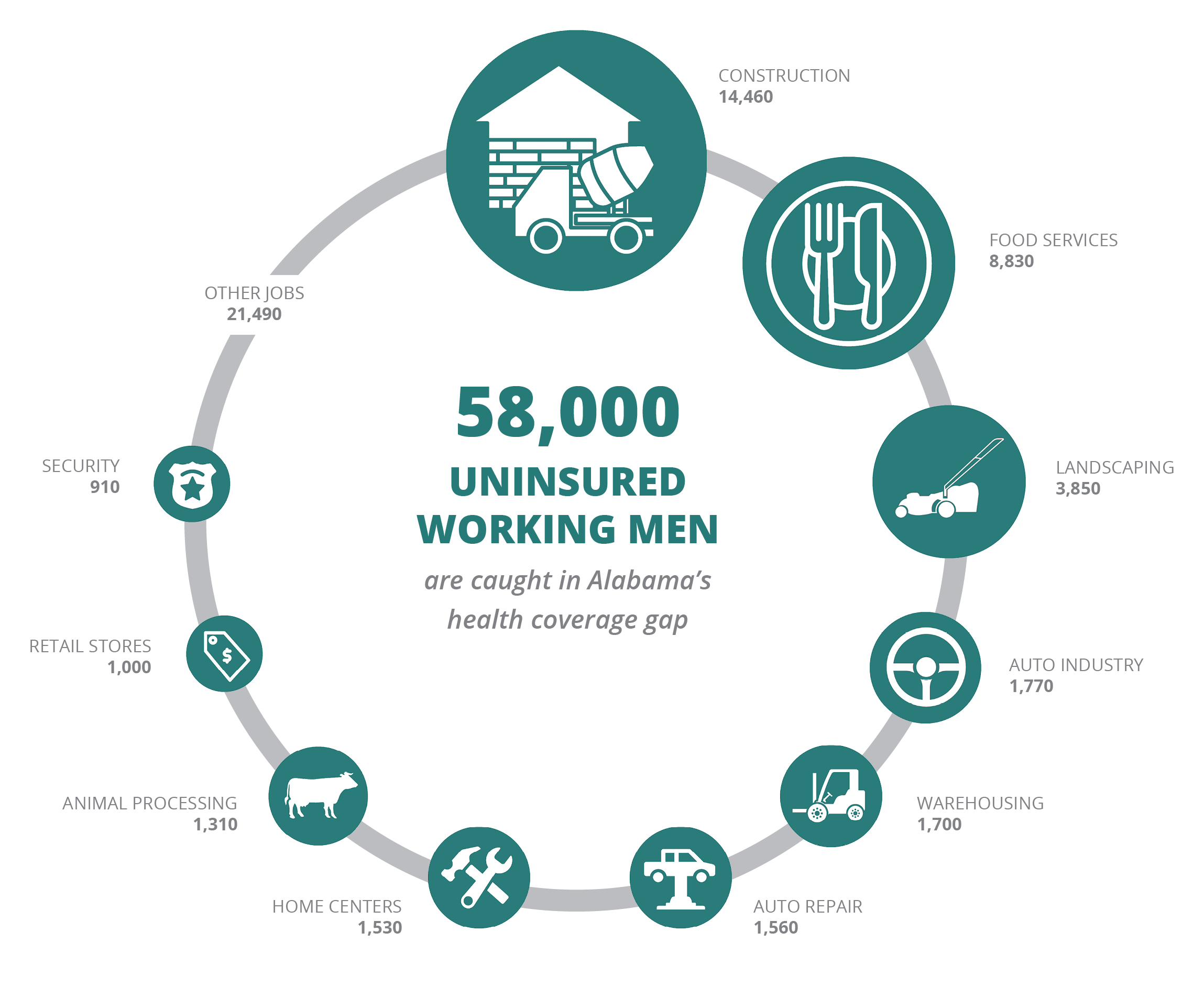
An infographic that breaks down the 58,000 uninsured working men who are caught in Alabama's health coverage gap by occupation: Construction (14,460); food services (8,830); landscaping (3,850); auto industry (1,770); warehousing (1,700); auto repair (1,560); home centers (1,530); animal processing (1,310); retail stores (1,000); security (910); other jobs (21,490).
Source: Center on Budget and Policy Priorities analysis of U.S. Census Bureau American Community Surveys, 2013-17

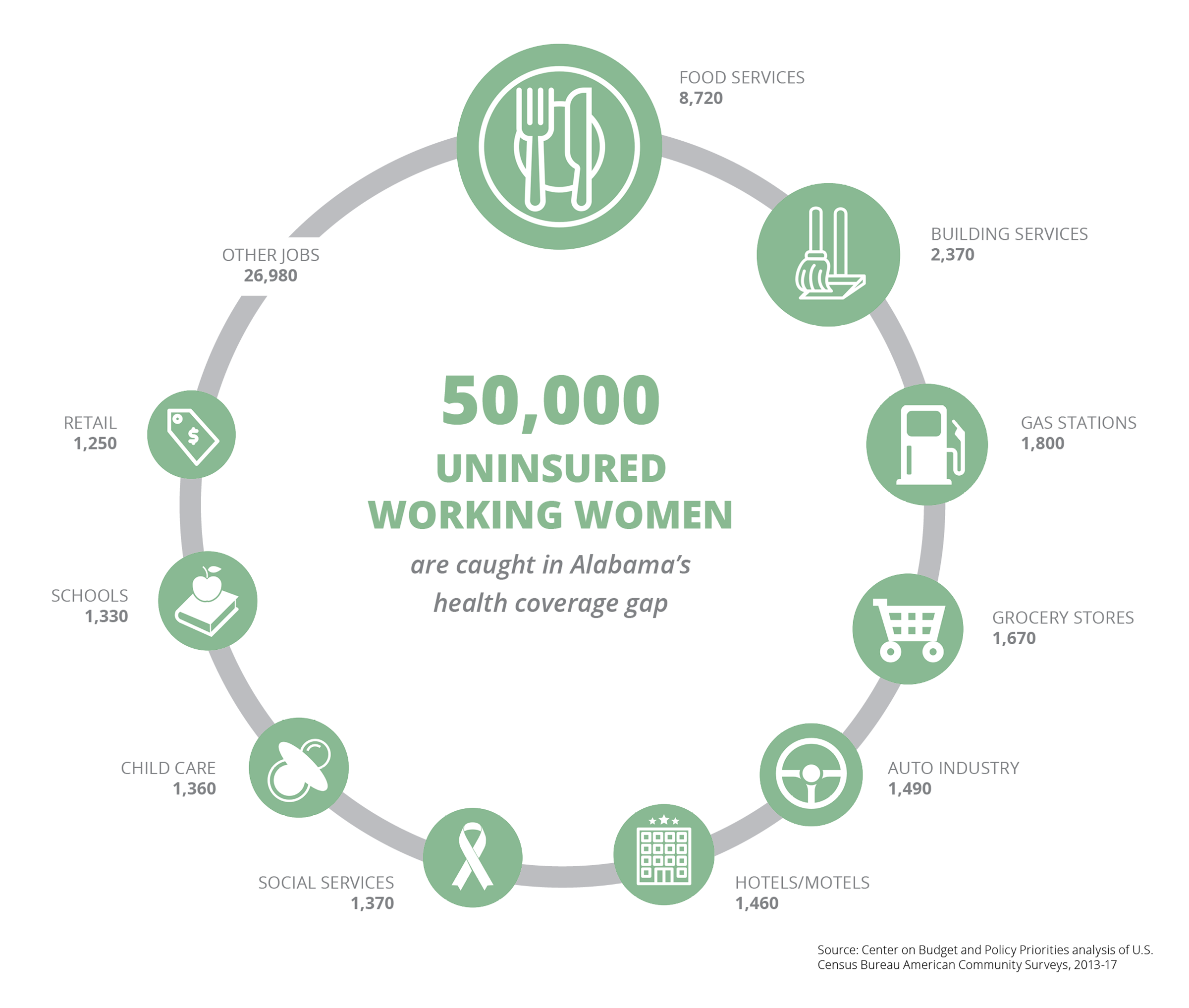
An infographic that breaks down the 50,000 uninsured working women who are caught in Alabama's health coverage gap by occupation: Food services (8,720); building services (2,370); gas stations (1,800); grocery stores (1,670); auto industry (1,490); hotels/motels (1,460); social services (1,370); child care (1,360); schools (1,330); retail (1,250); other jobs (26,980). Source: Center on Budget and Policy Priorities analysis of U.S. Census Bureau American Community Surveys, 2013-17.

Alabamians who aren’t formally employed need coverage, too

While it’s helpful to highlight the workers in the coverage gap, it’s equally important not to overlook people who don’t hold formal jobs. There are many reasons people in the coverage gap may not be working a regular job. Health coverage is a work support that helps people gain and maintain employment.

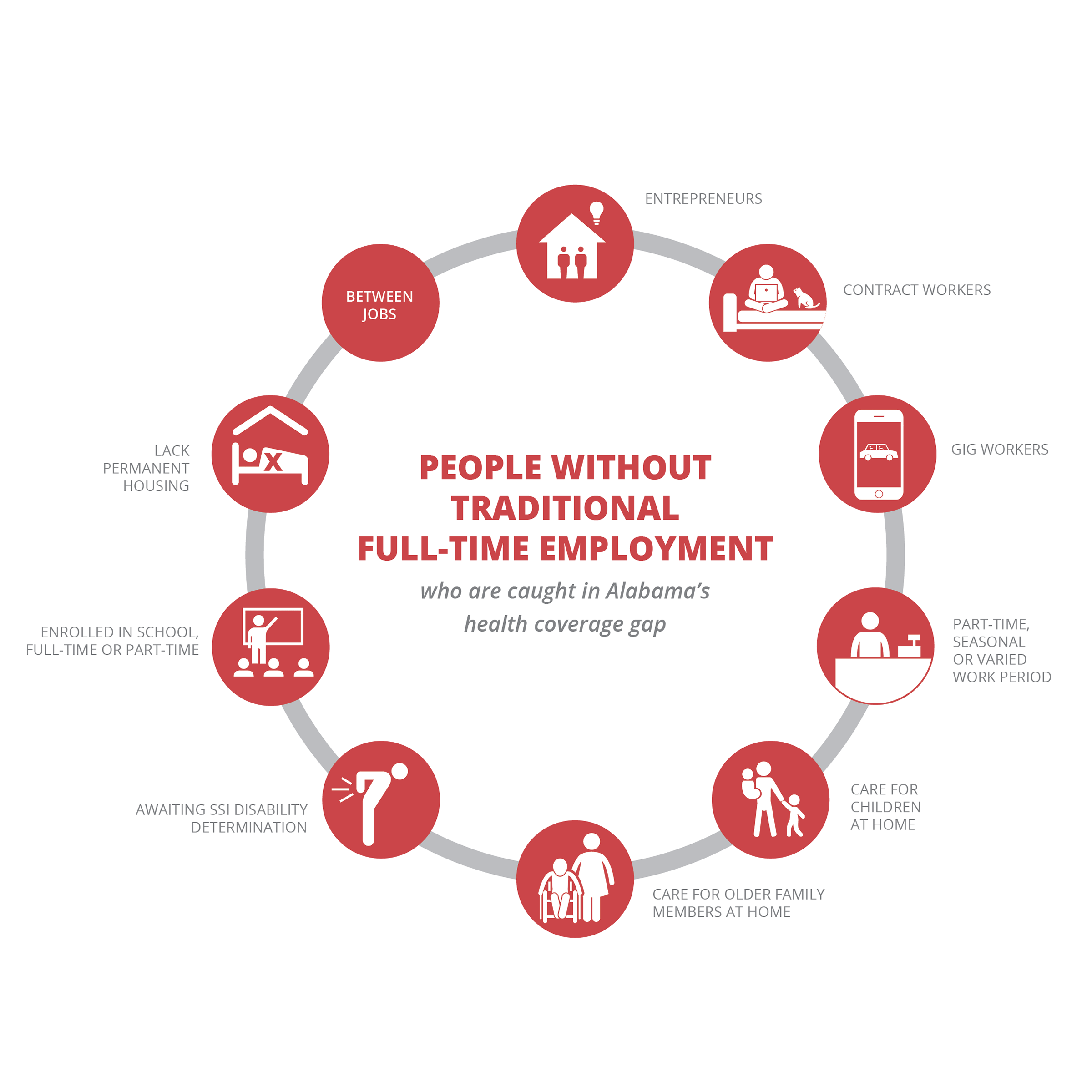
This graphic highlights some categories of people without traditional full-time employment who are caught in Alabama's health coverage gap: Entrepreneurs, contract workers, gig workers, people who work part-time, seasonal or varied work periods, people who care for children or older family members at home, people awaiting an SSI disability determination, people enrolled in school full-time or part-time, people who lack permanent housing and people who are between jobs.


SPOTLIGHT

Meet Kenneth Tyrone King

A portrait of Kenneth Tyrone King.
Like thousands of his fellow Alabamians, Kenneth Tyrone King of Birmingham works without health insurance, doing his best to keep chronic health problems under control. (Photo: Julie Bennett)

Kenneth Tyrone King is an “underemployed” resident of Birmingham, where he lives with his wife and daughter. He chooses the term “underemployed” carefully, as a testament to the difficulty of finding and keeping work in the face of chronic health challenges, including an irregular heartbeat. Volunteer work and community advocacy, including service on the Alabama Arise board, give him a sense of connection and purpose, but they don’t pay the bills.

“Most of the jobs I have are temporary,” he says. “And if they do sustain longer-term, they sometimes just end.”

Kenneth isn’t able to obtain health insurance because the work he can get doesn’t provide it. And he can’t afford coverage through the Marketplace.

“I’m thinking about longevity in life and being here for my daughter and my wife,” Kenneth says. “Hopefully, if I can get employment that would have health benefits, that would offset my concerns about my health overall.”


IN FOCUS

Veterans in the health coverage gap

It’s a common misconception that people who serve in the U.S. military automatically receive lifetime eligibility for health coverage and other benefits. In reality, veterans’ health benefits depend on their length of service, military classification, type of discharge and other factors. Treatment for service-connected conditions has no time-of-service requirement, but other health benefits do.

Active-duty service members and their families receive health coverage through the Department of Veterans Affairs (VA). Most also receive “bridge” health insurance coverage in the 180 days before and after their active-duty service. But many Alabama veterans — including many National Guard and Reserve members — return home without military health care for the long term. For the 13,000 Alabama veterans and adult family members who have no military health insurance and can’t afford private plans, the consequences can be dire.

Returning to civilian life can be challenging enough without the added burden of being uninsured. Alabama can show its respect for veterans by giving them the health security they need.

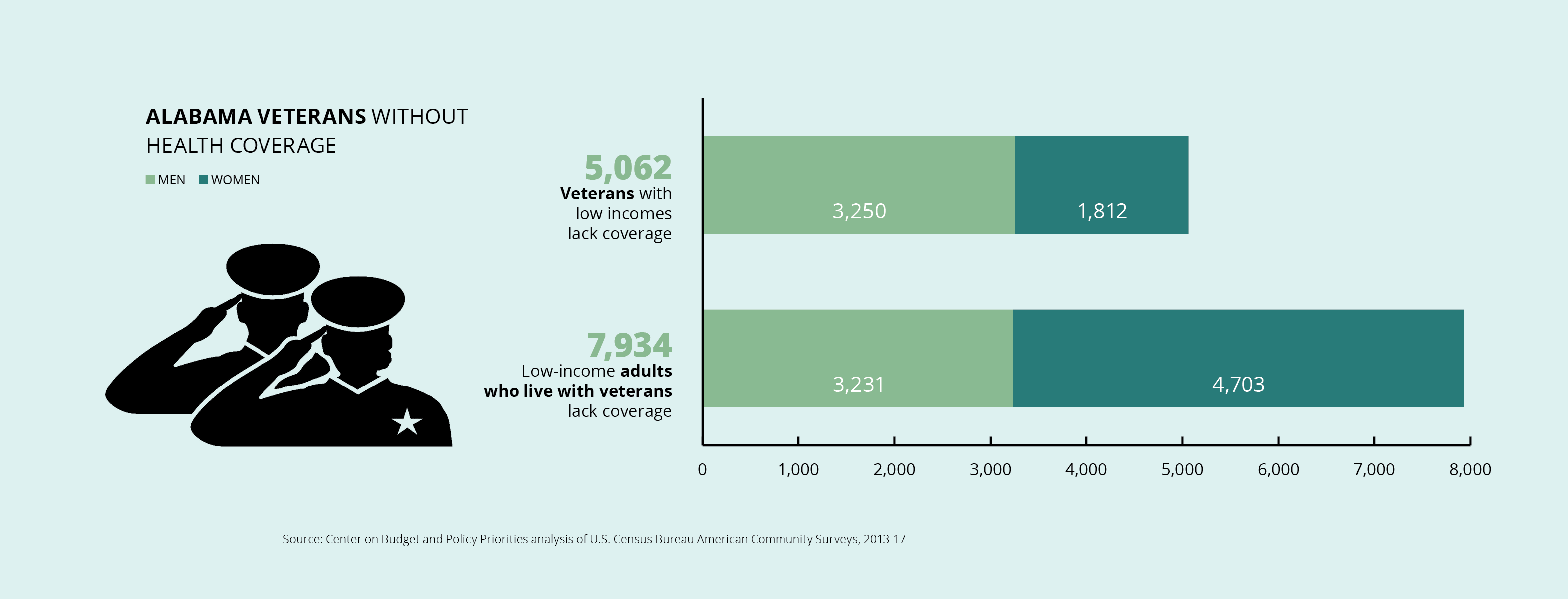
An infographic on Alabama veterans without health coverage. Of the 5,062 veterans with low incomes who lack coverage, 3,250 are men and 1,812 are women. Of the 7,934 low-income adults who live with veterans who lack coverage, 3,231 are men and 4,703 are women. Source: Center on Budget and Policy Priorities analysis of U.S. Census Bureau American Community Surveys, 2013-17.

IN FOCUS

Rural Alabamians in the health coverage gap

Almost 65,000 rural Alabamians are caught in the health coverage gap, including nearly 4,000 farmers and farm workers. Inadequate health care funding is fraying Alabama’s rural hospital network.

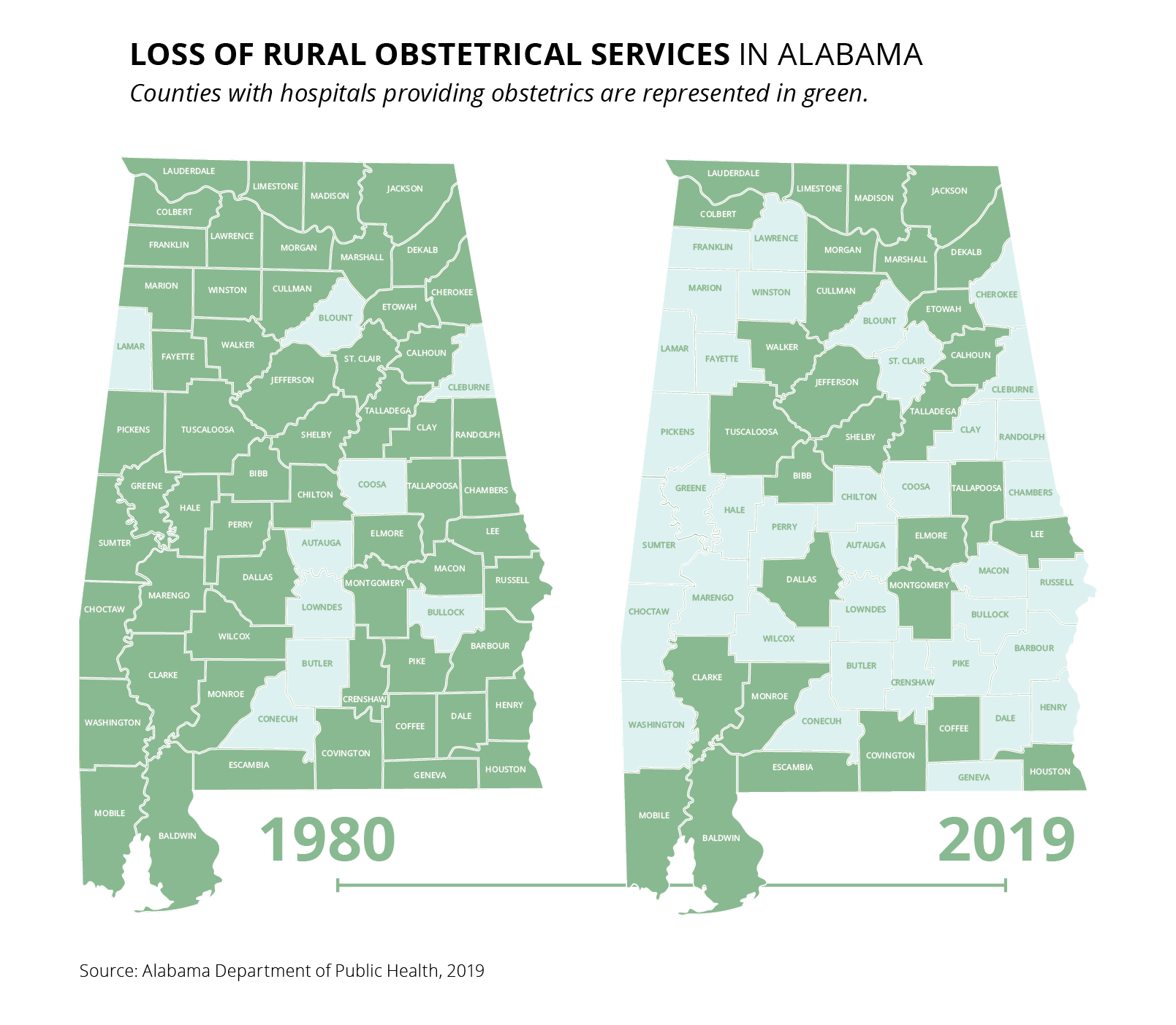
Two state maps of Alabama showing counties with hospitals providing obstretics. In 1980, the following counties did not have hospitals providing obstetrics: Lamar, Blount, Cleburne, Coosa, Autauga, Lowndes, Butler, Conecuh and Bullock. In 2019, the following counties did not have hospitals providing obstetrics: Franklin, Lawrence, Marion, Winston, Blount, St. Clair, Cherokee, Lamar, Fayette, Pickens, Clay, Cleburne, Randolph, Greene, Hale, Perry, Chilton, Coosa, Chambers, Sumter, Marengo, Autauga, Lowndes, Macon, Bullock, Russell, Choctaw, Wilcox, Washington, Butler, Conecuh, Crenshaw, Pike, Barbour, Dale, Henry and Geneva.Rural hospitals in states that increased Medicaid eligibility and enrollment experienced fewer closures,” a 2018 report by the U.S. Government Accountability Office found. Alabama has lost obstetrical services in 29 counties since 1980. Expanding health coverage would protect Alabama’s rural families, hospitals and communities.

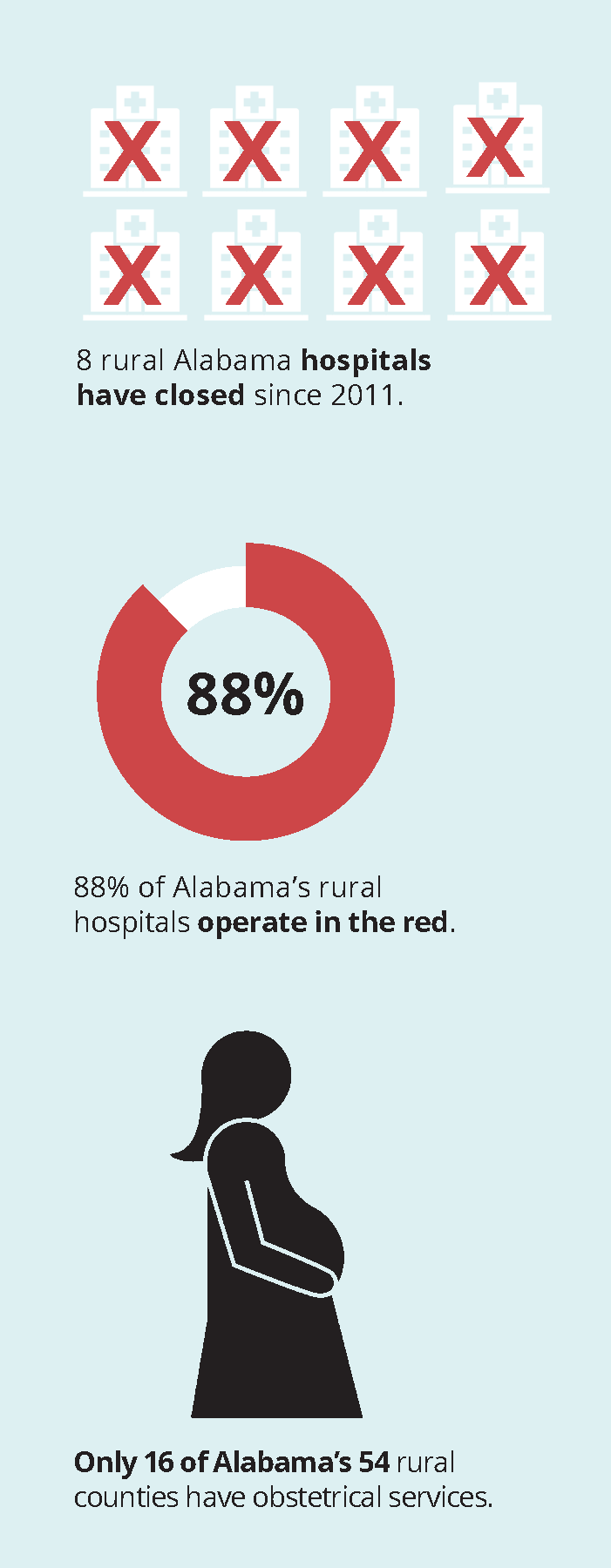
An infographic showing that 8 rural hospitals have closed since 2011, 88% of Alabama's rural hospitals operate in the red and only 16 of Alabama's 54 rural counties have obstetrical services.


Medicaid Matters (Main Section)
How does Medicaid work in Alabama? (Section 1)
How is Medicaid improving coverage? (Section 2)
How can we make Alabama healthier? (Section 4)


Medicaid Matters – Section 4: How can we make Alabama healthier?

MEDICAID EXPANSION

What you need to know …

A woman holding an #IamMedicaid sign
(Photo: #IamMedicaid)
  • Medicaid expansion would help hundreds of thousands of Alabamians get the health care they need.
  • States that have expanded Medicaid have seen improvements in infant and maternal mortality and greater access to treatment for mental illness and substance use disorders.
  • Extending coverage would reduce Alabama’s racial health disparities.
  • Medicaid expansion would generate billions of dollars in economic activity and hundreds of millions of dollars in new tax revenues.
  • Expanding health coverage would boost efforts to make Alabama’s prison system more humane, restorative and cost-effective.
  • Medicaid expansion could save hundreds of lives in Alabama every year.

Closing the coverage gap would improve lives

Hundreds of thousands of Alabamians could get the health care they need to survive and thrive if Alabama raised the income limit for Medicaid and allowed coverage for adults who aren’t parents. Medicaid expansion improves lives across a range of health measures, a growing body of research shows. Those areas include better birth outcomes and maternal health, lower overdose rates and improved mental health. Expansion also would increase household financial security and reduce racial health disparities.

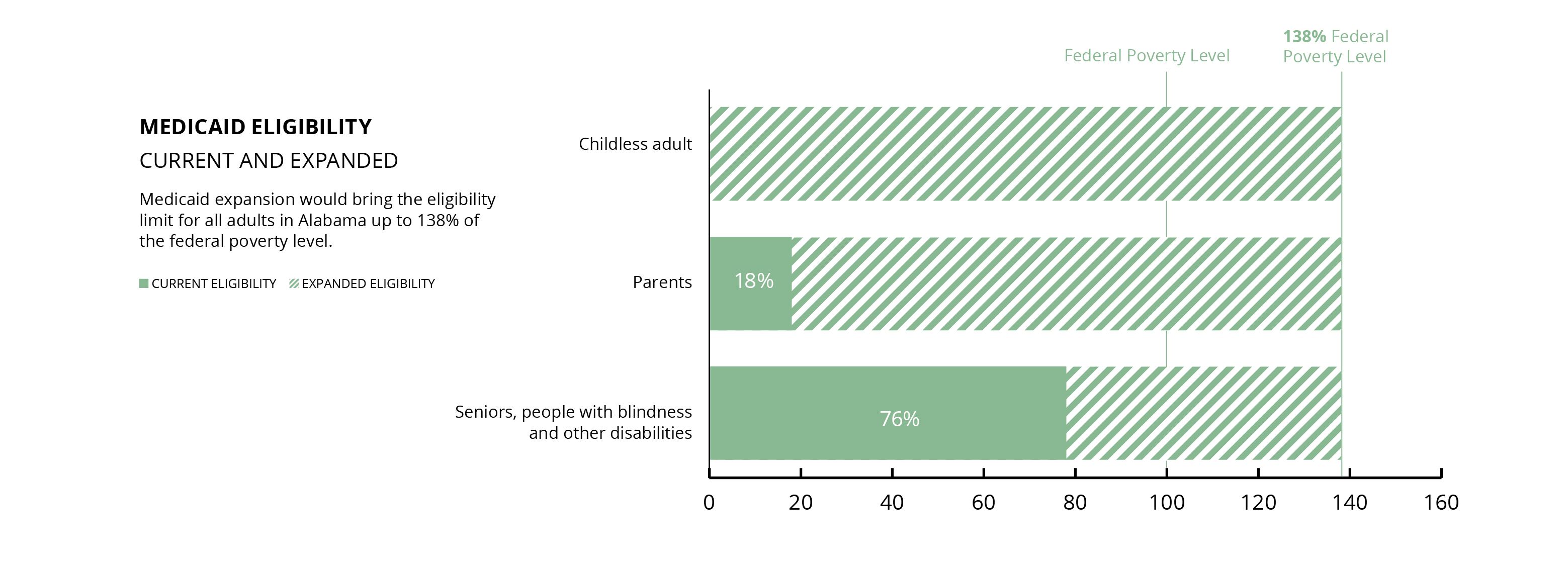
A bar graph showing Alabama's current Medicaid eligibilty and eligibility under expansion. Medicaid expansion would bring the eligibilty limit for all adults in Alabama up to 138% of the federal poverty level. Right now, the eligibility limit for parents is at 18% FPL, and the limit for seniors, people with blindness and other disabilites is at 76% FPL. Childless adults without a disability are not eligible right now.

Extending coverage would keep Alabamians healthier

  • Evidence from Medicaid expansion states shows that providing women continuous health coverage before, during and after pregnancy would make a life-saving difference for mothers and babies.
  • Extending Medicaid coverage to adults with low incomes would extend the benefits of ongoing Medicaid reforms to hundreds of thousands more Alabamians. This improvement would give us the tools we need to address the state’s chronic health challenges, making families and our workforce healthier in the process.
  • Research shows that Medicaid expansion increases access to treatment for substance use disorders and significantly strengthens responses to the opioid epidemic.

Medicaid expansion would promote racial equity

A circle graph that shows Alabama's racial/ethnic health coverage gap. 49% of uninsured Alabama residents with low incomes are people of color, while 34% of all Alabamians are people of color.

Alabama’s shameful legacy of segregation and racial discrimination has driven racial health disparities that continue today. Nearly half of uninsured Alabamians with low incomes are people of color, even though people of color make up just one-third of the state’s population. Medicaid expansion would reduce that coverage disparity and increase economic and health security for Alabamians of all racial and ethnic backgrounds.

Medicaid expansion would boost Alabama’s economy and budgets

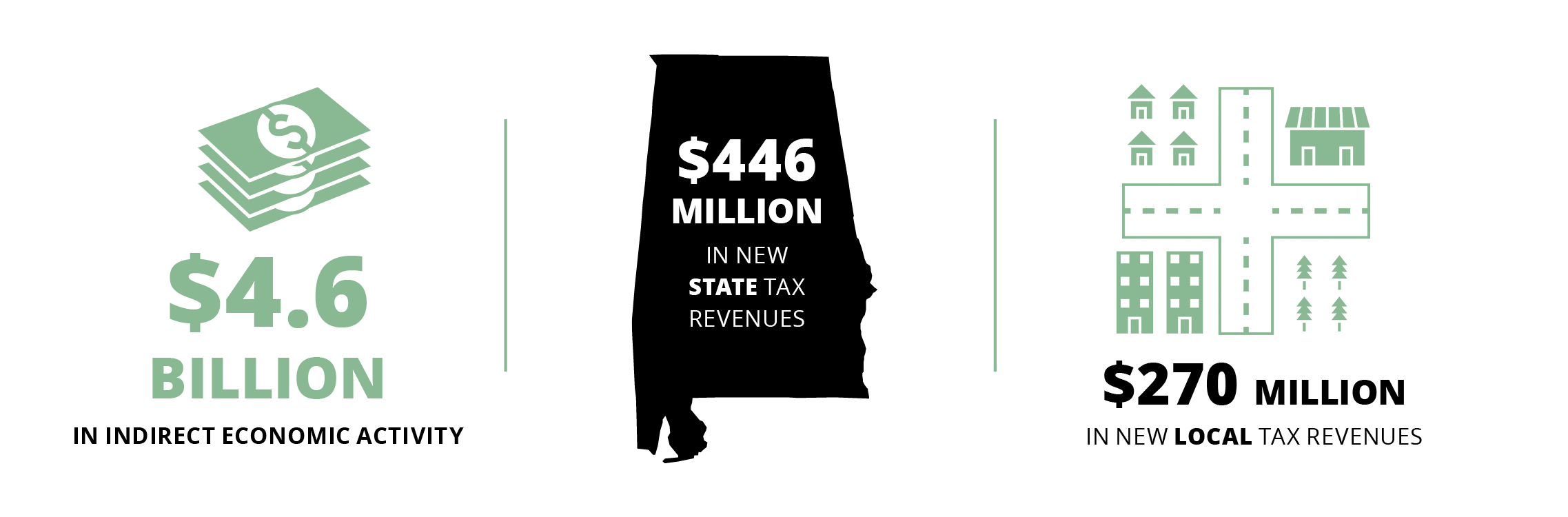
In the first four years of Alabama’s Medicaid expansion, the federal government would spend $6.7 billion for new health coverage in our state. This direct investment would yield:

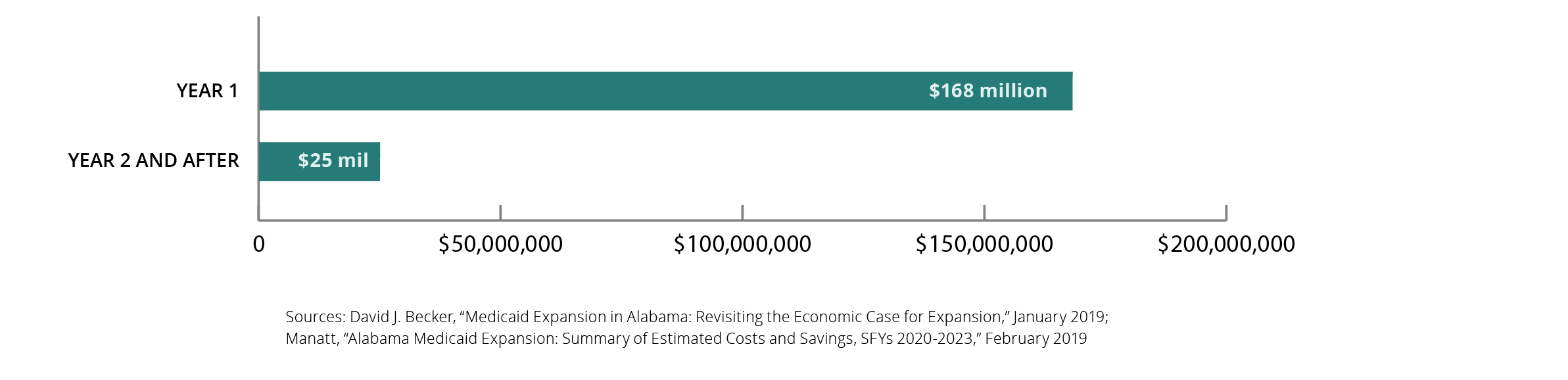
An infographic showing a direct investment of $6.7 billion for new health coverage in Alabama would yield $4.6 billion in indirect economic activity, $446 million in new state tax revenues and $270 million in new local tax revenues.Covering adults with low incomes also would save $316 million in current state health program costs. With all these gains, the net cost to the state would be:A bar graph showing that the net state cost of Medicaid expansion would be $168 million in year 1 and $25 million in year 2 and after. Sources: David J. Becker, "Medicaid Expansion in Alabama: Revisiting the Economic Case for Expansion," January 2019; Manatt, "Alabama Medicaid Expansion: Summary of Estimated Costs and Savings, SFYs 2020-2023," February 2019.

IN FOCUS

Medicaid expansion would support prison reform in Alabama

In 2019, the U.S. Department of Justice put Alabama on notice that prison violence and overcrowding will trigger federal intervention if we don’t get the problems under control. Medicaid expansion would make our corrections system more humane, restorative and cost-effective in three ways:

    1. Untreated mental illnesses and substance use disorders are major contributors to over-incarceration in Alabama. By strengthening support for these services, Medicaid expansion would reduce recidivism and help more people stay out of the criminal justice system in the first place.
    2. When a person leaves prison, it’s hard to get a job that offers health coverage. But to get and keep a job, you need to be healthy. Medicaid expansion would provide former inmates the health security they need to join and remain in the workforce.
    3. Federal funding would cover 90% of the cost of expansion. That would slash state costs for hospitalizing prisoners and free up funds for other needed investments in the corrections system.

Medicaid expansion’s biggest win: saving lives

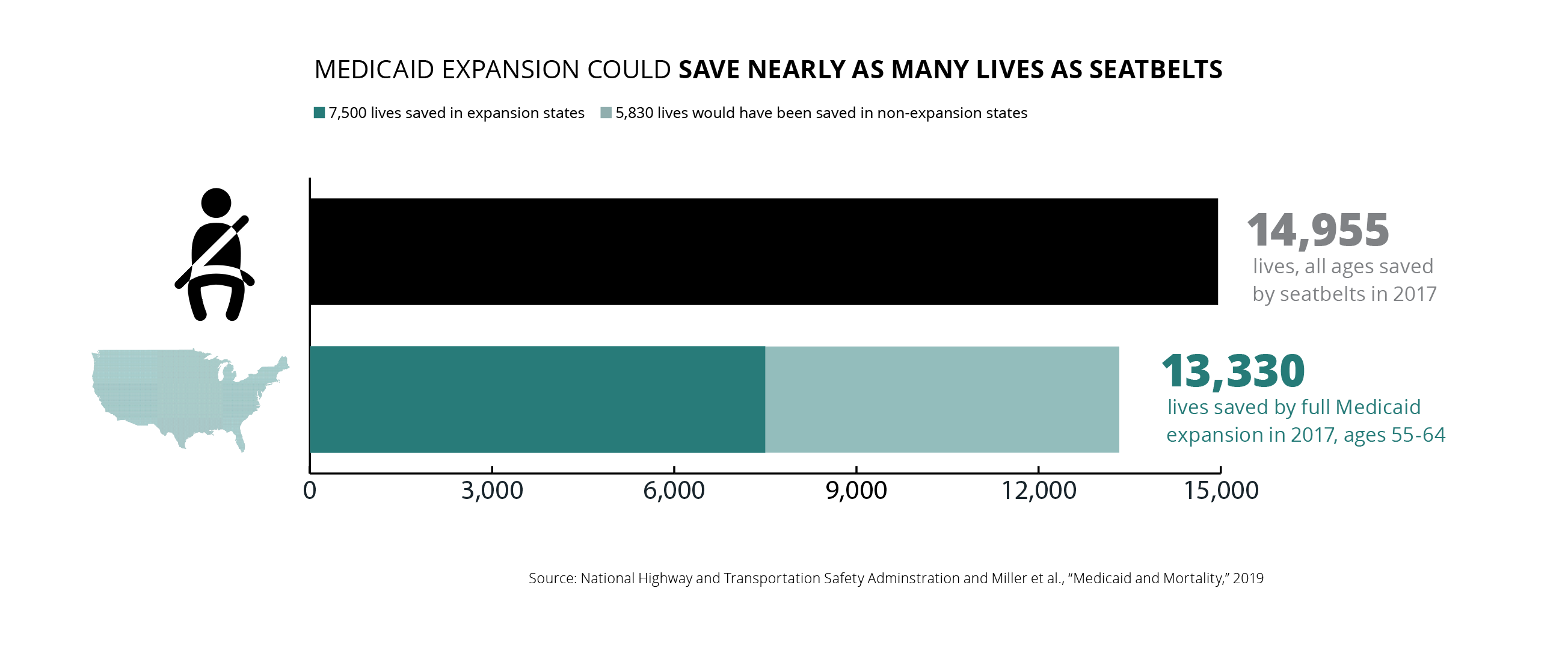
Across the country, Medicaid expansion saved the lives of at least 19,200 Americans aged 55 to 64 over the four-year period from 2014 to 2017. During the same period, 768 older Alabamians with low incomes lost their lives because they lacked health insurance. (Source: National Bureau of Economic Research, 2019)

If all states expanded Medicaid, the lives saved each year among older adults would nearly equal those of all ages saved by seatbelts.

A bar graph showing Medicaid expansion could save nearly as many lives among older adults as seatbelts save among people of all ages. In 2017, 14,955 lives of all ages were saved by seatbelts. 13,330 lives of people ages 55-64 would have been saved by full Medicaid expansion in every state in 2017. 7,500 lives were saved in expansion states, and 5,830 more lives would have been saved in non-expansion states. Source: National Highway and Transportation Safety Administration and Miller et al., "Medicaid and Mortality," 2019.


SPOTLIGHT

Meet Formeeca Tripp

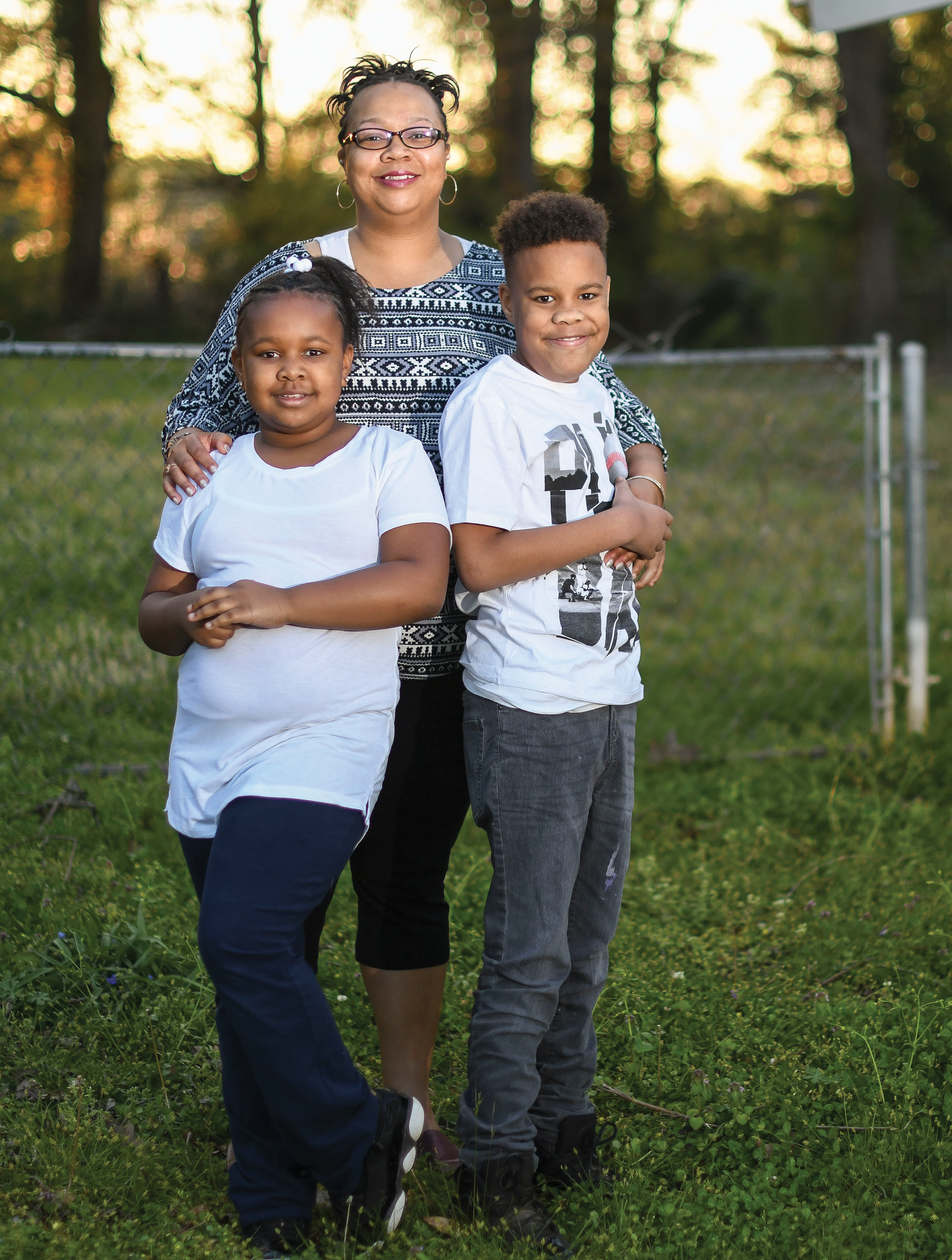
A photo of Formeeca Tripp with her two children.
Formeeca Tripp of Auburn knows firsthand the tough decisions that come with living and working in the coverage gap. (Photo: Julie Bennett)

Formeeca Tripp watched her parents struggle with diabetes and heart disease. She has made efforts to follow a new path. But it hasn’t been easy.
“I have been conditioned to put my health on pause to make sure my children are up to date with all of their health care and mental health needs,” she says.

Formeeca lives in Auburn and is the mother of two children, one of whom was diagnosed with autism. She works full-time as a behavior specialist and part-time as an Uber driver to provide them both with medication they need, sometimes at a great cost to herself. For a long stretch, she fell into the coverage gap. With all her “extra” money spent on her children’s health care needs, Formeeca found herself reporting to work with ailments such as tooth infections and pink eye.
Recently, she gained coverage through her employer’s plan, but many people she knows are not so fortunate. Speaking from her own experience, Formeeca says Alabamians who can’t afford health insurance often work in public-facing jobs.
“It’s the people who are working with the sick and elderly, working with your babies,” she said. “It’s us, out here, hands on, making food, cleaning houses — it’s that gap of people, very important people. People who come into contact with thousands of other people. And you don’t want them to be healthy?”


Medicaid Matters (Main Section)
How does Medicaid work in Alabama? (Section 1)
How is Medicaid improving coverage? (Section 2)
Who’s still left out of health coverage? (Section 3)

Medicaid expansion would improve life for all Alabamians, new Arise report shows

Expanding Medicaid to cover adults with low incomes would build on the program’s successes and save hundreds of lives every year, according to a new report that Alabama Arise released Wednesday.

Arise’s report, Medicaid Matters: Charting the Course to a Healthier Alabama, illustrates why Medicaid expansion is so critical for the state at this moment in history. Through data, colorful graphics and personal profiles, the report explores Medicaid’s crucial role in Alabama’s health care system. And it reveals how Medicaid expansion would promote racial equity and leave communities better equipped to fight the COVID-19 pandemic.

“Expanding Medicaid would save thousands of lives, create tens of thousands of jobs and help hospitals and clinics across Alabama,” Alabama Arise policy director Jim Carnes said. “As our state continues to struggle with COVID-19, it’s more important than ever for the governor and lawmakers to step up and prove they value the health and well-being of all of our residents.”

Front cover of Alabama Arise's Medicaid Matters report

Medicaid is a health care lifeline for one in four Alabamians and an economic engine for the entire state. Medicaid Matters explains the Medicaid coverage available to more than 1 million children, seniors, and people with disabilities in Alabama. It highlights improvements that new Medicaid changes are promoting in key areas like infant mortality, obesity and substance use disorders. And it shines a spotlight on more than 340,000 uninsured and underinsured Alabamians who would be covered under Medicaid expansion.

Medicaid expansion would save and transform lives across Alabama

So far, 36 states – including Arkansas, Kentucky and Louisiana – have expanded Medicaid to cover adults with low incomes. But Alabama is one of just 14 states that have not. That remains the case even though the state would get $9 in federal money for every $1 of state funding.

Medicaid expansion would bring peace of mind to thousands of Alabamians who recently lost their jobs and health insurance. And it would make life better for many uninsured people who are working on the front lines of the pandemic. This includes workers at grocery stores, hospitals, child care facilities and other essential businesses.

Formeeca Tripp, a behavior specialist who lives in Auburn, explains in Arise’s report how the health of any Alabamian is linked to the health of every Alabamian.

A photo of Formeeca Tripp with her two children.
Formeeca Tripp of Auburn knows firsthand the tough decisions that come with living and working in the coverage gap. (Photo: Julie Bennett)

“It’s the people who are working with the sick and elderly, working with your babies,” Tripp said. “It’s us, out here, hands on, making food, cleaning houses – it’s that gap of people, very important people. People who come into contact with thousands of other people. And you don’t want them to be healthy?”

Click here to read Arise’s full report. Links to each section of the report are below.

Medicaid Matters (Main Section)
How does Medicaid work in Alabama? (Section 1)
How is Medicaid improving coverage? (Section 2)
Who’s still left out of health coverage? (Section 3)
How can we make Alabama healthier? (Section 4)

You’re invited to Arise’s Town Hall Tuesdays!

Arise’s statewide online summer listening sessions are a chance to hear what’s happening on key state policy issues and share your vision for our 2021 policy agenda. Register now to help identify emerging issues and inform our work to build a better Alabama.

We’d love to see you at any or all of these sessions! Registration is required, so please register at the link under each description.

June 23rd, 6 p.m. Money talks

How can we strengthen education, health care, child care and other services that help Alabamians make ends meet? And how can we fund those services more equitably? Click here to register for this session.

July 7th, 6 p.m. Justice for all

We’ll discuss Alabama’s unjust criminal justice system – and how to fix it. Click here to register for this session.

July 21st, 6 p.m. Getting civic

How can we protect voting rights and boost Census responses during a pandemic? Click here to register for this session.

August 4th, 6 p.m. Shared prosperity

Policy solutions can boost opportunity and protect families from economic exploitation. Click here to register for this session.

August 18th, 6 p.m. Feeding our families

How can we increase household food security during and after the recession? Click here to register for this session.

September 1st, 6 p.m. Closing the coverage gap

Join the Cover Alabama Coalition to discuss how you can help expand Medicaid. Click here to register for this session.

Alabama should use federal COVID-19 relief funds to heal and protect communities, Arise and partners write

To members of the Alabama Legislature,

Alabama is struggling. Even after Governor Ivey issued an emergency stay-at-home order, the average number of new coronavirus cases continues to rise. And despite those climbing case numbers, Alabama is moving forward with reopening its economy. To accomplish a successful recovery, residents must have confidence that it is safe to be in public and workers must be able to work in safe environments without fear for their health or the health and safety of their families. We are asking that you support the following recommendations so that Alabama will use the $1.9 billion under the Coronavirus Relief Fund to heal and protect the communities who have and will continue to shoulder the high costs of this crisis.

The Alabama Legislature, in consultation with Governor Ivey, has divided these federal funds into large categories of spending. Governor Ivey now has provided a method by which you and your colleagues may request release of the funds for coronavirus-related expenditures.

We recognize that $1.9 billion is inadequate to address the long-term needs of Alabamians as the present economic crisis continues to unfold. Consequently, you and your colleagues will need to find additional revenue sources to ensure that Alabama’s economy does not weaken further and that its residents are sufficiently protected from future spikes in infections. We look forward to working with you on those longer discussions.

Our recommendations aim to provide support where it is most needed, reflecting the disparate impact of the crisis. Highly educated workers have largely been able to work from home. Low-wage and many essential workers have not. Unemployment rates are highest for workers who have less than a bachelor’s degree and are higher in our Latinx and Black communities. We have also seen the largest gender gap in unemployment, where women experience unemployment at a nearly 3% higher rate than men. Our response to the pandemic and our use of the Coronavirus Relief Funds need to heal this harm, not exacerbate the disparities that already exist.

However the taxpayer-funded payments are distributed, they must be openly accounted with reasonable but sufficient detail. In addition to public reporting of expenditures, the Department of Examiners of Public Accounts must be authorized to audit receipts and expenditures of all agencies within its purview and to request accounting from other CARES Act funding recipients.

Ensuring safe workplaces and families

As Florida and Georgia have shown, merely reopening the economy does not bring back customers or jobs. Both states have seen ongoing unemployment claims at rates higher than other states in the nation. Alabama must ensure that workplaces are safe, that workers’ families are cared for, and that state and local services are ready for people to come back before the more than 500,000 newly unemployed can return to work. These recommendations focus mostly on needs that can be met with the $300 million earmarked for supporting businesses, nonprofits, and faith-based organizations.

Working

Working outside the home brings with it the very real risk that you will become infected. The primary concern of many workers is that they will become infected on the job and, in turn, infect their family.

To make work safe, we must fund testing and contact tracing, provide protective and sanitary equipment, and create new workspaces that minimize the possibility of transmission.

High-risk and essential workplaces, such as poultry plants, warehouses, grocery stores, child care centers, nursing homes and hospitals, require repeated and random testing for workers who do not appear ill, immediate testing of anyone who has symptoms of the novel coronavirus, and contact tracing for employees, their families, and the public who have come in contact with an employee who has tested positive.

Alabama should use a portion of the $300 million earmarked for the support of citizens, businesses, nonprofits, and faith-based organizations directly impacted by the pandemic or providing assistance to those affected to provide:

  • The tests necessary for business and government agencies that have reopened;
  • Contact tracing of positive test results;
  • Personal protective equipment for employees of those business and government agencies; and
  • Increased sanitary stations within essential workplaces.

Alabama also needs to develop or adopt technical assistance on workplace safety detailing how employers test for COVID-19, use PPE, and create safer workspaces.

In exchange for providing these supplies and equipment, Alabama must require businesses to adopt paid sick leave requirements for all employees to protect other employees and the public from transmission of the virus and allow employees to get tested without fear of losing their jobs.

When allocating these funds, Alabama should prioritize supporting minority-owned and woman-owned local businesses and provide small business loans or grants to these businesses to retain employees or make workplaces safer. Minority-owned businesses received fewer Small Business Administration loans under the CARES Act, and because the business owners have less access to credit, they rely on personal funds more than white-owned businesses to finance their work.[1]

In addition, Alabama should follow Congress’ example and provide a one-time tax rebate to low-income households to assist families who are unemployed and underemployed.

Families

One of the largest hurdles for families who are prepared to go to work is finding affordable and safe child care. Approximately one in four working adults has a child under age 18 and in two-thirds of two-parent families with children, both parents work. However, not every family can afford child care. Low-income families who pay for child care spend around 35% of their income on that care. To ensure parents are able to return to work, Alabama needs to provide child care for low-income families. This includes supporting low-income families by making child care affordable and supporting child care centers that are at risk of closing.

Stable families need stable homes. While Governor Ivey’s April 3 proclamation alleviated the immediate threat of eviction and foreclosure, it does not solve the long-term problem for Alabamians unable to pay rent or mortgages now that the emergency order has expired. Many families will not be able to pay the back rent that has accumulated. About a third of low-income and nearly two-thirds of extremely low-income households in Alabama pay more than half of their income on rent and utilities every month. The total cost of rent support needed in Alabama for the duration of this crisis is estimated at a little over $1 billion.[2]

These families and their landlords urgently need rent relief. To meet this significant need, Alabama must:

  • Allocate and leverage Coronavirus Relief Fund money in coordination with other sources of federal and private housing assistance funds; and
  • Provide emergency relief, through homeless and other nonprofit agencies, for families at risk of eviction, foreclosure or loss of utility service.

Other states have already taken this important step. Montana used $50 million of the Coronavirus Relief Funds it received to provide tenant and homeowner relief. The Pennsylvania Legislature reserved $150 million for emergency rental assistance from its federal funding. Likewise, Illinois allocated $396 million of its funds for housing assistance. It reserved $100 million specifically to meet the needs of people in disproportionately impacted areas based on COVID-19 cases and $79 million for counties that did not receive direct allotments from the federal Coronavirus Relief Funds. Alabama needs to take similar steps to protect its families who rent.

These solutions do not address the overwhelming need for more affordable housing in Alabama. To address this long-term goal, Alabama needs to increase its stock of affordable housing by funding the Housing Trust Fund administered by the Alabama Department of Economic and Community Affairs.

As more Alabama families lose jobs or work hours, hunger is growing in the state. In the last week of May, the Census Bureau’s Household Pulse Survey found that over 10% of Alabama households are experiencing food insecurity–a significant increase from the first week of the crisis. Therefore, we must greatly increase our support to Alabama-based food banks that provide emergency food to hungry families.

Improving Alabama’s health

COVID-19 is exposing chronic and deadly inequities in Alabama’s health care system. The virus’s disproportionately high mortality rate for African Americans reflects deep structural barriers to health care, economic opportunity, transportation, and other assets of the common good. These same barriers have impeded the state’s response to the pandemic by limiting the delivery system for mitigation, testing, and treatment in historically underserved communities. In light of these challenges borne of both active exclusion and passive neglect, Alabama’s COVID-19 response should prioritize interventions that explicitly address health disparities.

Allocation of federal COVID-19 relief funds does not occur in a vacuum. These funds will have their biggest impact when they flow through or alongside state programs designed to provide basic protections for all Alabamians. The single biggest action Alabama can take to maximize the impact of current and future federal COVID-19 relief funding on historic health disparities in our state is to expand Medicaid. Lack of health coverage for low-income adults creates an “outsider class,” distancing many of our most vulnerable neighbors from emergency resources that could buffer the pandemic’s toll. We recognize that the state cannot use COVID-19 relief funding for the state share of expansion costs.

Thus far, Alabama has set aside $5 million to support the Department of Health and an additional $250 million to support delivery of health care and related services related to the pandemic. Alabama should use these funds to:

  • Ensure that there is adequate testing for new infections, including funding for testing supplies;
  • Provide contact tracing after new infections are discovered;
  • Supply PPE to areas that have been most impacted by COVID-19; and
  • Strengthen public health surveillance systems to facilitate rapid response to local infection upsurges as economic activity increases.

Adequate testing for the virus is the most urgent tactical need. A primary tool for targeting finite (and admittedly inadequate) resources is accurate information. The state must evaluate the extent and adequacy of testing in each Public Health District in order to prioritize additional resources for underserved districts and facilitate partnerships between local health departments, private testing providers and local community and faith groups to ensure assistance for all who need it.

Another barrier to both testing and treatment is lack of transportation, especially in rural areas. To address this concern, Alabama should appropriate a portion of COVID-19 relief funds to the Public Transportation Trust Fund to mitigate coronavirus-related drops in local agencies’ farebox recovery rates.

Safely reopening state and local services

Reopening our courts

The Alabama Supreme Court has authorized the presiding circuit judge in each circuit to continue court closures until August 15 for all courts within the circuit, including municipal courts, to preserve the safety and welfare of court personnel and the public. We would encourage delaying non-essential hearings for as long as possible, so long as the delays do not affect the rights of litigants.  However, when courts reopen, they will need to take special precautions to protect people with disabilities or with family members who are vulnerable to infection. Funding to courts should require that they develop, and make accessible, a comprehensive reasonable accommodation policy for civil and criminal cases that addresses the individual needs of lawyers, litigants, defendants, and witnesses who cannot physically come to court due to disability.

These accommodations could be as simple as continuances or remote video proceedings for people who have access to technology necessary to participate in the proceedings remotely. If remote proceedings are used, funding should be used to allow for technology that permits video to enhance credibility determinations by fact finders, that allows the introduction and viewing of documentary evidence by remote participants, and that provides access, or education about the requisite technology for participants prior to their hearing.

Alabama also should increase funding to support ADA coordinators within courts that individuals with disabilities can contact in the event that an accommodation is needed.

In addition to delaying court reopenings and taking necessary steps to protect people with disabilities, a portion of the $10 million set aside for court services should fund personal protective equipment for all people required to attend court functions, including court personnel, attorneys, witnesses, victims, and litigants. Additionally, a portion of those same funds should be used to promptly notify individuals with court dates of delays, cancellations, and rescheduled hearings. Not only should these notices be sent to individuals, but as the hours and operating conditions of the courts evolve and change, the court should ensure that the public is aware of current court policies and how people seeking emergency relief may access the courts. These notices should be prominently posted at the courthouse, online, and in any other location likely to inform the public.

Improving state services

The pandemic caused a groundswell of need for services administered by Alabama, including the Supplemental Nutrition Assistance Program (SNAP), Medicaid, Temporary Assistance for Needy Families, Unemployment Insurance benefits, and subsidized housing programs (which are primarily run at a local level). As more residents need these supports to make it through the pandemic, Alabama should prioritize the $300 million it has set aside for state agencies to increase the numbers of case handlers they employ to respond to the increased demand, provide those workers with resources they need to work from home or with the same testing and PPE that we recommend for all essential workers when they engage with the public, and collectively improve access to their services using mobile technology.

When an individual is going through a crisis or the entire state is in a pandemic, these disparate services need to be accessible in one place with minimal barriers to applying for benefits, receiving important correspondence about deadlines or reporting obligations, and communicating with case workers about the services. Applying and maintaining these services comes at a high opportunity cost to families. Currently, to apply for and communicate about each service takes hours, often at different agencies and with different case workers. That is time that people need to take care of their children, their elderly parents or neighbors, or to look for employment. Improving capacity and access now both responds to the current crisis and inoculates these agencies for future crises.

Voting

In addition to improving access to state services, Alabama must protect our citizens’ health and fundamental  right to vote. A portion of the $300 million set aside for state services should be used to provide absentee ballot applications to every registered voter or, at a minimum, allow every registered voter to request and vote by absentee ballot during the pandemic. In addition, because many voters require or prefer in-person voting, the state must work to improve the safety and accessibility of in-person voting and permit curbside voting. To ensure voters know how to vote safely during the COVID-19 pandemic, Alabama will need to increase its spending to educate voters in coordination with local election officials.

Taking responsibility for people in our custody

Alabama has both a legal and a moral responsibility for the safety and well-being of the people it incarcerates. There are tens of thousands of individuals housed in state prisons, local jails, and ICE detention facilities — all places where it is impossible to practice social distancing. To date, less than 1% of those incarcerated in Alabama’s prisons have been tested for COVID-19.

Governor Ivey with approval from the Legislature has set aside $200 million for the Department of Corrections to help meet Alabama’s moral and legal obligations during this pandemic. We recommend that Alabama prioritize its use of the funds to:

  • Release all incarcerated people who do not pose a threat to public safety, who are pregnant, and people who are at a higher risk if infected with COVID-19;
  • Assist with reentry services to enable successful reintegration for returning persons;
  • Test people in Alabama jails and prisons prior to release and while incarcerated; and
  • Provide PPE, soap, sanitizer, and other supplies necessary to maintain a safe and hygienic environment for the remaining incarcerated people and correctional staff.

The fastest way to reduce the threat of infection in jails and prisons is to test and release as many people as possible to reduce the number of people within the facilities. However, decarceration requires more than releasing someone from jail or prison. We also must prioritize a successful reentry into communities to prevent recidivism. A portion of the funds allocated for the Department of Corrections must go to increasing reentry services to ensure successful and safe transitions into the community. Particularly important to this transition are ensuring that people are tested for the coronavirus before reentering and that they are provided with the housing, employment, and medical services necessary once they are in the community. Some states have reduced their populations by nearly 20%. Alabama must do more.

In addition to expediting reentry and funding reentry services, Alabama needs to ensure that people are not set up to fail with onerous fines and fees used to fund the criminal justice system and reentry monitoring. Unemployment is already at record highs, and we know that the effects of racial bias in the hiring process increase the already negative effects of criminal records for people of color. Studies have shown that Black applicants with a criminal record had only a 5% chance of receiving a call back, less than one-third of white applicants with a criminal record. Reentering into this economy will be tough. Having paid for reentry with federal funds, Alabama should waive the fines and fees for people who are struggling to reintegrate into our communities, giving them a clean start and a better chance for success.

Even with fewer people in facilities, we will still need to dramatically increase testing of employees who work in prisons and jails and for the people who are incarcerated therein. Only four in every 100 residents in Alabama have been tested for COVID-19. Alabama has tested fewer than 1% of people incarcerated in its prisons. This is wholly inadequate to slow, let alone stop, the spread of COVID-19 within Alabama’s facilities.

Securing our children’s futures

The pandemic radically impacted education and threatens to worsen future education outcomes in Alabama for the many students who already did not have the benefit of an equitable opportunity to learn before it began. Alabama must focus its attention on addressing the inequities exacerbated by access to technology, space to learn, and caretakers to support their learning and those for whom specialized services are not available, including for students with disabilities. If it does not, the opportunity gap will widen with significant economic impacts for students and their families far into the future.

The opportunity gap experienced by low-income children and children of color begins early in life. We must intervene and use a portion of the dedicated $300 million for expenditures related to technology and infrastructure for remote instruction and learning to provide support to organizations offering early intervention programs for at-risk children so that these services can be provided safely and, as necessary, remotely.

Alabama also should prioritize the use of the $300 million to fund public schools with the highest proportion of students who are low-income children, children of color, children with disabilities, English-language learner children, children in immigrant families, children in foster care, migrant children, children experiencing homelessness, LGBTQ children, and children in the juvenile justice system. Public schools likely will need to hire additional staff, including counselors, to provide necessary education, social and emotional, and health and safety services and increase salaries to remain competitive for educators who now take greater risks to their own health and are required to master more technological skills to teach their kids.

We recognize that the $300 million allocated by the Legislature will not be enough. Additional funding could also be taken from the $250 million fund for local government expenditures directly related to the pandemic to provide these disproportionately affected school systems and their local communities with funding for after-school, summer school, and community programs for youth.

Finally, where there are competing priorities for funding, the Legislature has set aside an additional $118 million that can be used to supplement the funds required for these recommendations. If you have any questions or concerns about any of these recommendations, please contact Robyn Hyden (Robyn@alarise.org or 334-832-9060) or Katie Glenn (katie.glenn@splcenter.org or 334-531-7638).

Signatories

Sincerely,

90 Alabama organizations

ACLU of Alabama
Adelante Alabama Worker Center
AIDS Alabama
AL CURE
Alabama Appleseed
Alabama Arise
Alabama Black Women’s Roundtable
Alabama Civic Engagement Coalition
Alabama Coalition for Immigrant Justice
Alabama Coalition on Black Civic Participation
Alabama Faith Council
Alabama Institute for Social Justice
Alabama Justice Initiative
Alabama NAACP
Alabama Poor People’s Campaign
Alabama Rivers Alliance
Alabama Solutions, A Grassroots Movement
Alabama Youth and College NAACP
Amalgamated Transit Union Local 770
Auburn Unitarian Universalist Fellowship
Baptist Church of the Covenant
Bay Area Women Coalition, Inc.
Beloved Community Church
Birmingham AIDS Outreach (BAO)
Children First Foundation, Inc.
Christian Church in Alabama-Northwest Florida
Christian Methodist Episcopal Church
Church of the Reconciler, UMC (Birmingham)
Church Women United Montgomery
Citizens’ Climate Lobby – Baldwin County, Alabama Chapter
Collaborative Solutions, Inc.
Etowah Visitation Project
Fairhope Unitarian Fellowship
Faith and Works Statewide Civic Engagement Collective
Faith in Action Alabama
Fall Injury Prevention And Rehabilitation Center
First Christian Church – Disciples of Christ (Montgomery)
First Congregational Church, UCC (Birmingham)
Five Horizons Health Services
GASP
Greater Birmingham Ministries
Hispanic Interest Coalition of Alabama
Holiday Transitional Center
Holy Rosary Catholic Church
Human Rights Campaign Alabama
Humanists of North Alabama
Immanuel Presbyterian Church, PCUSA (Montgomery)
Interfaith Montgomery
Jesuit Social Research Institute
Jobs to Move America
Just Faith, Prince of Peace Catholic Church (Birmingham)
Just Faith, Our Lady of the Valley Catholic Church (Birmingham)
League of Women Voters of Alabama
Low Income Housing Coalition of Alabama
Macedonia Missionary Baptist Church (Daphne)
March of Dimes
Mary’s House Catholic Worker
Medical Advocacy & Outreach
Mission Possible Community Services, Inc.
Monte Sano United Methodist Church
Montevallo Progressive Alliance
Montgomery Pride United
National Action Network – Birmingham Chapter
National Lawyers Guild
National MS Society
Nightingale Clinic
North Alabama Conference United Methodist Women
North Alabama Peace Network
Open Table United Church of Christ
People First of Alabama
Planned Parenthood Southeast
Progressive Women of Northeast Alabama
Project Hope to Abolish the Death Penalty
Restorative Strategies, LLC
Saint Junia United Methodist Church
Shelby Roden, Attorneys at Law
Sierra Club, Alabama Chapter
Sisters of Mercy Alabama
Sisters of Mercy of the Americas
Southern AIDS Coalition
SPLC Action Fund
St. Andrew’s Episcopal Church (Birmingham)
The Empowerment Alliance
The Green Kitchen
The Right Place, Inc.
The Women’s Fund of Greater Birmingham
Unitarian Universalist Fellowship of Mobile
URGE: Unite for Reproductive & Gender Equity
Yellowhammer Fund
Youth Towers
YWCA Central Alabama

cc: Governor Kay Ivey and policy staff

[1] The SBA Inspector General found that the SBA failed to instruct lenders to prioritize underserved and rural markets [found at https://www.sba.gov/sites/default/files/2020-05/SBA_OIG_Report_20-14_508.pdf on May 27, 2020]. Disparities in lending between minority-owned and white businesses already existed as documented by the Federal Reserve Bank of Atlanta’s December 2019 Small Business Credit Survey [found at https://www.fedsmallbusiness.org/medialibrary/fedsmallbusiness/files/2019/20191211-ced-minority-owned-firms-report.pdf on May 27, 2020].

[2] Estimate from the National Low Income Housing Coalition.