
Congress should reverse SNAP cost shifts to Alabama

By Carol Gundlach, senior policy analyst | carol@alarise.org, and LaTrell Clifford Wood, hunger policy advocate | latrell@alarise.org

Grocery prices are persistently high, and many Alabamians are struggling to put food on the table. Alabama Arise believes freedom from hunger is a basic human right and has worked for decades to make food more affordable.

Arise has advocated to remove the state sales tax from groceries and to expand access to federal nutrition programs like school meals and the Supplemental Nutrition Assistance Program (SNAP), also known as food stamps. But to ensure those programs work for Alabamians, we also must ensure Congress puts the needs of the people first.

In the coming months, federal lawmakers will seek to pass a new Farm Bill. Congress should ensure this legislation reverses harmful SNAP cuts and takes other measures to reduce hunger.

Why the Farm Bill matters to Alabama families

The Farm Bill is a major act of Congress, usually passed every five years. The last full Farm Bill reauthorization came in 2018. Congress has approved several extensions since, but not a major rewrite.

While the Farm Bill provides essential aid and support for farmers, its biggest component is SNAP food assistance. The Farm Bill authorizes nearly all SNAP funding. What Congress chooses to fund through the bill will determine if many families can afford the food they need.

A U.S. House committee in March approved its version of the Farm Bill. The House could consider the bill sometime in May. If passed by the House, the Farm Bill would go to the U.S. Senate, which likely would take it up sometime this spring or summer. Alabama’s senators, Tommy Tuberville and Katie Britt, will be key players in the bill’s negotiations. Tuberville sits on the Senate Agriculture Committee, and Britt sits on the Senate Budget Committee.

Arise is urging the Senate to prioritize key SNAP reforms that the House committee’s Farm Bill neglected. The most important of these priorities is to reverse or suspend the upcoming SNAP benefit cost shift from the federal government to states.
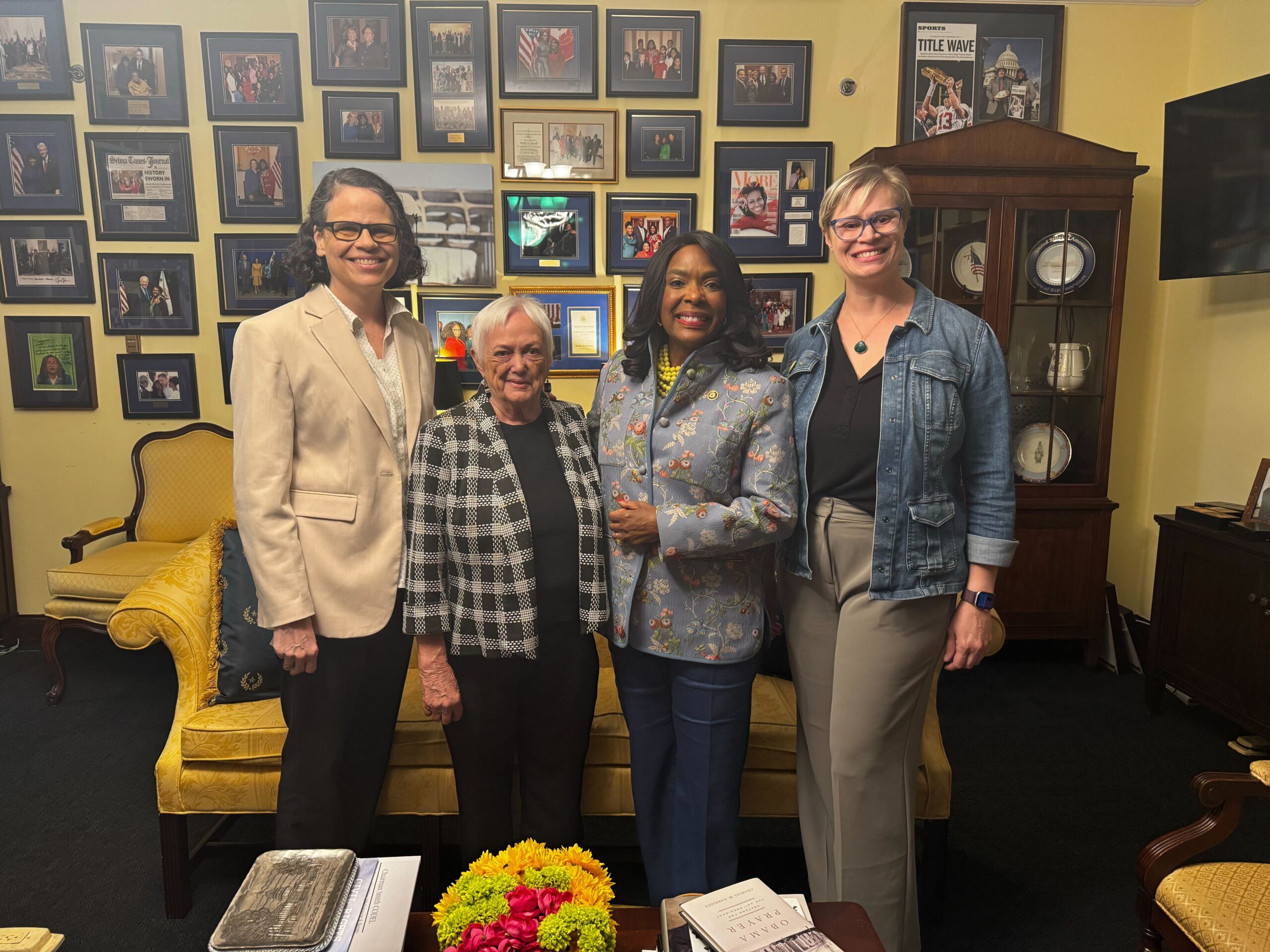
Alabama Arise senior policy analyst Carol Gundlach (second from left) joined Hunger Free Alabama allies Laura Lester from Feeding Alabama (left) and Elisa Munoz from the Alabama Sustainable Agriculture Network (right) to meet with U.S. Rep. Terri Sewell (second from right) on April 28 in Washington, D.C. The advocates urged Sewell to help delay the SNAP cost shift in the Farm Bill. (Photo courtesy of Elisa Munoz)

SNAP changes could be costly for Alabama

Congress last year passed HR 1, the so-called One Big Beautiful Bill Act. This budget reconciliation bill could result in major SNAP cuts in Alabama and nationwide.

Since the food stamp program was created 60 years ago, the federal government has covered the full cost of SNAP benefits. The federal and state governments also have divided the cost of running the program. HR 1, however, will shift more of those SNAP costs to states. The law will require most states to pay for a percentage of SNAP benefits – up to 15% for some states. HR 1 also requires states to pay for 75% of SNAP administration costs, up from the current 50%.

Unless Congress changes this requirement, Alabama will have to provide up to $261 million in additional SNAP funding in next year’s General Fund to maintain basic food assistance. Arise fears that the Legislature may be unable or unwilling to do so, with potentially devastating consequences for more than 750,000 Alabamians.

The new Farm Bill should reverse these harmful SNAP cost shifts to Alabama and other states. At minimum, Congress should delay the cost shifts to give states more time to figure out how to cover the new expenses.

What should Congress do to improve SNAP?

Congress should use the Farm Bill reauthorization as an opportunity to take other steps to make SNAP better. One big change would be to loosen or end time limits imposed on some SNAP participants who are unable to meet rigid work reporting requirements.

Most SNAP participants are children, seniors or people with disabilities. Even so, more than 1 in 3 SNAP participants in Alabama (35%) lived in households with work-based income in 2024. And overall, 5 in 6 participants (83%) have incomes at or below the poverty line. These facts point to an essential truth: Families are struggling to keep food on the table because of low wages and an affordability crisis, not unwillingness to work.

Congress can strengthen SNAP by protecting participants from a form of benefit theft known as skimming. Lawmakers should require that SNAP EBT cards have the same chip technology protections provided to credit and debit card holders.

Congress also should require the U.S. Department of Agriculture to continue publishing its annual Food Insecurity Report. This report collects critical data over time about how many Americans are hungry and how anti-hunger programs make a difference.

Arise will continue speaking out for hunger relief in Alabama

Over the next few months, Alabama Arise will make sure our senators hear our voices on the importance of SNAP. We will continue meeting and communicating with their offices and will follow up on a sign-on letter we sent to Tuberville and Britt expressing our concerns about the SNAP cost shift and its impact on state budgets. We also will keep working to bring more business leaders and allies into the conversation.

We will be asking you, our members and supporters, to raise your voices on the importance of SNAP for our families and communities. Please watch for Arise action alerts, and please share your thoughts and concerns with your members of Congress.

Healthcare, food aid still may be at risk of further federal funding cuts

Healthcare and hunger relief programs may avoid further harmful federal cuts this year. But Alabama Arise members should remain vigilant and keep speaking out against proposed cuts, both now and in the future.

Congress is moving quickly on a budget reconciliation bill, with leadership aiming to pass it by June 1. Senate Republicans on April 21 introduced a proposal that excludes spending cuts and narrowly focuses on funding for ICE and the Border Patrol. However, we worry that other lawmakers may push for cuts to health coverage or food assistance. This could put healthcare and food access at risk for millions of Americans, including here in Alabama.

Budget reconciliation bypasses the Senate filibuster and allows legislation to pass with a simple majority. This means decisions with far-reaching consequences could move quickly, with limited opportunity for debate or compromise. This is the same process used last year to make major nationwide cuts to Medicaid and the Supplemental Nutrition Assistance Program (SNAP), also known as food stamps, under HR 1, the so-called One Big Beautiful Bill Act.

Further cuts would hurt those with greatest needs

Medicaid plays an important role in providing health coverage to those who need it most in Alabama. The program primarily serves children, seniors, people with disabilities and pregnant women. Alabama already operates one of the country’s most bare-bones Medicaid programs. Our program has little to no room for cuts without directly impacting people who rely on it for life-saving care.

Because we have not yet expanded Medicaid to cover adults with low incomes, Alabama largely avoided major Medicaid cuts under HR 1. While that softened the immediate impact, it also means further cuts would fall squarely on Alabamians with the greatest needs. That includes children who rely on routine care, seniors in nursing homes, and individuals with disabilities who depend on consistent treatment and support.

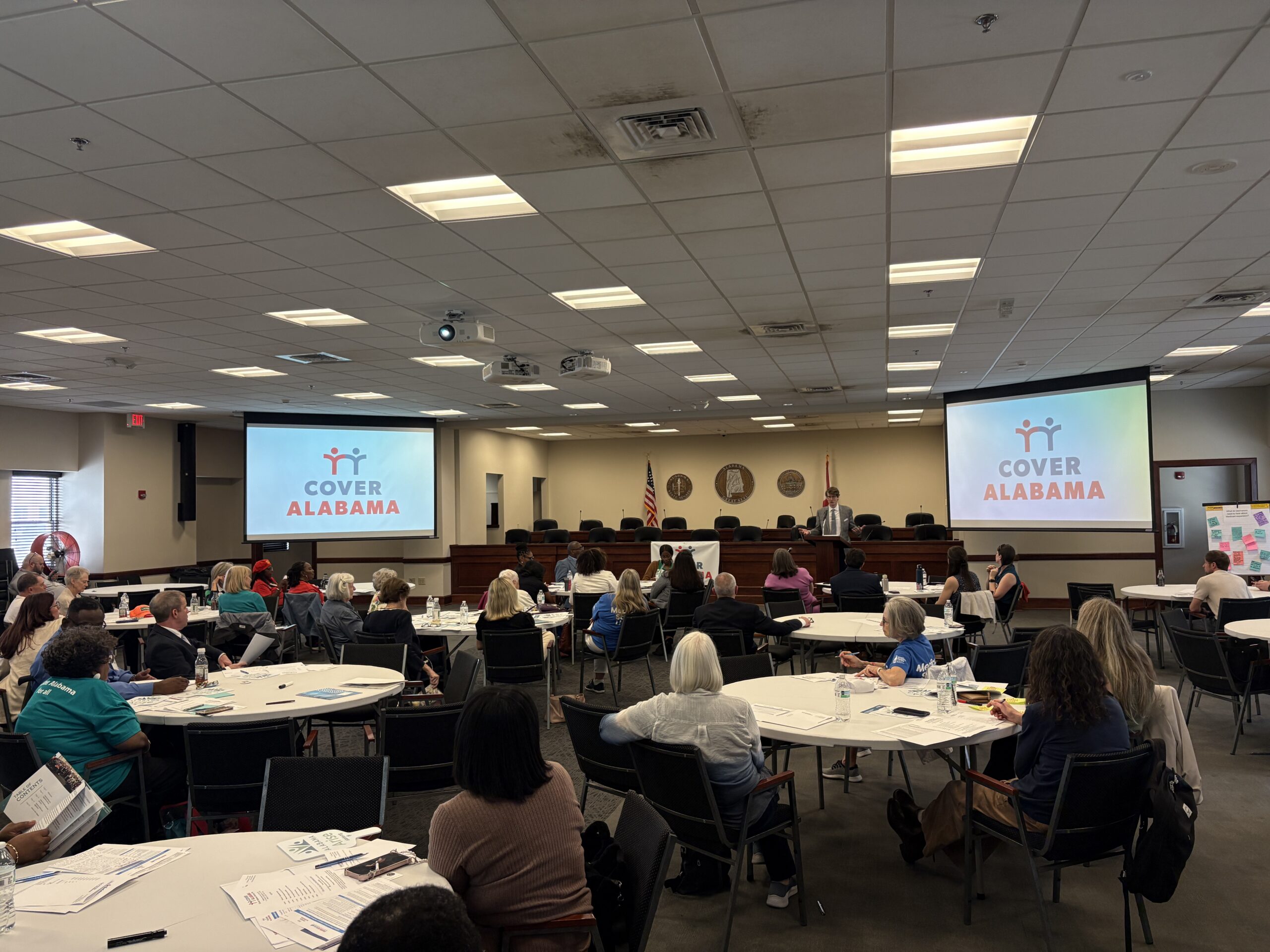
Cover Alabama Advocacy Day attendees gather for a workshop session to discuss challenges and solutions for Alabama’s healthcare system. (Arise staff)

Alabama’s healthcare system is under strain

Other parts of the healthcare system are also under strain. Congress allowed enhanced Premium Tax Credits for Healthcare.gov coverage to expire in December, making Marketplace plans under the Affordable Care Act (ACA) more expensive. At least 20,000 fewer Alabamians enrolled in these plans in 2026 as a result. Many who enrolled had to select a lower-quality plan with higher out-of-pocket costs to stay insured.

This increase in the uninsured and underinsured population harms our whole healthcare system. Hospitals, especially in rural areas, face growing financial pressure as they provide care to more uninsured patients while receiving less reimbursement.

These challenges are interconnected. When people lose coverage, they often delay care until conditions worsen. That leads to more serious health issues and higher costs down the line. Hospitals absorb much of this burden. And in communities where margins are already thin, this can threaten access to care for everyone. More cuts to Medicaid or ACA coverage would only deepen these problems.

Your voice matters

This is a critical moment. Congress is acting quickly, and the outcome will have lasting consequences for Alabama families and communities. That is why your voice matters right now. Lawmakers need to hear directly from you about the importance of protecting access to food and healthcare.

Please take action today. Contact your members of Congress and tell them to oppose any cuts to food assistance, Medicaid and ACA coverage. The health and well-being of our communities depend on it.

‘Resilient communities begin with healthy people, period’

A smiling man in a black shirt and black hat.
Warren Tidwell works as a disaster rebuilding and recovery organizer in rural communities like Parrish in Walker County and Camp Hill in Tallapoosa County. (Photo courtesy of the Alabama Center for Rural Organizing and Systemic Solutions)

Warren Alan Tidwell has spent years doing work that depends on trust. He does the slow, often unseen work of bringing people together across differences after an emergency.

“There’s very few men like me who aren’t a part of marginalized communities that have the ability to work across working-class lines, between white folks and Black folks, trans folks, queer folks, whatever,” Tidwell said. “And it’s built on 25 years of experience working in places like Ghana and Haiti, but most importantly, right here in rural Alabama.”

Warren is originally from Walker County, just west of Birmingham. But in recent years, he has centered his organizing work on disaster relief and recovery in Camp Hill in Tallapoosa County.

The work became more challenging after a powerful hail storm and flooding hit the small east Alabama town in March 2023. Since then, Warren has tarped roofs, rebuilt everything you can imagine and gathered resources as the town continues to recover.

“It’s not my job to lead, but it’s my job to help draft leaders, you know, build them up and get the hell out of their way,” he said.

Chronic pain that keeps getting worse

Warren said his approach as executive director of the Alabama Center for Rural Organizing and Systemic Solutions (ACROSS) focuses on helping communities grow their own leaders and solve problems together. Step one is getting people what they need. That’s tough to do without a grocery store or doctor in town.

And lately, the work has become even harder to keep up for personal reasons. Warren’s health is getting worse, and he can’t afford healthcare. He’s facing several health issues, often on his own and with no treatment. One of those is a hernia he has had for two years.

“It’s umbilical,” he said. “If it was inguinal, I’d have had to figure something out by now.”

Without health insurance, Warren has put off surgery and is trying to manage the pain day by day. But that keeps getting harder.

“If I keep on this rotation of NSAIDs and Tylenol, man, it’s just going to ruin my stomach and my liver,” he said.

Warren also recently has been facing headaches caused by trigeminal neuralgia. The pain wears on him.

“Chronic pain is what I’ve always feared, because I know it’s something I struggle with tremendously,” he said.

For Warren, that means not being there for a town that counts on him.

“My wife’s a schoolteacher, but her employer doesn’t offer [spousal coverage],” he said.

Warren went onto healthcare.gov to find coverage in the Marketplace, but he found no affordable plans available for him. He said his monthly premiums would’ve cost him nearly $800 out of pocket.

“Then the federal cut in tax subsidies cut me out of being able to afford it,” he said. “And because our nonprofit needs better funding, I can’t even keep the folks working for me in health coverage, least of all myself.”

Lack of healthcare limits workforce development

Two men smile and embrace for a posed photo.
Warren Tidwell and Tommy “Pops” Sellers (left) worked together after a powerful 2023 hail storm in Tallapoosa County to set up a logistics network that still serves the people of Camp Hill. (Photo courtesy of Warren Tidwell)

Recent federal changes have made things even more difficult. Policies tied to the One Big Beautiful Bill Act have reduced access to affordable coverage for many people with low or middle incomes. That makes it even harder for people like Warren to get the care they need.

Warren spends every day investing in the people living in rural Alabama, and he said he wonders why the federal or state governments can’t do the same. He said lack of affordable health coverage isn’t just about being sick and skipping care for himself. It is also is limiting what organizations like his can do from a workforce development perspective.

“These are self-fulfilling prophecies,” he said. “If you can’t offer healthcare, people are going to have to sacrifice a lot just to be a part of that. Two people who work with me moved here from out of state to do this work. I don’t know if anyone would make that leap now.”

In rural places like Camp Hill, those struggles are easy to see — especially during disaster recovery. But as prices rise and wages stagnate for more Americans, Warren said rural Alabamians feel even more disenfranchised and alienated.

Lack of healthcare access affects entire communities. When people can’t get care, it weakens the systems meant to support everyone, Warren said.

“We have a number of seniors who are disabled on fixed incomes,” he said. “When prices go up, it affects every aspect of their life. They have no agency to take part in any kind of recovery.”

Investing in communities before it’s too late

Warren said he believes healthcare is the starting point for strong communities.

“Resilient communities begin with healthy people, period,” he said. “How can you help create opportunities and solve issues for other people when you’re trying to navigate the complexities of those issues yourself?”

For Warren and his organization, the stakes are rising. Without new funding to help cover costs (including health insurance for him and his staff), the work may not last much longer.

“If it gets worse with all of this health stuff, I mean, they’ll have to replace me,” he said. “If we’re not able to get the kind of funding we need by end of summer, we’re shutting down. I’ve got to take a job that I can get myself some insurance to take care of my health issues.”

What’s happening to Warren isn’t unusual. It’s the result of policy choices.

Alabama’s leaders often talk about investing in rural healthcare and economic development. But Warren’s situation shows a problem: Many of the people doing this work can’t afford to stay healthy enough to keep doing it.

Expanding Medicaid and renewing enhanced Premium Tax Credits for Marketplace coverage would be a good start. These investments in a healthier future would help Alabamians like Warren get the care they need. And they would make it easier for nonprofits like ACROSS to stay afloat.

In Camp Hill and rural communities across Alabama, the question is simple: Will policymakers invest in the people holding these communities together… before that work disappears?

About Alabama Arise and Cover Alabama

Whit Sides is the storyteller for Alabama Arise, a statewide, member-led organization advancing public policies to improve the lives of Alabamians who are marginalized by poverty. Arise’s membership includes faith-based, community, nonprofit and civic groups, grassroots leaders and individuals from across Alabama. Email: whit@alarise.org.

Arise is a founding member of the Cover Alabama coalition. Cover Alabama is a nonpartisan alliance of advocacy groups, businesses, community organizations, consumer groups, health care providers and religious congregations advocating for Alabama to provide quality, affordable health coverage to its residents and implement a sustainable health care system.

2026 Alabama election guide and candidate questions

2026 election questions

Where do candidates stand?

Meeting and talking with candidates as they campaign for your vote helps shape the conversation and let them know which issues are most important to their constituents. Below are some questions you can ask and info you can share when meeting candidates. Please let us know what you hear back!

Click here to download this resource as a PDF.

Funding public services

Alabama’s tax system is upside down. People with low incomes pay a higher share of their income in state and local taxes – double the amount paid by wealthier Alabamians. Alabama gives tax breaks and incentives to wealthy individuals and large corporations that are not accessible to low-income families and small businesses.

Alabama is the only state still providing the outdated federal income tax deduction, which costs our state $1.3 billion in lost revenue every year and overwhelmingly benefits the wealthiest households. At the same time, when Arise proposes policy solutions to help folks get ahead, we often hear lawmakers claim the state doesn’t have enough money.

Congress last year passed HR 1 (aka the One Big Beautiful Bill Act), which will cut $1.5 trillion from services like healthcare and food assistance to give more tax breaks to billionaires and highly profitable corporations. Because of this cut, Alabama may need to pay up to $261 million in additional state money to fund SNAP in 2027.

Questions for legislators or statewide candidates: Would you support getting rid of the outdated federal income tax deduction, which costs Alabama more than $1 billion a year and mostly helps wealthy households, while also ending the state grocery tax to help everyone? If not, what is your plan to untax groceries sustainably and responsibly?

Alabama is one of three states with no state dollars set aside for public transportation, and one of five with no funds directed toward affordable housing. Would you support providing dedicated state funding for affordable housing through the Alabama Housing Trust Fund, and for transportation through the Public Transportation Trust Fund?

Question for congressional candidates: Will you work to repeal the harmful spending cuts in HR 1, particularly Medicaid and SNAP cuts that will hurt Alabama for decades?

Health equity

Rural hospitals across Alabama face ongoing financial strain. More than 1 in 3 Alabama counties offer no maternity care services. Around 160,000 Alabamians fall into the health coverage gap, earning too much to qualify for Medicaid but too little to afford private insurance. The income limit for a single parent with two children to qualify for Medicaid is just $410 a month. That leaves many working families without affordable health coverage.

Questions for legislators or statewide candidates: Do you support Medicaid expansion to keep rural hospitals open, reduce maternal and infant mortality, help families afford healthcare and help low-wage workers stay healthy enough to work? If not, what is your specific plan to stabilize rural hospitals and improve healthcare?

Questions for congressional candidates: Will you pledge to repeal the $1 trillion in Medicaid cuts passed in HR 1, protect Medicare and make health insurance more affordable?

What will you do to hold healthcare corporations accountable for high costs?

Hunger relief

More than 750,000 Alabama families use SNAP to help put food on the table. In 2025, Congress enacted HR 1, aka the One Big Beautiful Bill Act, which will shift more SNAP costs onto states. Alabama may have to pay an additional $175 million next year just to ensure families continue to receive SNAP benefits.

About 1 in 6 Alabamians struggle with food insecurity, including more than 1 in 5 Alabama children. One positive step Alabama has taken in recent years is expanding no-cost school breakfast to more classrooms with increased state funding. We would like to expand this program to every school.

Questions for legislators or statewide candidates: Will you pledge to find new revenue to protect SNAP funding in next year’s state budget? Will you pledge to expand funding for no-cost school breakfast and lunch programs?

Questions for congressional candidates: Will you help families put food on the table by fighting to protect SNAP funding and roll back cuts to SNAP in HR 1? If not, what is your proposed solution to reduce hunger?

2026 election information

Key dates for the 2026 elections

Primary election: Tuesday, May 19, 2026

  • May 4 is the voter registration deadline for the primary election.
  • The election manager must receive absentee ballot applications by May 12 (by mail) or May 14 (in person).
  • Completed absentee ballots must arrive at the election manager’s office by May 18 (if hand-delivered) or by noon on May 19 (if returned by mail).

Runoff election (if necessary): Tuesday, June 16, 2026

  • May 29 is the deadline to hand-deliver a voter registration form for the runoff. June 1 is the deadline to register online or postmark registration forms delivered by mail.
  • The election manager must receive absentee ballot applications by June 9 (by mail) or June 11 (in person).
  • Completed absentee ballots must arrive at the election manager’s office by June 15 (if hand-delivered) or by noon on June 16 (if returned by mail).

General election: Tuesday, Nov. 3, 2026

  • Oct. 19 is the voter registration deadline for the general election.
  • The election manager must receive absentee ballot applications by Oct. 27 (by mail) or Oct. 29 (in person).
  • Completed absentee ballots must arrive at the election manager’s office by Nov. 2 (if hand-delivered) or by noon on Nov. 3 (if returned by mail).

What to know about voter registration and absentee voting

  • Alabama’s voter registration deadline for the 2026 primary election is May 4. For the runoff election, the deadline is May 29 (hand delivery) or June 1 (online or postmarked by mail). For the general election, the deadline is Oct. 19.
  • These deadlines are both for new voters to register and for current voters to update their information if they have moved to another location within Alabama.
  • People who have faced domestic violence, or guardians of people who have faced domestic violence, may submit a form to protect their residential and mailing addresses from appearing on the public list of registered voters.
  • Alabamians are not officially registered to vote until their county board of registrars reviews and approves their application.
  • Alabamians applying for an absentee ballot must certify that they cannot vote in person on Election Day for a reason allowed under state law. Those reasons include absence from the county on Election Day or an illness that prevents a trip to the polling place.
  • Visit alabamavotes.gov to learn more about voter registration and absentee voting.

What to know for the elections

  • Polls will be open from 7 a.m. to 7 p.m. on Election Day. If you’re a registered voter in line by 7 p.m., stay in line! You’ll be allowed to vote.
  • A valid photo ID is required to vote. Visit alabamavotes.gov to learn more.
  • Alabamians can vote in either the Democratic or Republican primary, but not both. Both ballots will include proposed constitutional amendments.
  • State law forbids “crossover voting” in runoff elections. If a runoff election is necessary in June, people who vote in the Democratic primary will be able to vote only in a Democratic runoff, and people who vote in the Republican primary will be able to vote only in a Republican runoff. Voters who participate in neither party’s primary can choose to vote in either party’s runoff.
  • The crossover voting rule does not apply to the general election in November. Voters may vote for whomever they wish in the general election, regardless of which primary (if any) they participated in earlier in the year.
  • Voters’ party choice for this year’s primary election does not bind their choice for future primaries.
  • Visit alabamavotes.gov to check your voter registration and polling place, find sample ballots by county and more.

Alabama should expand healthy food access. SB 57 isn’t the answer.

Alabama should not be in the business of telling people what to eat simply because they have low incomes. But SB 57 proposes to do just that. The bill would limit food choice for participants in the Supplemental Nutrition Assistance Program (SNAP), also known as food stamps, by forbidding the use of SNAP benefits to purchase candy or soft drinks.

SB 57 would stigmatize Alabamians with low incomes. It would do nothing to remove the structural barriers that limit access to healthy food for many families. And it would cost state agencies millions of dollars.

The bill would require Alabama to apply to the federal government for an exemption (or waiver) from the standard definition for SNAP-eligible foods under federal law. Twenty-two other states have received similar waivers. Now, five consumers are suing the U.S. Department of Agriculture (USDA), which administers SNAP, over the waivers it approved for five states. The plaintiffs argue that such waivers could narrow the definition of food without considering factors that can lead to infrastructural blockades to food access beyond the control of individuals. 

Alabama Arise members set our legislative agenda, and they voted overwhelmingly for us to oppose proposals, like SB 57, that limit the purchasing choices of Alabama families. We urge lawmakers to vote “no” on SB 57 and invest instead in no-cost school breakfast, Double Up SNAP Bucks and other policies that actually would advance health and nutrition for people across our state.

Read my testimony against SB 57 before a House committee for more on why Arise opposes this bill.

What this bill would do – and what we could do instead

SB 57 would penalize and patronize Alabamians with low incomes based on a false narrative about the factors that drive public health. It would limit food choice for hundreds of thousands of consumers, with no consideration for their individual circumstances. And it would force our state to pay millions of dollars to do so.

The Legislative Services Agency estimated that SB 57 would saddle taxpayers and state departments with a $10.6 million cost. In return, the state would increase complexity for retailers and leave many families at risk of seeing lower food access in their communities through no fault of their own.

As Rep. Laura Hall, D-Huntsville, asked during the House committee debate on the bill: “If we’re having a large amount of money to spend, wouldn’t it make sense that we would be providing an opportunity for eating healthier?” Here are three examples of things Alabama could do instead with that $10.6 million to improve healthy food access:

  • Use the same $10.6 million to help ensure that every Alabama public school student has access to a no-cost school breakfast. Alabama has shown more growth in fourth-grade math than any other state since 2019, according to the Public Affairs Research Council of Alabama (PARCA). We have seen access to no-cost school meals nearly double in the same period.
  • Increase the capacity of the Double Up Bucks program, which incentivizes fresh produce purchases for SNAP participants and supports our local farmers. State budgets for 2027 do not yet include funding for this program.
  • Restore funding for SNAP-Ed, a program that was cut by HR 1. SNAP-Ed provides free learning opportunities for SNAP participants about how to shop for and prepare healthy meals.

How SB 57 could harm the economy and send SNAP costs soaring

Instead of making important investments to improve food access, SB 57 would add red tape for retailers across our state. The bill includes a three-strike rule, which would allow retailers only three accidental acceptances per fiscal year before any “punishment,” as administered by the USDA Office of Retailer Operations and Compliance.

This provision could threaten revenue losses for 5,000 SNAP-authorized retailers across Alabama. It could even jeopardize the ability for many stores to accept SNAP or EBT altogether.

How SB 57 could increase SNAP costs and harm older adults in Alabama

In addition, SB 57 could increase the harm that Alabama faces as a result of HR 1, the so-called One Big Beautiful Bill Act – or what I call one hell of an ugly bill. Alabama will have to appropriate an estimated $174 million or more to address HR 1’s shift of SNAP benefit costs to states, based on error rates. If the state does not allocate those matching funds, SNAP benefits could be reduced or disappear entirely for more than 750,000 participants across Alabama.

Often mistaken as a measure of fraud, the error rate is determined using a USDA assessment of a sample of 1,000 SNAP-eligible households per state. USDA staff calculate the number of underpayments or overpayments made to SNAP users by the state agency managing SNAP. In Alabama, that agency is the Department of Human Resources (DHR). This bill would divert some of DHR’s attention away from efforts to reduce the error rate in the name of an experimental pilot program over which several other states are suing the USDA. The risks of this experiment would include increased SNAP costs and potential litigation costs.

We know that food-insecure seniors who participate in SNAP are 46% less likely to be hospitalized than non-participating seniors with low incomes. This bill puts that access at greater risk. We also know that SNAP participants eat a better diet, more frequently access preventative health care, adhere to medication, experience fewer hospitalizations and ER visits, and have lower health care costs for older adults.

Why would SB 57 not really address health? Access to healthy food is a structural issue 

On the surface, it might seem as though SB 57 would improve the health of Alabamians with low incomes. Some legislators referenced obesity as a sort of flat concept, solely correlated to soft drinks and candy. However, getting to the root of a public health issue is almost never that simple.

When you think of SB 57, I want you to imagine getting in a car and expecting to drive to France from Florence, Ala. Would you make it there? No. Why? Because the built world, or infrastructure around you, does not support the vehicle. The same is true for communities that have limited food access due to factors like affordability and transportation.

SB 57’s definitions draw many arbitrary lines. Most chewing gum, for example, is sweetened with Aspartame instead of sugar, so it still would be SNAP-eligible based on SB 57’s current text. And more to the point, making some foods more unaffordable does not make other food more affordable.

‘Do not legislate dignity away from Alabamians’

Some legislators, including Rep. Pebblin Warren, D-Tuskegee, said they found the bill patronizing in principle. “I see this really as a discrimination against SNAP recipients,” Warren said during a House committee discussion of the bill.

Rep. Napoleon Bracy, D-Mobile, emphasized the cost vs. the benefit of the bill in its current form. “I just don’t understand why we have to always legislate things all the way down to a person’s grocery basket as if it’s really going to fix a major overall obesity problem,” Bracy said.

Sen. Robert Stewart, D-Selma, said protecting food choice for SNAP participants is a matter of fundamental respect. “It’s important … that we do not legislate dignity away from Alabamians,” Stewart said.

Ultimately, members of the House Ways and Means General Fund Committee approved the bill on March 18. But the decision came only after an agreement not to schedule a House vote on it until many members’ concerns are resolved.

“[We are simply] not ready … to move forward on this,” said Rep. Rex Reynolds, R-Huntsville, who chairs the committee. “There’s just too many issues. We’re seeing lawsuits in other states. A lot of that’s got to do with the administrative ability to move this bill forward.”

Who might SB 57 impact?

  • Alabamians with low incomes
  • Retailers across Alabama, especially in small towns and rural areas
  • DHR and other state agencies
  • Potentially anyone who buys candy or soda

What should our legislators do instead?

To get to the root of the problem of healthy food access, we must start by asking the real questions:

  • Why do some Alabamians struggle to access healthy food?
  • Why do some Alabamians lack the resources to eat healthy?
  • What policy choices underlie poverty in Alabama?
  • Why are legislators not incentivized to improve the common good?

Many of our legislators unfortunately are not asking and working to answer these questions. But in the meantime, they still can do better.

Lawmakers should vote “no” on SB 57 and use any additional funds to support a full $14 million appropriation to provide a no-cost school breakfast for every child in Alabama’s public schools. We know that since 2019, access to no-cost meals has doubled in Alabama. In that time, reading and math scores across the state have improved for children across all household income levels.

Greater access to school meals helps improve student behavior and learning and reduces absenteeism, reducing the risk of incarceration. With streamlined funding for school breakfast local school districts have less paperwork and administrative costs. Moreover, continuing and increasing state investment in access to no-cost school breakfast supports local farmers and helps schools serve more local produce.

We must remove barriers to food access for Alabama communities

As an undergraduate student at Stillman College, I helped to co-found a sustainable healthy food initiative in west Tuscaloosa, because my campus was situated in what some social scientists call a food desert. Food Insecurity is not natural, but it is determined by your environment.

The intentional separation of people from resources is the result of a built world that does not support the presence of those resources. Before the 1960s, Stillman was a farm worked by students from the Black Belt, because no one would sell food to The Colored Institute.

As an Academic Scholar on a full-ride scholarship, it was my first time having access to breakfast, lunch and dinner in many years, so I work to repay that. Frankly, It is disrespectful to leverage the desperation that communities face as a result of our built world to pass harmful legislation like SB 57. Our lawmakers can and should do better for Alabama.

Alabama Arise testimony in opposition to SNAP food choice limits

Alabama Arise hunger policy advocate LaTrell Clifford Wood testified Wednesday before the House Ways and Means General Fund Committee in opposition to SB 57 by Sen. Arthur Orr, R-Decatur. SB 57 would restrict which foods can be bought in Alabama with food assistance benefits under the Supplemental Nutrition Assistance Program (SNAP). Here is the full text of Clifford Wood’s prepared remarks:

Mr. Chairman and esteemed committee members, my name is LaTrell Clifford Wood, and I am a hunger policy advocate with Alabama Arise. I am also an appointee to the Joint Study Commission on Grocery Taxation.

Alabama Arise is a member-based organization, and our members voted strongly for us to oppose SB 57. We support policies to improve the health of low-income people and to expand access to food and health care. However, those goals are not achieved by a bill that comes with sanctions for people experiencing poverty and unclear costs for our state.

It is government overreach for Alabama to be in the business of telling people who are living in poverty what to eat. This bill would not achieve its stated ends, nor was its introduction supported by any research about consumer behavior.

People on SNAP have similar purchasing habits to the average consumer. And while SNAP is the most effective program this nation has seen when it comes to addressing hunger, it is a modest program. SNAP benefits average $6 a day, meaning they only supplement grocery budgets. This bill would increase state costs, as well as increase the tax burden on low-income households, without making any investments to improve consumer access to healthy food.

Since it was introduced, SB 57’s estimated cost to taxpayers has increased to $10.4 million. It also threatens to undermine vital steps we have taken toward eliminating the state sales tax on food.

To put that cost in perspective, $10 million is 21 times the amount lawmakers annually allocate to increase access to fresh produce and support local farmers through SNAP incentives like Double Up Bucks. And it is more than enough to ensure every public school student in Alabama can access a no-cost school breakfast. Both of these policies are proven to improve the long-term health of Alabamians. 

I ask that you vote no on this bill. Do not resort to experimenting on our low-income communities. Let’s focus on stabilizing SNAP under the state cost shift. I am open to meeting with any of you all to discuss how we might improve access to healthy food, and I thank you for your time.

2026 Legislative Day – Close the health coverage gap: Enact policies to save lives in Alabama

No one should have to choose between going to the doctor and putting food on the table. But for more than a decade, Alabama lawmakers have turned down the opportunity to expand Medicaid to cover adults with low incomes. This choice has cost lives, weakened our health care system and left billions of federal dollars unused.

Alabama still urgently needs Medicaid expansion to help more people get care and to keep hospitals and clinics open across the state. Unfortunately, while expansion remains essential, HR 1, the so-called One Big Beautiful Bill Act, has made financing more challenging and has increased the need for sustainable funding solutions.

Federal policy changes are reshaping Medicaid financing

Alabama remains one of only 10 states yet to expand Medicaid. As a result, hundreds of thousands of Alabamians are caught in the state’s coverage gap, earning too much to qualify for Medicaid but too little to afford Marketplace insurance subsidies.

HR 1 eliminated a two‑year increase in the federal Medicaid match rate that would have brought Alabama an estimated $619 million in exchange for expanding coverage. This incentive would have been enough to cover at least the first two years of Medicaid expansion. Without it, expansion will cost more and will require identifying new, sustainable financing sources.

Provider tax changes create more budget constraints

HR 1 also restricts how states can use provider taxes to finance Medicaid. Under the law, Alabama would be required to reduce provider tax collections if it expanded Medicaid. This could result in the loss of more than $100 million annually in health care revenue. Alabama Arise will continue making the case that lawmakers should not pit current Medicaid enrollees against people who need coverage but cannot afford it.

Healthcare.gov enrollees face higher costs after the end of enhanced tax credits

Congress allowed enhanced Premium Tax Credits (ePTCs) for Marketplace coverage under the Affordable Care Act to expire on Dec. 31. This lapse left nearly 500,000 Alabamians facing steep increases in their monthly premiums. Early 2026 enrollment data from CMS shows that 20,000 fewer people selected Marketplace plans this year. We will not know the full number of people who have lost coverage until July, but the growing affordability crisis makes Medicaid expansion even more critical.

Persistent gaps in health coverage and outcomes

Nearly 200,000 adults remain stuck in Alabama’s coverage gap, and that number is expected to grow. Alabama also continues to rank poorly on key health outcomes, including maternal health and infant mortality. These harsh realities underscore the need for comprehensive coverage solutions.

Sustainable revenue options to fund Medicaid expansion

Even with the loss of the federal incentive, Alabama has multiple viable revenue options that can fully fund Medicaid expansion and strengthen the state’s long‑term fiscal stability. Earlier revenue analysis provides several pathways. These include:

1. Remove the state deduction for federal income taxes

Removing the state deduction for federal income tax (FIT) payments would generate $1.26 billion per year. Alabama is the only state that still allows a full FIT deduction. Eliminating it would modernize the tax code and generate enough revenue to:

  • Fully fund Medicaid expansion.
  • Pay the state share of costs for SNAP food assistance benefits.
  • Remove the remaining state sales tax on groceries.

2. Remove the state deduction for FICA payroll taxes

Removing the state deduction for FICA payroll taxes would generate $387 million in revenue per year. Alabama is one of the only states offering a full FICA deduction. Ending it would broaden the tax base and provide stable, recurring revenue for Medicaid and other essential services.

3. Other revenue options

  • Increase the cigarette tax.
  • Adopt a tax on sugar‑sweetened beverages.
  • Close corporate tax loopholes, including adopting combined reporting.
  • Ensure large landowners pay a fairer share of property taxes.

These measures would diversify Alabama’s revenue streams and help the state meet long‑term health care needs.

Bottom line

Alabama can no longer afford the cost of inaction. Health coverage gaps are widening, health outcomes are worsening and federal policy changes have made delay even more expensive. The state has clear, achievable revenue options to fund Medicaid expansion sustainably and to strengthen our entire health care system. Medicaid expansion is a choice for healthier families, stronger communities and a more resilient future for Alabama.

How the so-called One Big Beautiful Bill Act worsens health and hunger in Alabama communities

HR 1, the so-called One Big Beautiful Bill Act, was signed into law on July 4, 2025. This federal law will have far-reaching consequences on many issues affecting people in our communities. Following are a few talking points focused on how HR 1 will impact health and hunger for people in Alabama.

Health

  • Did not extend enhanced tax credits that make insurance affordable for more than 400,000 Alabamians who get coverage through Healthcare.gov. Health insurance premiums more than doubled for many Alabamians, and the number of people signing up for health insurance decreased this year.
  • Made expanding Medicaid in Alabama more difficult because it removed additional federal financial incentives and restricted one of the ways that potentially could have helped our state pay for expansion.
  • Did not do enough to protect rural hospitals from closing or having to limit the services they provide. The Rural Health Transformation Fund created to help offset Medicaid cuts under the new law was not funded with enough money.

Hunger

  • Requires Alabama to provide more money to continue SNAP (food stamps). This year, lawmakers must designate millions in new funding to continue SNAP, and likely even more money in coming years. More than 750,000 Alabamians, approximately 40% of whom are children, depend on SNAP to help access food.

If lawmakers cannot or will not provide the required funding, the state will have to reduce the number of SNAP participants or opt out of the program entirely.

  • Set work requirements for certain people to receive SNAP benefits:
    • Many veterans, people experiencing homelessness, and young adults who have aged out of foster care.
    • All adults in a household with children aged 14 or older.
    • People aged 55 to 64.

We don’t know when, but those affected will get notice and opportunity to ask for an exemption.

What you can do

  • Share what you learn with others and stay informed.
  • Tell your federal and state lawmakers what you need for your community.
  • Since this is an election year, find out where candidates stand on the issues that matter most to your community. Then vote and bring others to vote with you.

Arise legislative update: Week of Jan. 19, 2026

Arise’s LaTrell Clifford Wood focuses this week on one of our key hunger relief priorities: no-cost school meals. After the Legislature increased state funding for school meals last year, Alabama public schools served 2.8 million more breakfasts to our Alabama students in fall 2025.

Greater access to school meals improves learning outcomes, and Arise is advocating to ensure that this school meal funding remains in the Education Trust Fund budget for school year 2026-27 and beyond. Arise also will keep working to increase this investment and ensure that every student in Alabama’s public schools can access a no-cost school breakfast option.

Keep up with all of our action alerts and bills of interest by signing up at alarise.org.

Hi, everybody. My name is LaTrell Clifford Wood, and I’m our hunger policy advocate here at Alabama Arise. I’m excited to be bringing you this week’s legislative update with a little bit of a tilt. We’re going to be focusing on hunger policy.

So this year, our big legislative priority is to continue school breakfast funding so that our Alabama students can get access to no-cost school meals options. Last week, we saw the governor’s budget come out, as well as her State of the State address. And we really appreciated her focus on a strong start and a strong finish primarily through continuing to improve Alabama’s educational outcomes.

We have seen expanded school meals access improve learning outcomes since 2019, with nearly two out of every three Alabama students having access to a no-cost school meals option. This past legislative session in the spring, we saw the state invest their first-ever appropriation that helped to support no-cost school meals options. And with that, this fall, we saw 2.8 million more breakfasts served to our Alabama students.

And so we are seeing that school meals access doesn’t just improve learning outcomes in theory, but it does it in Alabama. And so we are hoping that our Legislature will ensure that this funding is institutionalized in the Department of Education’s budget for school year 2026-27 and beyond. But we also hope that we can reconsider how much is being allocated to ensure that every Alabama student has access to a no-cost school breakfast option.

And with that, we look forward to continuing this fight with you all, particularly our Arise members, as we push to ensure that we are building a better Alabama for everyone. Thank you.

Arise 2026: How we’re working to build a better Alabama

Alabama Arise believes in dignity, equity and justice for all. We believe in an Alabama where everyone’s voice is heard and everyone has the opportunity to reach their full potential. And we believe better public policies are the key to building a brighter future for our state. 

Below, we’ll share some details of that vision as the Alabama Legislature’s regular session begins January 13. This blog focuses on the crucial legislative priorities on our 2026 roadmap to change.

If you’re not already a member of Alabama Arise, join us! Members will receive an exclusive version of our weekly Legislative Updates throughout the session. These emails include a weekly video update from Arise staff members on what’s happening at the State House, as well as details about upcoming legislation and links to additional resources.

Executive Director Robyn Hyden welcomes us to the 2026 session

Arise’s Robyn Hyden welcomes everyone to the Alabama Legislature’s 2026 regular session. Watch to see what to expect this year and to learn more about our advocacy on school breakfast, protecting funding for public schools and other member-selected legislative priorities. 

Strong investments in schools, housing and transit improve life for all Alabamians

Strong funding for public services like education and public health broadens opportunity for everyone, especially for Alabamians with low incomes. Arise members for decades have urged robust and secure state funding for these services. Our top adequate state budget priorities include protecting funding for public schools and securing state support for affordable housing and public transportation.

READ OUR FACT SHEET

Closing the health coverage gap: Alabama must enact policies to save lives

As Alabama enters the 2026 legislative session, Medicaid expansion and maternal health will be central to the state’s health equity conversations. Recent federal policy changes have made these conversations more urgent and more complex. Our top health equity priorities are Medicaid expansion and investments in comprehensive maternal health care.

READ OUR FACT SHEET

Federal SNAP cuts underscore Alabama’s need to protect and increase food access

Alabama’s food insecurity rates are among the worst in the country. More than 1 in 6 people in our state (17%) face food insecurity, according to the Alabama Department of Public Health. And that share is even larger for children: Nearly 1 in 4 Alabama children (23%) live in households with food insecurity. Our top hunger relief priorities are increasing the availability of no-cost school meals, protecting SNAP food assistance and continuing the successful SUN Bucks summer nutrition program.

READ OUR FACT SHEET

An inclusive democracy is vital to building a better Alabama for all

Alabama was central to the struggle for democracy and voting rights in the United States during the Civil Rights Movement in the 1950s and 1960s. And the need for our state to do more to build a more inclusive democracy continues today. That is especially true after recent U.S. Supreme Court decisions affecting the rights of people nationwide to have their say in who represents them at the local, state and federal levels. Our top inclusive democracy priorities include no-excuse absentee voting, early voting and removal of barriers to voting rights restoration.

READ OUR FACT SHEET

Alabama’s justice system should focus on rehabilitation, not cruelty

Alabama’s criminal justice system too often prioritizes punishment over evidence-based interventions. This cruel orientation has fueled heavy-handed sentencing policies and a broken parole system. And it has led to a death penalty system where state officials continue to kill prisoners against the recommendation of the juries that convicted them. Our justice reform priorities include reforms to Alabama’s sentencing and parole practices and legislation to make the state’s ban on judicial override in death penalty cases retroactive. 

READ OUR FACT SHEET

Alabama’s tax system is upside down and needs real reform

Alabama’s tax structure is among the nation’s most unfair and unjust. The state is heavily reliant on regressive sales taxes on consumer goods that account for a larger share of spending for households with low incomes. Our state continues to tax groceries, though at a lower rate than other goods after grocery tax reductions in 2023 and 2025. And Alabama does not tax numerous services that people with higher incomes more often purchase. Our tax reform priorities include untaxing groceries, reining in income tax breaks for wealthy households and opposing further diversion of public school funding to private schools and homeschooling.

READ OUR FACT SHEET

Empower workers to build an economy that works for all Alabamians

Alabama has a history of anti-worker policies that prioritize the interests of wealthy corporations over those of working people. This top-down structure has led to our state falling behind in measurable standards of well-being. Our worker power priorities include increased accountability for child labor law violators, expansion of paid leave and stronger protections for temp workers.

READ OUR FACT SHEET