Federal cuts to SNAP, health coverage will harm people across Alabama

The U.S. House voted Thursday for final passage of a budget bill that will make basic needs like food and health care more expensive for millions of American families through severe cuts to food assistance, Medicaid and other human services. These funding cuts will finance renewals and expansions of tax cuts for wealthy people and highly profitable corporations.

Alabama Arise executive director Robyn Hyden issued the following statement Thursday in response:

“It’s wrong to hurt people who are struggling to help people who are already far ahead. But Congress just passed legislation that will do exactly that. This budget bill is not only a moral failure. It’s bad policy, and it is a really bad deal for Alabama and our entire country. It also will undermine important bipartisan progress that state policymakers made this year on food affordability and maternal health care.

“This cruel budget plan will take away food assistance, health coverage and other vital services from tens of thousands of Alabama families who struggle to afford basic needs. And it will make those cuts in service of slashing taxes for billionaires and highly profitable corporations, with more than $1 trillion in tax cuts accruing to people in the top income brackets. Meanwhile, more than $1 trillion in funding cuts will impact essential services for people with low incomes.
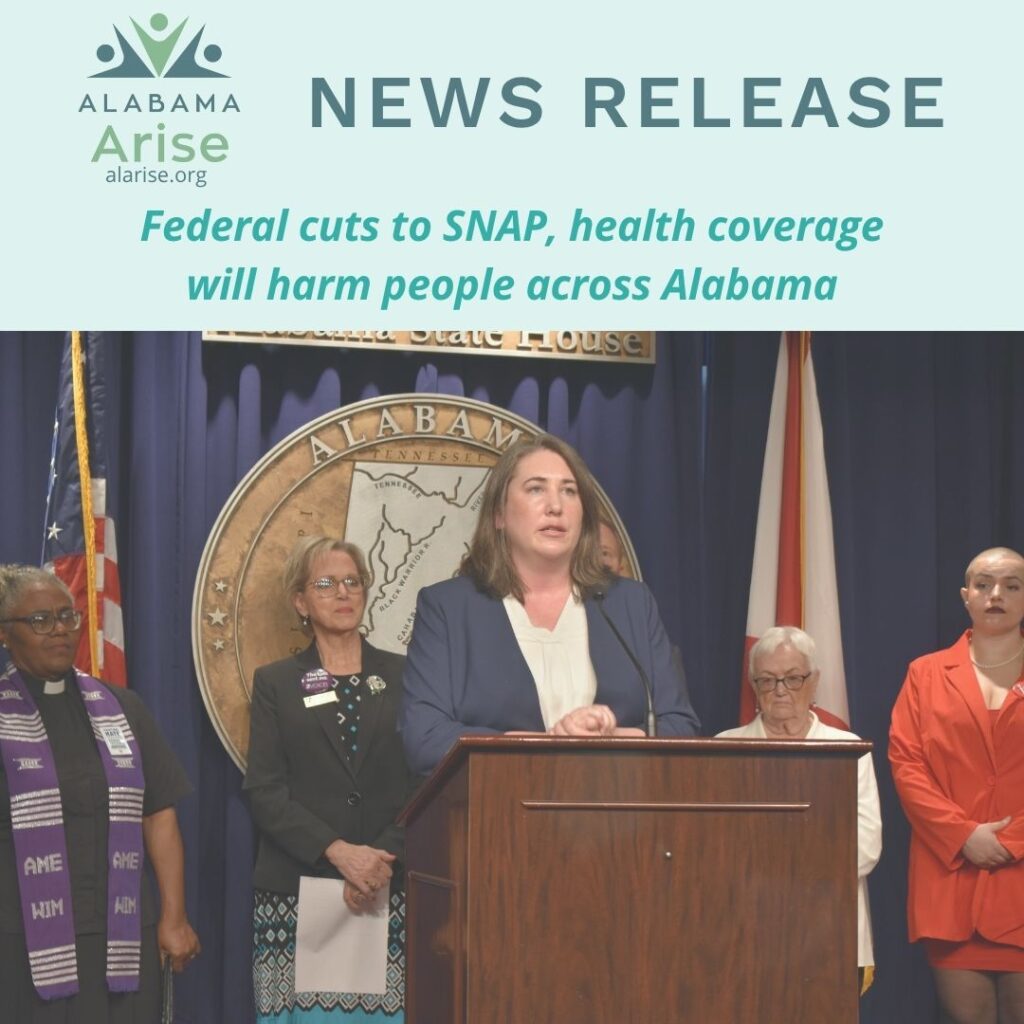
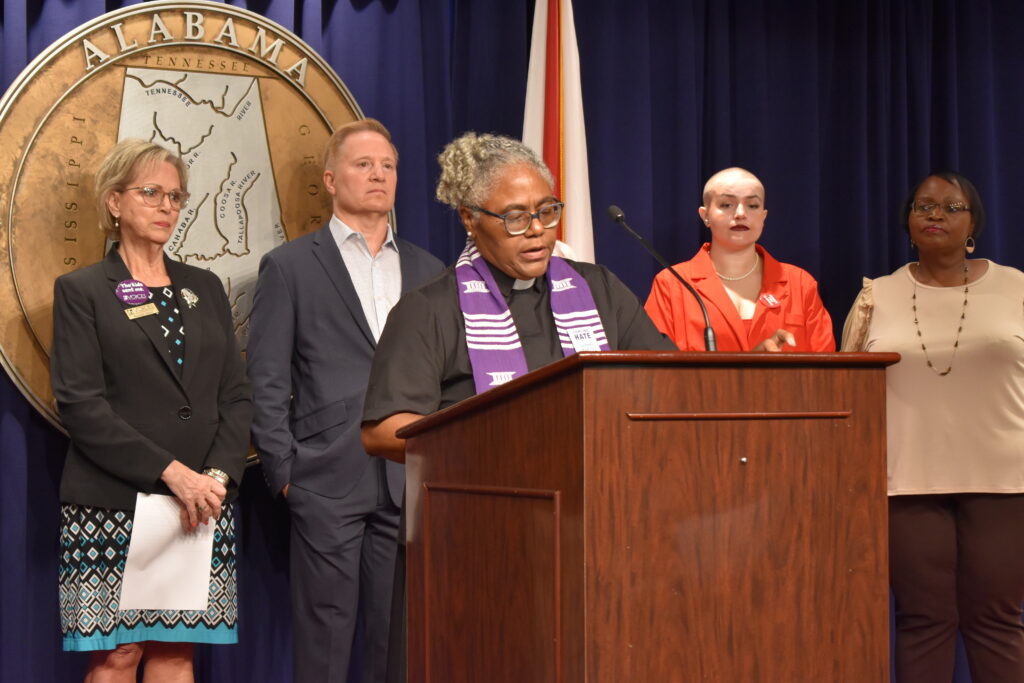
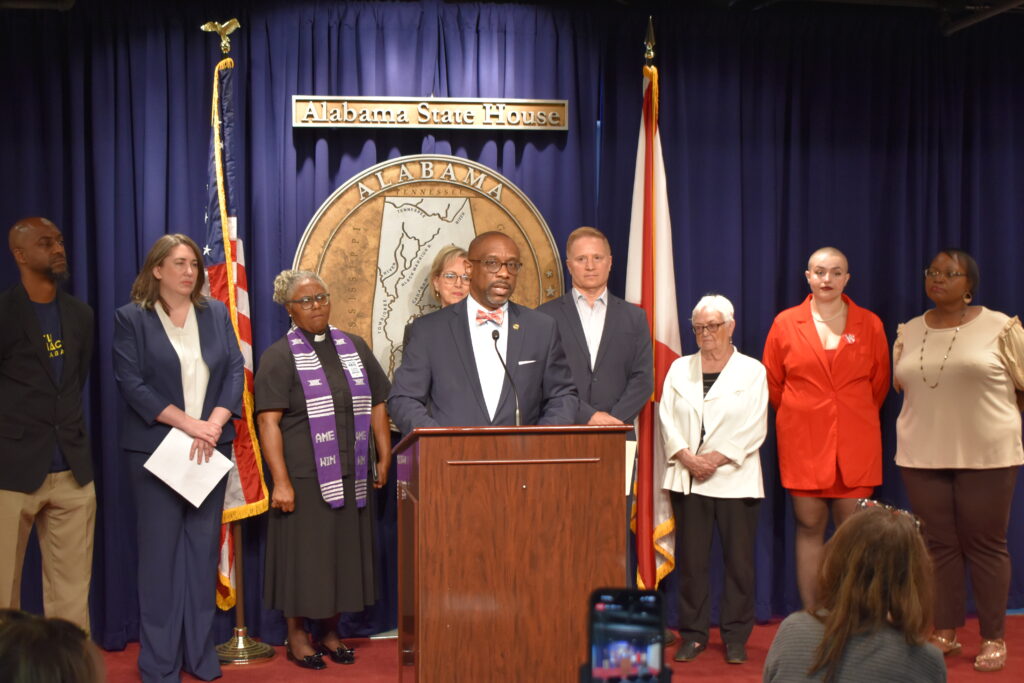
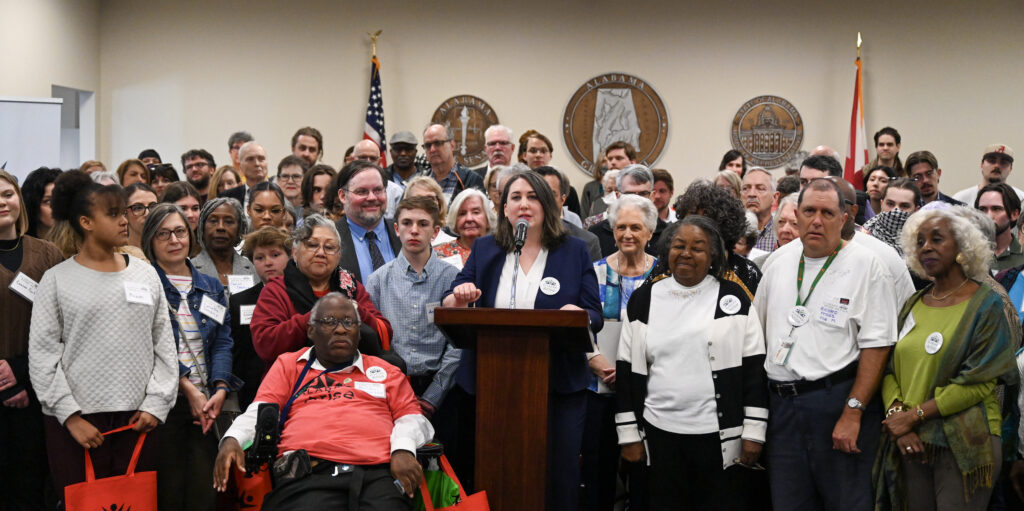
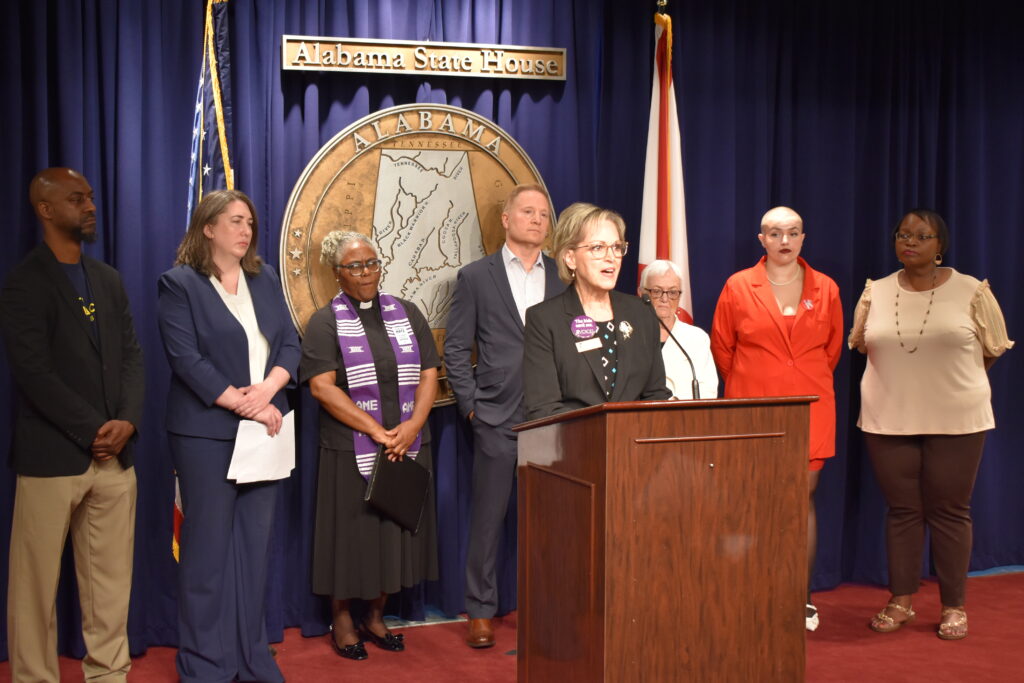
A woman speaks behind a lectern while advocates stand behind her. Headline: "Alabama Arise news release: Federal cuts to SNAP, health coverage will harm people across Alabama."

SNAP cuts could send hunger soaring, undermine state grocery tax reduction

“Alabama likely will feel the worst effects from cuts to the Supplemental Nutrition Assistance Program. SNAP benefits have been fully federally funded for decades, but this plan will change that starting in October 2027. If this legislation were in effect now, Alabama would be on the hook for about $207 million a year in direct benefits and additional administrative costs for SNAP. That amount would be roughly the same as the state’s first-year cost to expand Medicaid to cover nearly 200,000 adults with low incomes, and it would not include the cost savings that Medicaid expansion would generate for other services.

“There is reason to worry that the Legislature would decide it can’t or wouldn’t provide the additional SNAP funding. In that case, Alabama would be forced to cut SNAP participation significantly – or even eliminate the program altogether for nearly 800,000 participants statewide. This federal cost shift would reduce our state’s ability to fund existing essential services and programs. And it could lead to deep SNAP cuts that would devastate grocery stores and other retailers in communities across Alabama.

“This bill will expand work reporting requirements to cover more SNAP participants, including veterans, people experiencing homelessness, and young adults aging out of foster care. Many of them likely will lose food assistance not because of a failure to work but because of a failure to complete complicated paperwork. These new red-tape barriers will increase hunger for struggling families while billionaires and corporations run off with a bigger slice of the pie.

“Federal SNAP cuts will leave more Alabamians unable to afford to keep food on the table. That is a step in the wrong direction, and it will undermine the benefits of the state grocery tax reduction that Alabama legislators enacted unanimously this year.

Health coverage cuts will increase human suffering, reduce health care access

“This budget plan will make health care inaccessible or less affordable for tens of thousands of Alabamians. It will allow enhanced Affordable Care Act subsidies to expire, increasing premium costs for marketplace plans. It also will remove the additional $619 million in federal incentives for the first two years of Medicaid expansion that Alabama left on the table. That increases the chances that our state will continue to refuse to expand Medicaid, leaving hundreds of thousands of our neighbors stuck in the health coverage gap with no options to afford life-saving care.

“In total, nearly 200,000 Alabamians could lose health coverage as a result of policy changes like these. Those coverage losses likely will increase hospitals’ uncompensated care costs and make health care even less accessible in rural areas. Fourteen rural hospitals in our state have closed since 2010, and more than 20 others are at risk of closing. When a hospital or clinic closes, it closes for everyone, regardless of their insurance status.

“The human toll of cutting health coverage is all too real. It might mean a later cancer diagnosis for your neighbor. Your pregnant friend might die when her preeclampsia isn’t caught or treated in time because she has to drive an hour longer to get to a doctor. Your son or daughter might experience a mental health crisis and have no way to access or pay for care. Funding for health coverage is not just a line on a spreadsheet. It is often literally a matter of life or death for people facing medical challenges.

Where we go from here

“It will be a few years before many of the federal budget bill’s worst provisions will take effect in full. Alabama Arise’s members and supporters will continue urging our state’s congressional delegation to reverse this bill’s harmful provisions. We also will continue working at the state level to advance public policies to improve the lives of Alabamians marginalized by poverty. That includes advocacy to close our state’s health coverage gap, to right the wrongs of our state’s upside-down tax system and to ensure that all Alabamians have the resources they need to survive and thrive.

“Alabama Arise believes in building an economy that works for everyone and a society where everyone has the opportunity to reach their potential. We will continue working in the years and decades ahead to make that vision a reality for our state.”

More resources

June 27: A news release on the Hands Off SNAP and Medicaid news conference at the State House in Montgomery.

June 10: A letter from Alabama Arise and 49 partner organizations urging Gov. Kay Ivey and legislators to oppose harmful SNAP cuts and cost shifts.

June 5: A letter from 52 Cover Alabama coalition partners, including Alabama Arise, urging Ivey and legislators to oppose harmful cuts to Medicaid and health coverage under the Affordable Care Act.

May 23: A statement from Alabama Arise on numerous ways that the U.S. House budget bill would harm struggling Alabama families,

Feb. 25: A letter from Alabama Arise and 111 partner organizations urging Alabama’s congressional delegation to oppose cuts to Medicaid and SNAP.

Jan. 29: A letter from Alabama Arise and 55 partner organizations urging Alabama’s congressional delegation to oppose further tax cuts for wealthy people.
Alabama Arise, partner groups urge Congress to reject devastating cuts to SNAP, health coverage

Alabama’s congressional delegation should oppose a harmful budget bill that would reduce or remove food assistance, health coverage and other vital services for hundreds of thousands of Alabamians who struggle to afford basic needs, Alabama Arise and other advocates said Thursday during a Hands Off SNAP and Medicaid news conference at the State House in Montgomery.

The U.S. Senate could vote on the bill, HR 1, as soon as this weekend. The U.S. House passed its version of the legislation by a narrow 215-214 vote in May. Both versions include deep cuts to the Supplemental Nutrition Assistance Program (SNAP) and to health coverage under Medicaid and the Affordable Care Act. And both versions also include large tax cuts for wealthy households and highly profitable corporations.

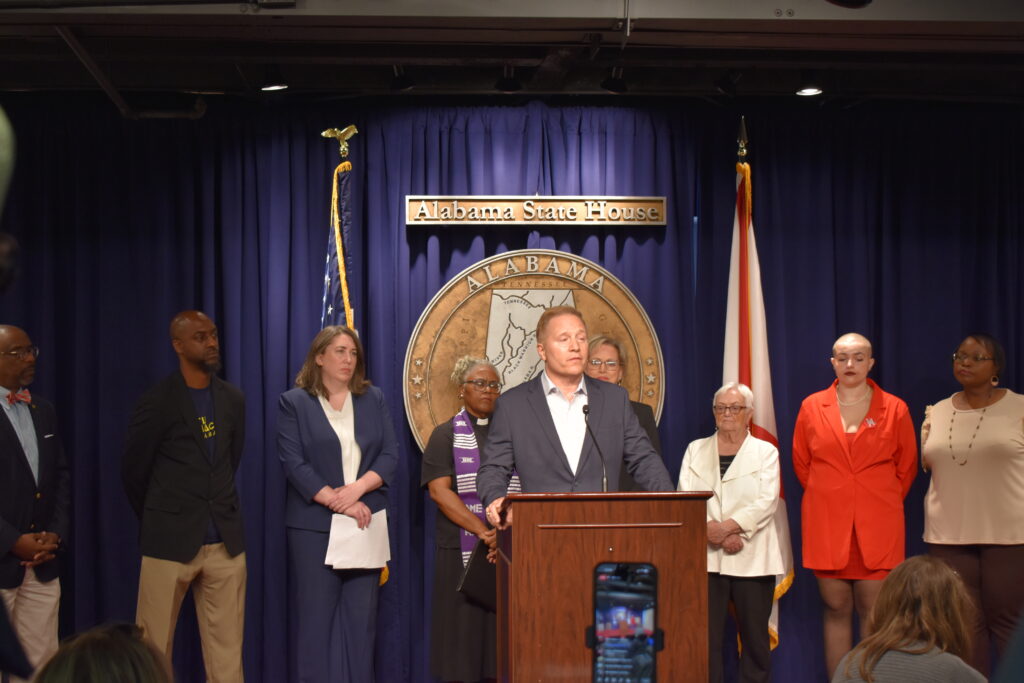
Image of Alabama Arise executive director Robyn Hyden speaking behind a lectern with advocates standing behind her. Text: "Alabama Arise news release: Alabama Arise, partner groups urge Congress to reject devastating cuts to SNAP, health coverage."

“It’s wrong to hurt people who are struggling just to help people who are already far ahead. That’s exactly what the Senate is debating right now,” Alabama Arise executive director Robyn Hyden said during the news conference. “The budget moving through Congress is not only a moral failure. It’s bad policy, and it is a really bad deal for our state.”

Photos from the news conference are available here. A video of the news conference is available here. (Remarks start at the 2:00 mark.)

SNAP cuts would send hunger soaring, imperil local retailers

For every meal that food banks provide in Alabama, SNAP provides nine. But if state lawmakers could not or would not provide new SNAP funding required under the bill, Alabama could be forced to cut SNAP benefits significantly – or even eliminate the program altogether for nearly 800,000 participants statewide.

Deep SNAP cuts could leave food banks with a “perhaps insurmountable” challenge, said Michael Ledger, president and CEO of Feeding the Gulf Coast, a food bank serving southwestern Alabama, southern Mississippi and western Florida.

“We’re worried that SNAP reductions are going to have a dramatic impact on our ability to help our neighbors,” Ledger said. “We’ve seen so many people who would have never dreamed they’d be in that position, in that position. I think as a community, it’s our responsibility to make sure we help these people through those struggles. If we don’t, where do they go?”

A man speaks behind a lectern with advocates standing behind him.
Michael Ledger, president and CEO of Feeding the Gulf Coast, speaks at a news conference at the State House in Montgomery on June 26, 2025. (Photo by Matt Okarmus)

Rhonda Mann, executive director of VOICES for Alabama’s Children, said nearly 5,000 retailers statewide redeemed more than $2 billion in SNAP benefits in 2023. She said the wreckage of harmful SNAP cuts would reach far beyond program participants.

“SNAP is incredibly important to the economy of our state. So when you don’t think this affects you because you don’t receive SNAP benefits, think again,” Mann said. “What you’re going to see are the closings of food retailers, and that will hurt everybody. Access to food in some areas of our state is already a problem, and it could become a problem in every area of our state.”

SNAP cost shift would strain state budgets

The federal budget bill could add severe strain to Alabama’s General Fund budget. Under the House-passed bill, states would have to pay for a portion of SNAP benefits, which have been 100% federally funded for decades, according to a sliding scale. The bill also would require states to pay for 75% of SNAP administrative costs, up from the current 50%.

Those cost shifts could leave Alabama on the hook for more than $120 million a year in direct benefits and additional administrative costs. For a sense of scale, that amount would be almost identical to the state’s Education Trust Fund (ETF) budget appropriations next year for both Jacksonville State University and the University of North Alabama combined. In a worst-case scenario, the state could be forced to find nearly $300 million a year for SNAP. That would be more than the 2026 ETF appropriation for either the University of Alabama or Auburn University.

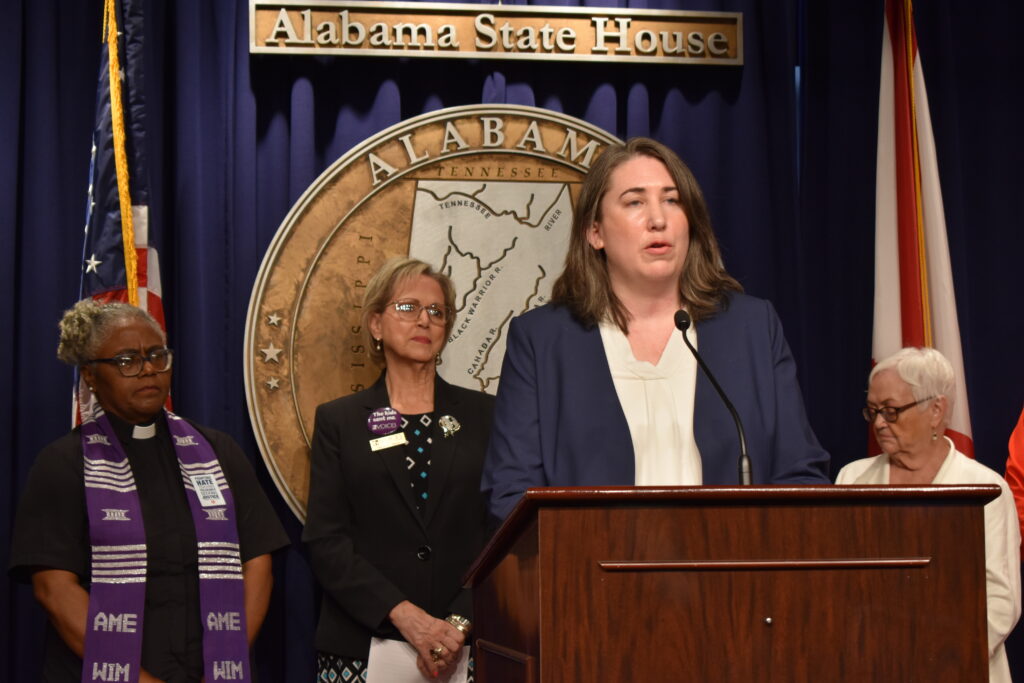
A woman stands behind a lectern with advocates standing behind her.
Alabama Arise executive director Robyn Hyden speaks at a news conference at the State House in Montgomery on June 26, 2025. (Photo by Matt Okarmus)

While increasing Alabama’s cost to administer SNAP, the bill also would expand work reporting requirements to cover many more participants. Hyden said these changes would harm many veterans, people experiencing homelessness, and young adults aging out of foster care. She also warned that many families could lose food assistance not because of a failure to work but because of a failure to complete complicated paperwork.

“These cuts will see hunger skyrocket while our state government, churches and charities and everyday working families are struggling to get by, and we’re all going to pay for that,” Hyden said. “It’s going to reduce our ability to fund existing essential services and programs. And we are going to be left on the hook to pick up the slack while billionaires and corporations run off with a bigger slice of the pie.”

Medicaid, ACA cuts would increase health care costs across Alabama

The Senate bill also would make health coverage more expensive or less accessible for tens of thousands of Alabamians. The legislation would allow the expiration of extra financial help for health coverage through HealthCare.gov and would block Alabama from receiving an additional $619 million in federal incentives to expand Medicaid to cover adults with low incomes. In total, nearly 200,000 Alabamians could lose health coverage as a result of the bill’s changes.

A woman speaks behind a lectern with advocates standing behind her.
Rhonda Mann, executive director of VOICES for Alabama’s Children, speaks at a news conference at the State House in Montgomery on June 26, 2025. (Photo by Matt Okarmus)

These coverage losses could make health care even less accessible in rural areas of Alabama, Mann said. Fourteen rural hospitals in the state have closed since 2010, and more than 20 others are at risk of closing.

“Medicaid dollars are for services and resources we all use, and cuts to Medicaid are going to result in increased health care costs for all of us,” Mann said.

Hyden underscored the human toll that losing health coverage could take on families and communities across Alabama.

“Cutting Medicaid and cutting the enhanced HealthCare.gov tax credits is going to mean one less early cancer diagnosis for your neighbor,” she said. “Your pregnant friend might die when her preeclampsia isn’t caught or treated in time because she has to drive over an hour to get to her doctor. Your daughter might experience a mental health crisis and have no way to access and pay for care.”

A woman speaks behind a lecture with advocates standing behind her.
Rev. Valtoria Jackson, the Montgomery lead organizer for the Alabama Poor People’s Campaign, speaks at a news conference at the State House in Montgomery on June 26, 2025. (Photo by Matt Okarmus)

Rev. Valtoria Jackson, the Montgomery lead organizer for the Alabama Poor People’s Campaign, called the bill’s proposed cuts to food assistance and health care “a war on the poor.”

“This is not just bad policy. It is a moral sin,” Jackson said. “We know that when people lose access to health care, they die. When food stamps are cut, hunger rises.”

‘Do something better for our state’

State Sen. Kirk Hatcher, D-Montgomery, said he sees up close the struggles that people living in poverty face, both as a legislator and in his role as Head Start director in Montgomery County. Passing legislation to make life even harder for struggling families would be “an absolute moral abomination,” he said.

“I do know what this particular bill and many of the things in it will do to damage the lives of so many,” Hatcher said. “Every life – and I do mean every life – has value. … We can do better.”

A man speaks behind a lectern with advocates standing behind him.
State Sen. Kirk Hatcher, D-Montgomery, speaks at a news conference at the State House in Montgomery on June 26, 2025. (Photo by Matt Okarmus)

Jackson said the federal budget bill would cause significant harm to “the least of these” and urged Congress to reject it.

“Budgets are moral documents, not just numbers. And this budget is morally bankrupt,” Jackson said. “The budget will not reduce poverty at all; it will increase it. It will not help seniors live with dignity; it will push them deeper into despair. It will not uphold Alabama’s moral values; it will betray them.”

Hyden closed by urging U.S. Sens. Katie Britt and Tommy Tuberville to oppose cuts to food assistance and health care and to focus instead on policies that would improve the well-being of every Alabamian.

“We have time to ask Congress to do something better for our state,” Hyden said. “We ask you to protect essential services like SNAP and Medicaid to help us build strong, healthy communities. For the future of our state, for our children and families, for all of us who struggle and anyone who might struggle, please vote no on HR 1.”

More resources

Thursday: A photo gallery and a video livestream from the Hands Off SNAP and Medicaid news conference at the State House in Montgomery.

June 10: A letter from Alabama Arise and 49 partner organizations urging Gov. Kay Ivey and legislators to oppose harmful SNAP cuts and cost shifts.

June 5: A letter from 52 Cover Alabama coalition partners, including Alabama Arise, urging Ivey and legislators to oppose harmful cuts to Medicaid and health coverage under the Affordable Care Act.

May 23: A statement from Alabama Arise on numerous ways that the U.S. House budget bill would harm struggling Alabama families.

Feb. 25: A letter from Alabama Arise and 111 partner organizations urging Alabama’s congressional delegation to oppose cuts to Medicaid and SNAP.

Jan. 29: A letter from Alabama Arise and 55 partner organizations urging Alabama’s congressional delegation to oppose further tax cuts for wealthy people.
Virginia wants you to join her in protecting health coverage in Alabama

A woman sitting and smiling.
Virginia found a good job and health insurance that meets her needs after moving back to Alabama last year. But Congress is considering legislation that could send health care costs soaring for her and tens of thousands of other Alabamians. (Photo by Whit Sides)

Virginia would say things have been going well since moving back home to Birmingham a year ago – steady even. She said consistency has been key in staying healthy when life takes on unexpected changes.

And Virginia has had to navigate some unexpected changes recently. 

After graduating from Mountain Brook High School and attending the University of Montevallo, she got married and followed her military spouse out of state. Virginia became a federal employee on the base where they were stationed, working in health care administration.

One of the benefits of being in a military family was having health coverage through TRICARE. That allowed her to stay on top of her mental and physical health.

“I’ve been treated for depression, anxiety and ADHD since I was very young, about 14, so it’s important that I regularly go to counseling. It’s important to find medication that works and stick with it,” Virginia said. “The reason I’ve done so well with my mental health is because I’ve had access to great health coverage throughout my life.”

When she and her spouse decided to separate, Virginia moved home. Then she learned she had lost her TRICARE health coverage in November 2024. 

“I knew I had to be in Birmingham. It’s where I know people. It’s where my family is,” she said. “I wasn’t in the best space emotionally, but I knew if I could make it home, I could deal with whatever was next once I got there.”

Reconnecting with the community

Virginia began her job search the day she arrived back in Alabama. She soon started working at a grocery store. The work was brutal, with long hours on her feet and only 10-minute breaks. But she said she was grateful for the support system that helped her earn money and become plugged into her community again.

“When I told my friends I was looking for a job, so many people were incredibly helpful, and that’s how I heard about the navigators at Enroll Alabama,” she said.

Virginia mentioned to her roommate that she was living without insurance. Her roommate then suggested visiting healthcare.gov to explore the Marketplace created under the Affordable Care Act (ACA).

An enrollment navigator walked Virginia through the process. With her recent income and household changes, together they discovered that she was eligible for premium tax credits that reduced the cost of her monthly health insurance premiums.

“I did a lot of research to make sure the plan I chose covered most of what I needed to cover my regular medications and doctors and everything,” she said. “And honestly, it wasn’t the cheapest plan, but I could afford it now with the help.”

Shortly after Virginia enrolled in her new plan, she received more good news: She was offered a job working at a family-owned office downtown.

“I work at a small local office now, and the reason I could accept that job is because I already had insurance,” she said.

The budget debate becomes personal

Since moving back, Virginia said, she feels like starting over in Birmingham was the right decision. She has plugged into several social organizations and is making an effort to become involved in causes she was passionate about locally.

That’s when Virginia found out the U.S. House recently passed a budget reconciliation bill (HR 1) with proposed health care cuts that might affect her directly.

I follow the news, and I’ve seen everything to do with the budget bill for a while now,” she said. “And understandably, a lot of the discussion focuses on Medicaid and Medicare, which is a really big issue. But sometimes navigating health policy is hard when I’m like, ‘OK, if Medicaid’s getting cut and Medicare is getting cut, does that include funding for the Affordable Care Act?”

A woman standing and smiling.
Virginia became more engaged in health care advocacy after attending a town hall that Alabama Arise co-hosted in Birmingham. She urges Alabamians to contact their lawmakers and tell them how proposed health care cuts would harm their families and communities. (Photo by Whit Sides)

Alabama Arise and Birmingham Indivisible co-hosted a community town hall at East Lake United Methodist Church on May 31 in Birmingham. Panelists discussed proposed federal cuts to food assistance and health coverage.

Virginia was one of the nearly 100 people in attendance that day. She heard Debbie Smith, Arise’s Cover Alabama campaign director, break down what HR 1 could mean for Alabamians who receive subsidies to help pay for their ACA plans. For people like Virginia.

“Someone on the panel said that there would be up to 75% cut of the premium tax credits,” Virginia said. “My heart sank, you know? I put my head in my head in my hands and may have literally gasped, ‘Oh, no!’”

How federal cuts would undermine health care across Alabama

The budget plan now moving through Congress would make health care more expensive and less accessible for people across Alabama and nationwide. One way it would do that is to allow enhanced tax credits for ACA Marketplace coverage to expire.

This expiration would cause out-of-pocket premium payments to increase by more than 75% on average for people enrolled in Marketplace plans, according to KFF. In Alabama, that increase would be 93% on average. And in a dozen other states, people would see their premium payments more than double on average. Most of them, like Alabama, have not expanded Medicaid to cover adults with low incomes.

The most significant Marketplace premium increases likely would hit older adults and enrollees with lower incomes, according to KFF. And those higher costs would play a huge role in driving up Alabama’s uninsured rate.

About 190,000 Alabamians would lose health coverage under the proposed new cuts and barriers to Medicaid and ACA coverage. The cuts also would increase the financial strain on many rural hospitals and clinics and ultimately would drive up health care costs for everyone, no matter what type of coverage they have. And all of the cuts would help finance tax breaks for wealthy households and highly profitable corporations.

For Virginia, the health care cuts would be personal. She said she receives close to $300 a month from the tax credits toward her health coverage costs.

“It’s only $3,100 a year, which is not a lot to these people working on the bill, but like, come on, man,” she said. “You’re going to take that from us, when it’s a 75% difference? That’s such a huge deal.”

Speaking out for herself and others

Virginia said she understands that our country needs a budget from year to year. But she said she hopes Alabama’s elected officials reject health care cuts that would harm so many people, including her.

“I’ve been making calls to lawmakers about other issues since before I even knew I was impacted,” Virginia said. “And so now I just start my day by calling [Sen.] Katie Britt and calling [Sen. Tommy] Tuberville. If I leave a voicemail, I call him ‘Coach,’ but sometimes, people actually answer and I have to work through my social anxiety.”

Virginia encourages anyone who might feel overwhelmed by advocacy to take it one step at a time, and to reach out to their lawmakers with their own story.

“I fundamentally disagree with everyone right now who says that it doesn’t matter if you make a call or show up at a town hall,” she said. “Because if we all say, ‘Nothing I do matters’ and we all sit here and do nothing, then we’re really going to be in trouble.”

About Alabama Arise and Cover Alabama

Whit Sides is the storyteller for Alabama Arise, a statewide, member-led organization advancing public policies to improve the lives of Alabamians who are marginalized by poverty. Arise’s membership includes faith-based, community, nonprofit and civic groups, grassroots leaders and individuals from across Alabama. Email: whit@alarise.org.

Arise is a founding member of the Cover Alabama coalition. Cover Alabama is a nonpartisan alliance of advocacy groups, businesses, community organizations, consumer groups, health care providers and religious congregations advocating for Alabama to provide quality, affordable health coverage to its residents and implement a sustainable health care system.

Federal budget bill would endanger state budgets, increase hunger for 750,000+ Alabamians

The U.S. House in May passed legislation that would take food assistance away from many Alabamians who are already struggling to afford groceries. A U.S. Senate committee in June approved similar legislation. These cuts would help pay for extending huge tax breaks for the wealthiest households. The bill would target the Supplemental Nutrition Assistance Program (SNAP) for the largest cut in its history. People living in rural, urban and suburban areas across Alabama all would pay the price.

This bill would harm people across our state. Here is what’s at stake for Alabama:

Passes the buck for SNAP funding to the Alabama Legislature.

The bill could require Alabama to pay between 5% to 15% of SNAP benefit costs, which would cost the General Fund an estimated $86 million to $258 million a year. In addition, states would have to come up with additional administrative funds for SNAP, which could add another $35 million to Alabama’s costs. This unfunded mandate could force legislators to reduce SNAP benefits, limit SNAP participation and/or cut funding for other vital services. In a worst-case scenario, the state could opt out of SNAP entirely, ending food assistance for nearly 800,000 Alabamians. That would send hunger soaring and devastate grocers, especially in rural areas.

Takes food assistance away from many families with young children.

Tens of thousands of Alabamians with school-aged children would be at risk of losing some or all of their food assistance. This would result from an expansion of red-tape time limits to parents and other caretakers of children aged 14 and older.

Takes food assistance away from many veterans and homeless people

The bill approved by the Senate committee would deny SNAP assistance to refugees, people granted asylum, and some victims of domestic violence, sex trafficking or labor trafficking. It also would impose stringent time limits on many SNAP participants – including veterans, people who are homeless and children aging out of foster care – who cannot comply with complex paperwork requirements.

Reduces SNAP benefits over time for everyone receiving food assistance.

The bill effectively would freeze the value of SNAP benefits at their current level unless Congress voted otherwise. This would make it harder for families to keep up with rising food costs in years when those costs increase more than inflation.

Updated June 25, 2025, to reflect proposed changes in the U.S. Senate.

Federal budget bill threatens health coverage for 190,000 Alabamians

A bill passed by the U.S. House would put the health of thousands of Alabamians — and the state’s fragile health care system — at serious risk.

Here is what’s at stake for Alabama:

190,000 Alabamians could lose coverage

The bill would make cuts to Medicaid and would raise premiums through the Health Insurance Marketplace. As a result, thousands of Alabamians may lose their health insurance, and many would be forced to skip medications, delay care or go to the ER in crisis.

$1.14 billion hit to Alabama’s economy

Raising premiums by letting enhanced Affordable Care Act (ACA) premium subsidies expire would shrink Alabama’s economy by $1.14 billion and cost the state 10,000 jobs in 2026.

Blocks Medicaid expansion funding

The bill would eliminate $619 million in federal funds set aside to help Alabama expand Medicaid. This would deny Alabama the chance to cover at least 200,000 more residents – including veterans, college students, caregivers and more.

Pushes Alabama’s health care system closer to collapse

Alabama’s health care infrastructure is already stretched thin – with at least 20 rural hospitals already at risk of closing. This bill would put more than $400 million per year in state Medicaid provider taxes at risk. As a result, our state lawmakers could be forced to cut coverage or raise new taxes to fill the gap.

Raises health care costs for everyone

When people lose coverage, hospitals and providers still deliver care — but with no reimbursement. That means higher health care costs for everyone — no matter what type of coverage you have.

Ivey, legislators should oppose federal SNAP cost shift to states, 50 Alabama groups write

Alabama lawmakers should speak out to help protect the state from devastating federal cuts to the Supplemental Nutrition Assistance Program (SNAP) in the U.S. House’s budget reconciliation bill, according to a letter that 50 organizations across Alabama sent to Gov. Kay Ivey and state legislators Monday.

The letter, initiated by Alabama Arise, asks state policymakers to contact members of Congress and express concerns about the bill’s negative impact on Alabama’s families and budgets.

“More than 750,000 Alabamians receive food assistance through SNAP, including 500,000 families with children,” the letter said. “The SNAP cuts being considered would increase hunger for every one of these Alabamians and would transfer significant financial obligations from the federal government to Alabama.”

Read the organizations’ full letter here.

A mother, father and two children enjoy a meal at the table. Text above the image: "Alabama Arise news release: Ivey, legislators should oppose federal SNAP cost shift to states, 50 Alabama groups write."

SNAP cost shift would add enormous strain to Alabama budgets

U.S. House members voted 215-214 on May 22 for a budget bill that would reduce food assistance for tens of millions of Americans, including hundreds of thousands of Alabamians. The Senate is expected to consider the bill later this month.

The bill would require states to pay for a portion of SNAP benefits, which have been 100% federally funded for decades. States would be responsible for covering anywhere from 5% to 25% of SNAP benefit costs. The bill also would shift a larger share of SNAP administrative costs to states.

“At our best estimate, Alabama would become responsible for up to $258 million in direct benefit costs, plus an additional $35 million in administrative costs annually,” the groups’ letter said.

If state lawmakers could not or would not provide that funding, Alabama would be forced to cut SNAP benefits significantly – or even eliminate the program altogether for nearly 800,000 participants statewide. For a sense of scale, an additional $293 million in state expenses would be more than the state’s Education Trust Fund budget appropriation to either the University of Alabama ($266.2 million)  or Auburn University ($287.9 million) for 2026.

New SNAP barriers could increase food prices, harm local economies

The House bill would limit future growth in the value of SNAP benefits, effectively cutting food assistance over time even as food prices continue to increase. The legislation also would add more red tape for SNAP participants, the letter says. These new barriers would include expanding the scope of current time limits and creating new work reporting requirements for 165,000 Alabamians, including parents with children over age 7, the groups’ letter said.

“Changes of this magnitude would create additional burdens for Alabama’s already stretched child care and child welfare systems and potentially would leave thousands of Alabama children and families without food on their tables,” the letter said.

SNAP provides vital, federally funded nutrition assistance to about 1 in 7 Alabamians — more than 750,000 people. More than 2 in 3 households that participate in SNAP are families with children. Many other participants are older adults or people with disabilities.

SNAP’s role in reducing hunger is especially important in Alabama and other states with high poverty rates. Nearly 1 in 4 Alabama children face food insecurity, meaning they do not always have enough to eat or know where they will get their next meal.

Funding cuts or other new barriers to SNAP enrollment would increase hunger and hurt local retailers, the groups’ letter said. That could mean higher food prices for everyone and even longer trips to the grocery store for many rural Alabamians.

“Deep SNAP cuts could force layoffs or closures at grocery stores and other retailers across our state,” the letter said. “A reduction or loss of SNAP benefits is a threat to our economy and the local communities where we all live and shop.”

Potential SNAP cuts would help fund tax breaks for the wealthiest households

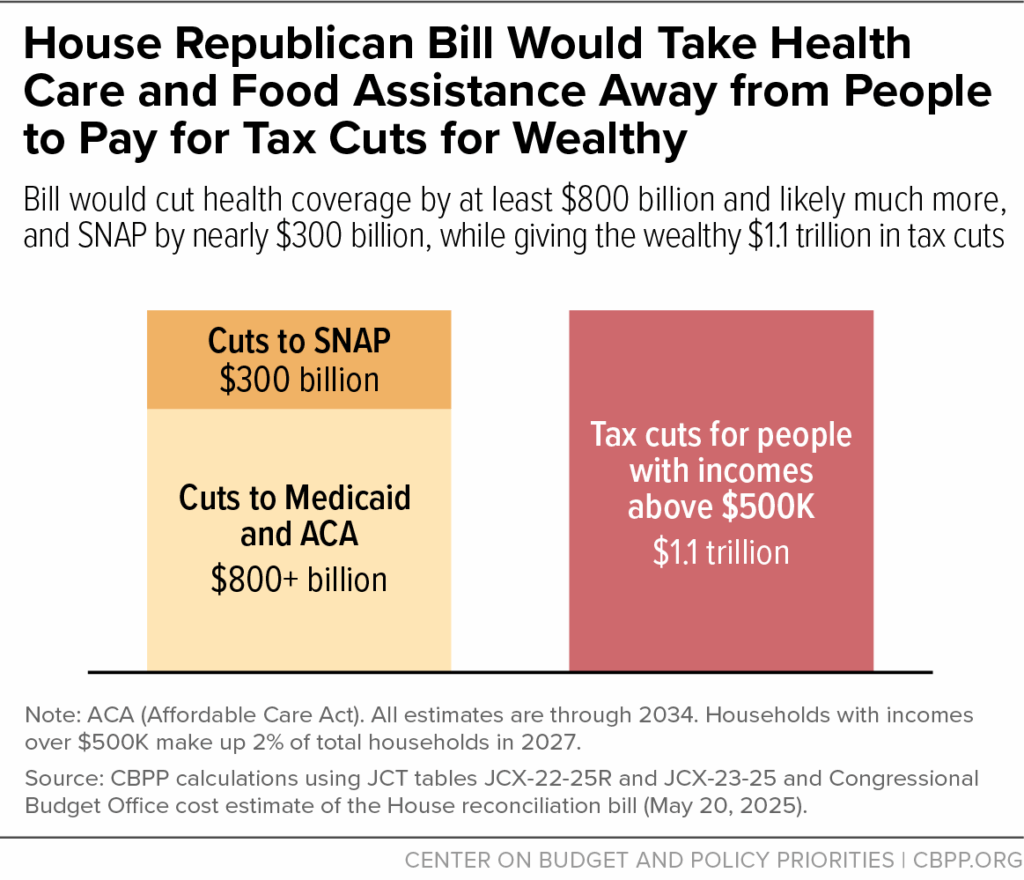
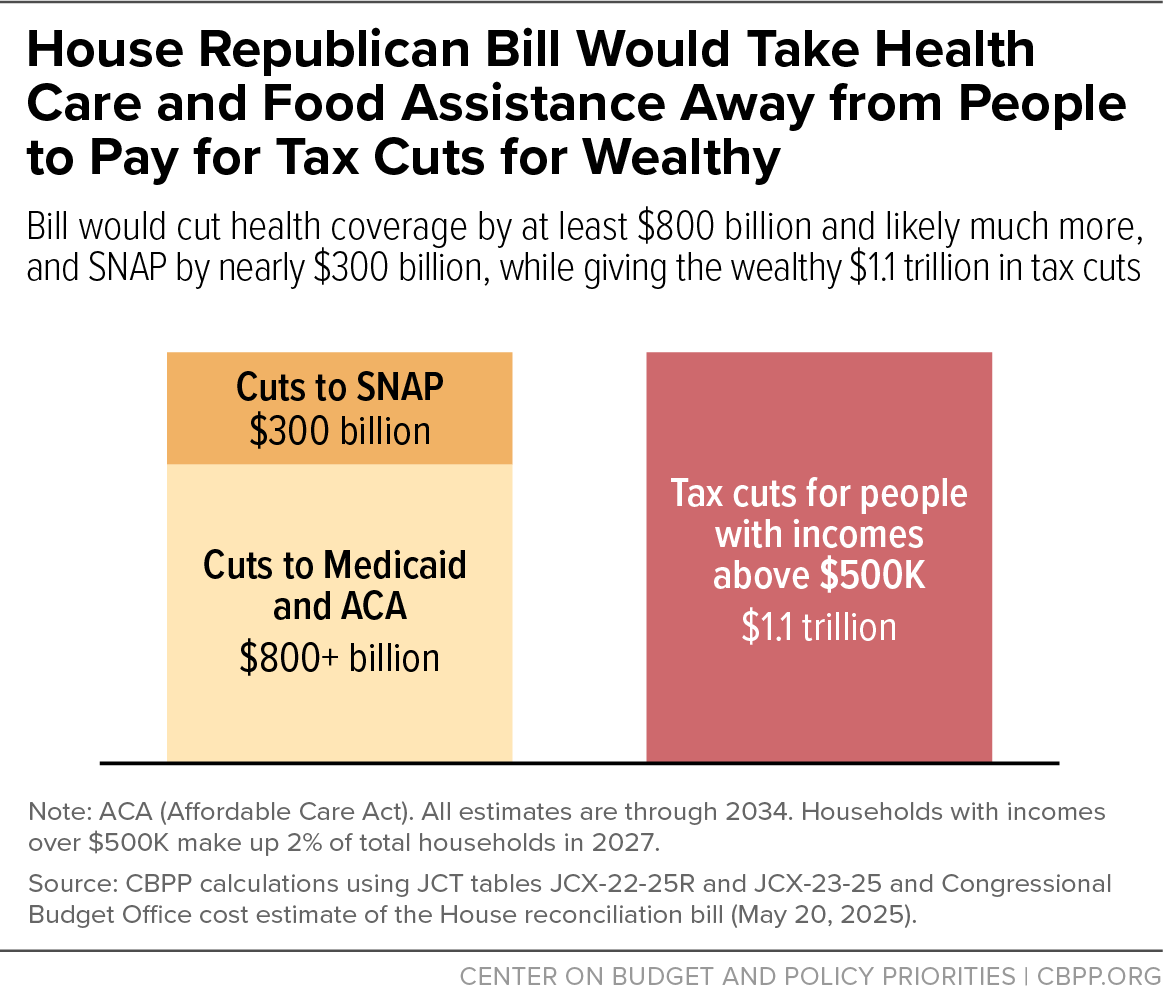
Congressional leaders are considering these cuts to food assistance and other human services in a push to offset the cost of tax cuts for wealthy households. The amount of potential SNAP and health care cuts in the House bill would be roughly equal to the cost of extending tax breaks for the wealthiest 2% of households, according to the Center on Budget and Policy Priorities, a nonprofit research and policy institute in Washington, D.C.

The Tax Cuts and Jobs Act, enacted in 2017, increased federal deficits while lavishing tax cuts on the country’s wealthiest households. Many of the law’s provisions are set to expire this year, including numerous tax breaks that disproportionately benefit wealthy people. These include higher estate tax exemptions and a cut to the top marginal income tax rate.

Read the 50 Alabama organizations’ full letter urging Ivey and legislators to oppose SNAP cuts here.

More resources

June 5: A letter from 52 Cover Alabama coalition partners, including Alabama Arise, urging Ivey and legislators to oppose harmful cuts to Medicaid and health coverage under the Affordable Care Act.

May 23: A statement from Alabama Arise on numerous ways that the U.S. House budget bill would harm struggling Alabama families.

Feb. 25: A letter from Alabama Arise and 111 partner organizations urging Alabama’s congressional delegation to oppose cuts to Medicaid and SNAP.

Jan. 29: A letter from Alabama Arise and 55 partner organizations urging Alabama’s congressional delegation to oppose further tax cuts for wealthy people.
Alabama Arise, 49 partner groups urge state lawmakers to oppose federal SNAP cost shift

Congressional leaders are considering cuts to food assistance and other human services in a push to offset the cost of tax cuts for wealthy households. The amount of potential SNAP and health care cuts in the budget reconciliation bill that the U.S. House passed in May would be roughly equal to the cost of extending tax breaks for the wealthiest 2% of households, according to the Center on Budget and Policy Priorities.

Alabama Arise joined 49 partner groups in a letter asking Gov. Kay Ivey and state legislators to speak out against the devastating budgetary and humanitarian effects of proposed federal food assistance cuts. The full text of the letter is below.

Letter text

Dear Governor Ivey, members of the Legislature and Finance Director Bill Poole:

We, the undersigned Alabama organizations, are writing to raise our concerns about the devastating negative impacts that the Supplemental Nutrition Assistance Program (SNAP) provisions in the federal budget reconciliation bill would have on Alabama.

More than 750,000 Alabamians receive food assistance through SNAP, including 500,000 families with children, 300,000 families with older adults or disabled people, and 24,000 Alabama veterans. The SNAP cuts being considered would increase hunger for every one of these Alabamians and would transfer significant financial obligations from the federal government to Alabama.

The reconciliation bill would shift tens of millions of dollars of costs for SNAP administration and benefits from the federal government to Alabama each year.  At our best estimate, Alabama would become responsible for up to $258 million in direct benefit costs, plus an additional $35 million in administrative costs annually.

Congress is considering expanding the scope of current time limits and adding more work verification red tape for an additional 165,000 Alabamians, including parents with children over age 7. Changes of this magnitude would create additional burdens for Alabama’s already stretched child care and child welfare systems and potentially would leave thousands of Alabama children and families without food on their tables.

Congress also is considering limiting future growth in the value of SNAP benefits. Over time, this would reduce SNAP benefits for nearly 800,000 SNAP participants in Alabama, including more than 300,000 children, even as food costs continue to grow.

Potential cuts to SNAP would damage Alabama’s economy. More than 5,000 stores in Alabama are authorized SNAP retailers, many in small towns and rural communities. The USDA estimates that every $1 in SNAP benefits can generate $1.50 in economic activity. Deep SNAP cuts could force layoffs or closures at grocery stores and other retailers across our state. A reduction or loss of SNAP benefits is a threat to our economy and the local communities where we all live and shop.

We urge you strongly to help protect federal funding for SNAP in Alabama and to communicate your concerns with the members of the Alabama congressional delegation. If you have any questions, please do not hesitate to contact us. We appreciate your service to Alabama.

Signatories

Sincerely,

  1. Alabama Arise
  2. A Beautiful Life Enterprises, LLC (Birmingham)
  3. Alabama Appleseed Center for Law & Justice
  4. Alabama Childhood Food Solutions, Inc. (Sylacauga)
  5. Alabama Dietetic Association
  6. Alabama Institute for Social Justice
  7. Alabama Network of Family Resource Centers
  8. Alabama Poor People’s Campaign
  9. Alabama Possible
  10. Alfred Saliba Family Services Center (Dothan)
  11. All Nations Church of God (Montgomery)
  12. Athens-Limestone County Family Resource Center
  13. Auburn United Methodist Church
  14. Baptist Church of the Covenant (Birmingham)
  15. Bay Area Women Coalition, Inc. (Mobile)
  16. Birmingham Indivisible
  17. Bread for the World, Alabama Chapter
  18. Children and Family Connection of Russell County
  19. Coffee County Family Services Center
  20. Community Food Bank of Central Alabama (Birmingham)
  21. Dallas County System of Services
  22. Family Services of North Alabama (Albertville)
  23. Family Support Center (Prattville)
  24. Feeding Alabama
  25. Feeding The Gulf Coast
  26. First Christian Church of Montgomery, Alabama
  27. Food Bank of East Alabama
  28. Grace Presbyterian Church (Tuscaloosa)
  29. Greater Birmingham Ministries
  30. Great I Am Ministries Outreach International (Birmingham)
  31. Growing Essence Nutrition, LLC (Montgomery)
  32. Heart of Alabama Food Bank (Montgomery)
  33. Hispanic and Immigrant Center of Alabama (¡HICA!)
  34. Jefferson County Family Resource Center
  35. Mary Hill Family Service Center (Ozark)
  36. Mary’s House Catholic Worker (Birmingham)
  37. National Lawyers Guild – Alabama Chapter
  38. Next Step Community Development Center (Tuscaloosa)
  39. North Alabama Area Labor Council
  40. North Alabama Peace Network
  41. Selma Area Food Bank
  42. Southern Poverty Law Center
  43. Southern Rural Black Women’s Initiative (SRBWI)
  44. Thrive Alabama (Huntsville)
  45. Tuscaloosa’s One Place
  46. Unitarian Universalist Congregation of Tuscaloosa
  47. VOICES for Alabama’s Children
  48. Voters Legal Justice Watch Group
  49. Whom It Concerns, Inc. (Montgomery)
  50. Woodlawn Community Table (Birmingham)

We’ve improved lives across Alabama!

Alabama Arise executive director Robyn Hyden speaks in support of untaxing groceries during Arise’s annual Legislative Day on March 20, 2025, in Montgomery. (Photo by Julie Bennett)

The 2025 legislative session is officially over, and it was busy and productive. Alabama Arise staff, partners and members worked hard to improve the lives of folks living paycheck to paycheck while also protecting the rights of Alabamians under attack by people with regressive policy agendas.

We made major progress toward a better, more inclusive Alabama. And while we didn’t win every fight, together, we held the line for vulnerable people. Download a one-page handout on Arise’s advocacy successes in 2025 here.

We successfully advocated for new laws that will improve lives. These policies will:

Make groceries more affordable for all Alabamians by reducing the state grocery tax (again)!

Increase access to food in schools by securing more funding in our education budget for no-cost school breakfast programs in public schools.

Make it easier for pregnant Alabamians to get prenatal screenings by removing red tape around Medicaid’s “presumptive eligibility” rule.

Ensure more parents can care for their new families by securing a new paid parental leave policy for teachers, two-year college workers and state employees.

Decrease the cost of living for families by ending the state sales tax on essential items like diapers, baby supplies, menstrual hygiene products and maternity clothing.

The fight doesn’t stop here. We must build on this momentum as we head toward the 2026 session. Become an Arise member today to join the fight and make your voice be heard!

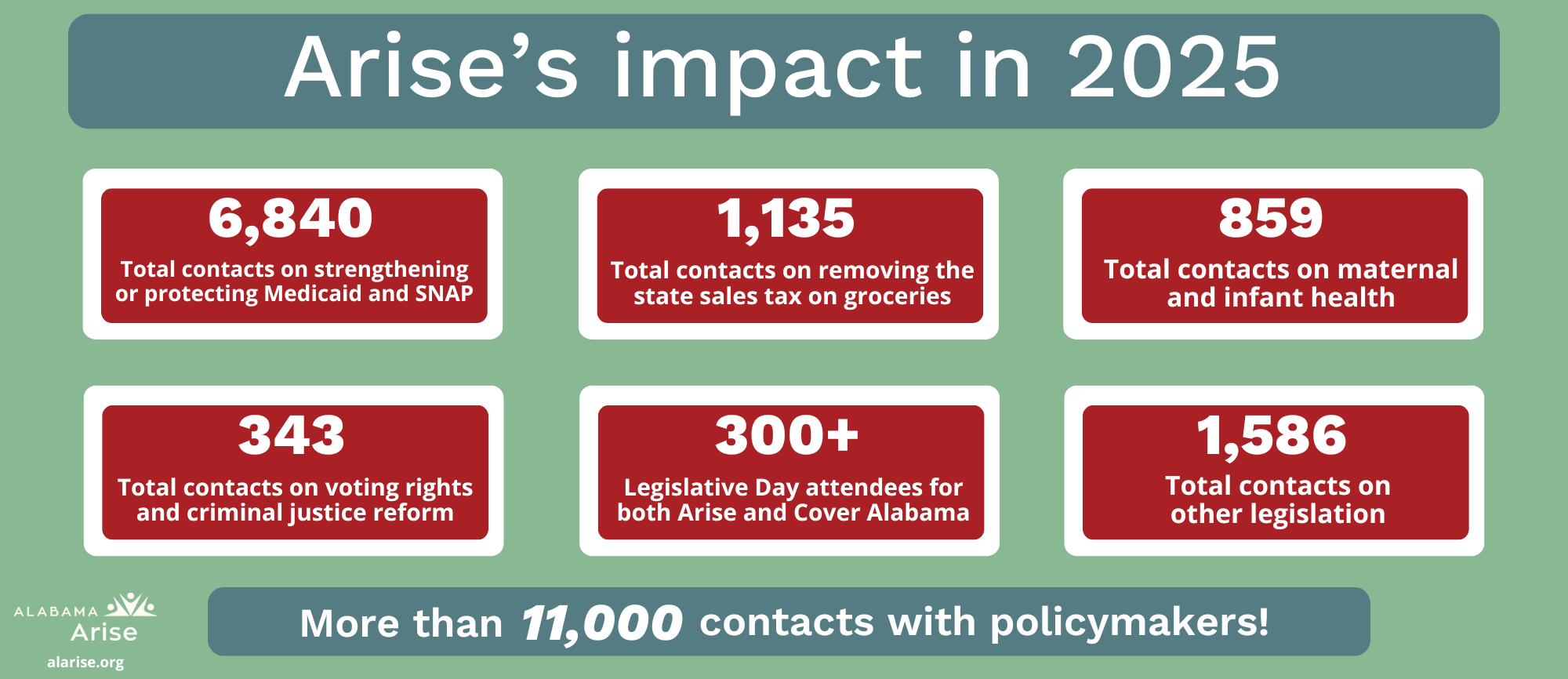
Grocery tax, paid leave, maternal health highlight triumphant 2025 session for Alabama Arise

Alabama Arise just wrapped up one of the most successful legislative sessions in our history this year. Life will be better for people across the state as a result – and members like you made it all possible.

Arise members’ advocacy and support pushed legislators to enact numerous laws to reduce hunger and promote healthier families. By the time the Legislature’s 2025 regular session ended May 14, our members were celebrating many important, far-reaching victories:

Arise got results in a big way in 2025. Now the work continues. Congress is considering deep federal cuts and harsh barriers to food assistance and health coverage. State lawmakers also enacted some harmful bills this year and will seek to advance others in 2026. Through it all, Arise members will keep speaking out for policies to improve life for Alabamians marginalized by poverty.

Major victories for tax justice in Alabama

For the second time in three years, Alabama is reducing its state sales tax on groceries. HB 386 by Rep. Danny Garrett, R-Trussville, will reduce the tax from 3% to 2% starting Sept. 1. It also gives cities and counties more flexibility to reduce local grocery taxes.

The law built on the momentum of a 2023 grocery tax reduction, and it passed the House and Senate unanimously. Energy for this change was high all year: More than 200 people packed the State House in Montgomery to urge lawmakers to untax groceries during Arise’s annual Legislative Day on March 20.

HB 386 will help families keep food on the table and is an important step toward tax justice in Alabama. The grocery tax drives many Alabamians deeper into poverty and contributes heavily to our state tax system’s regressive, upside-down nature. Arise will keep advocating to end the grocery tax in a sustainable way that protects funding for public schools.

Another law to help new and growing families make ends meet is HB 152 by Rep. Neil Rafferty, D-Birmingham. This law will remove the state sales tax on numerous items for infants and parents, including baby formula, diapers, maternity clothing and menstrual hygiene products. The exemptions start Sept. 1 and will expire on Aug. 31, 2028, unless renewed.

New policies for healthier families and children

Arise also advocated successfully for other pro-family, pro-worker legislation. SB 199 by Sen. Vivian Figures, D-Mobile, will ensure paid parental leave for public school teachers, two-year college workers and state employees starting July 1. The law will provide eight weeks of paid leave to mothers after childbirth, adoption of a child aged 3 or younger, stillbirth or miscarriage. Fathers will receive two weeks of paid leave in those circumstances.

SB 102 by Sen. Linda Coleman-Madison, D-Birmingham, is another step forward for maternal health in Alabama. The law, effective Oct. 1, will expand presumptive eligibility, allowing doctors and other health care providers to determine Medicaid eligibility for expectant mothers who likely qualify. This will permit thousands of women to receive prenatal care earlier in their pregnancy.

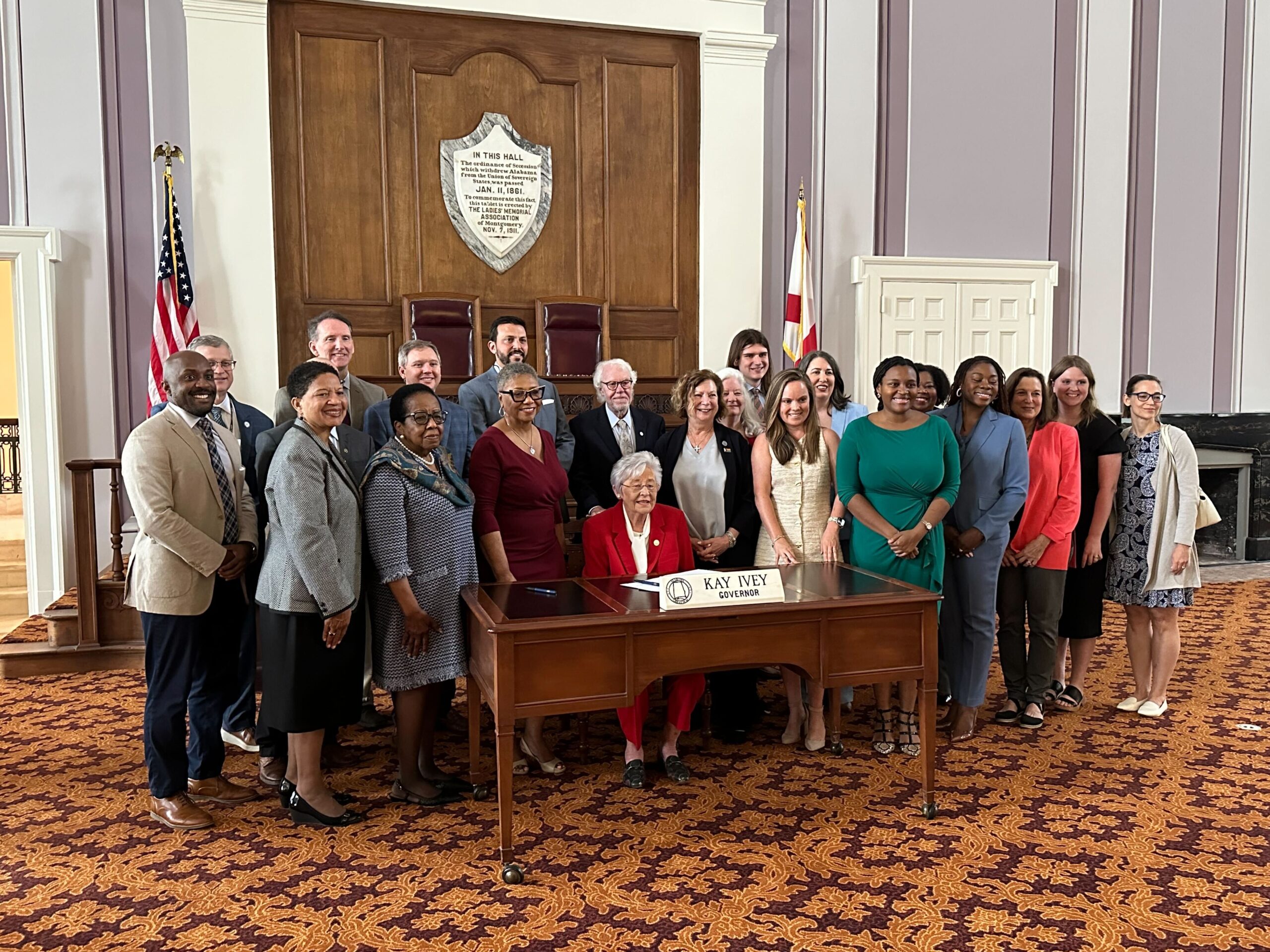
Gov. Kay Ivey sits behind a wooden desk with her nameplate on it and U.S. and Alabama flags in the background. Smiling people stand behind and to both sides of her. Behind her is wooden paneling and walls with a gray and white pattern. The patterned carpet is dark red and orange.
Alabama Arise senior health policy advocate Jennifer Harris (fifth from right) and executive director Robyn Hyden (seventh from right) participated in Gov. Kay Ivey’s bill signing ceremony for SB 102 on May 1, 2025, at the State Capitol in Montgomery. SB 102 will expand Medicaid presumptive eligibility and allow thousands of expectant mothers in Alabama to receive health care earlier in their pregnancy. (Photo by Matt Okarmus)

Arise advocacy also helped increase Alabama’s child nutrition investments. SB 112 and SB 113 by Sen. Arthur Orr, R-Decatur, allocated $17.3 million to expand school breakfast and continue Summer EBT. Arise members last year successfully pushed for Alabama to participate in Summer EBT starting in 2025. The program will help reduce food insecurity for more than 500,000 children statewide.

One setback this year was enactment of HB 477 by Rep. David Faulkner, R-Mountain Brook. This law authorizes unregulated health plans that could cap benefits for enrollees and charge higher premiums or deny coverage based on preexisting conditions. Arise sought amendments to help mitigate the law’s worst provisions.

The work continues

Several Arise-backed bills made major progress but fell just one step short of going to the governor. Garrett’s HB 389 would have reduced state income taxes for households with low and middle incomes. Coleman-Madison’s SB 153 would have improved Alabama’s voting rights restoration process. And SB 22 by Sen. Merika Coleman, D-Pleasant Grove, would have allowed the state to remove tax incentives for companies that violate child labor laws.

Arise also helped prevent numerous bad bills from passing. These included proposed new barriers to unemployment insurance benefits, food assistance and Medicaid coverage.

With your support, Arise will keep advocating for essential policy changes in 2026 and beyond. We will keep working to close the health coverage gap and untax groceries forever. And we will continue strengthening our movement for a better, more inclusive Alabama for all.

Federal funding cuts would increase hunger and hardship across Alabama

Congress is advancing a cruel proposal to take away food assistance, health coverage and other vital services from millions of Americans who struggle to afford basic needs.

Why? To give huge tax cuts to the wealthiest people in the country. The bill’s proposed $1.1 trillion of cuts to food assistance and health care over the next decade would be equal to the amount of tax cuts it would provide for the wealthiest 2% of households, according to the Center on Budget and Policy Priorities.

Congressional leaders are pushing the bill through budget reconciliation, a process that bypasses the Senate filibuster and allows legislation to pass with a simple majority vote. That process is ongoing and fluid. The U.S. House voted 215-214 for the bill in late May. By the time you read this, the Senate may have made many changes, some for the better and others for the worse.

The specifics may change, but the bill’s brutal core will remain the same. It will increase suffering for millions of Americans with low incomes to finance tax breaks for wealthy households and highly profitable corporations.

An existential threat to SNAP in Alabama

Alabama likely would feel the worst effects from proposed cuts to food assistance under the Supplemental Nutrition Assistance Program (SNAP). SNAP helps more than 42 million people nationwide and nearly 800,000 Alabamians put food on the table.

Now, Congress and the White House are threatening those families’ meals in an effort to reduce taxes for billionaires. Three major proposed SNAP changes would have devastating effects on Alabama.

(1) The bill likely would require Alabama to pay hundreds of millions of dollars more for SNAP benefits and administrative costs. The federal government has funded 100% of SNAP benefits for decades. Under the new cost shift, Alabama would become responsible for a projected $258 million or more in direct benefit costs annually, plus an additional $35 million a year in administrative costs.

The General Fund is already facing increasing costs and often stagnant revenues. There is real reason to be concerned that the Legislature can’t, or wouldn’t, commit this money. In that case, Alabama would be forced to cut SNAP benefits significantly – or even eliminate the program altogether.

(2) Congress also is considering expanding SNAP current time limits and work verification red tape for an additional 165,000 Alabamians, including parents with children over age 7. A change of this magnitude would create additional burdens for Alabama’s already stretched child care and child welfare systems. And it could leave thousands of Alabama children and families without food.

(3) Congress is considering limiting future growth in the value of SNAP benefits. Over time, this would reduce benefits for nearly 800,000 SNAP participants in Alabama, including more than 300,000 children, even as food costs continue to grow.

The economic devastation of SNAP cuts

SNAP cuts not only would hurt Alabama’s people. They also would damage Alabama’s economy. More than 5,000 Alabama stores are authorized to accept SNAP payments, and for many, it’s a large part of their business. This is particularly true in small towns and rural communities where retail is a major source of jobs and tax revenue.

Every $1 in SNAP benefits can generate $1.50 in economic activity in local communities, the USDA estimates. Deep SNAP cuts could force layoffs or closures at grocery stores and other retailers across our state. A reduction or loss of SNAP benefits is a threat to our economy and the local communities where we all live and shop.

Threats to Medicaid and ACA coverage

The bill also would make health care inaccessible or less affordable for tens of millions of Americans, including tens of thousands of Alabamians. It would allow enhanced Affordable Care Act (ACA) subsidies to expire, increasing premium costs for marketplace plans.

In addition, the bill would create new barriers that would limit Alabama’s ability to manage its own Medicaid program in the future. For example, the legislation would eliminate the federal incentives set aside to help states like Alabama cover the first two years of Medicaid expansion.

Alabama is one of 10 states yet to expand Medicaid to cover adults with low incomes. As a result, nearly 200,000 Alabamians are in the health coverage gap, earning too much to qualify for Medicaid but too little to afford private insurance.

The bill also would freeze provider taxes at current levels. This would ban Alabama from increasing fees on nursing homes, ambulance providers and others to fund Medicaid costs – even if legislators find that move necessary to sustain the program or expand coverage later.

Now is the time to speak out

It is not too late for us, as Alabamians and Alabama Arise members, to raise our voices against this dreadful bill. Congress is hearing the opposition from people back home, and that pressure continues to grow. The bill’s margin for passage is tight, and only a few votes can make a difference.

Please call on your U.S. representative and senators to say “no” to deep cuts to food assistance and health care. Ask them to focus instead on legislation that advances tax equity and meets essential health and nutrition needs in our communities.