Explaining Alabama’s state grocery tax reduction: What it covers and what it doesn’t

The sales tax may seem less visible than other taxes because we pay it in small bits, unlike once-a-year property and income tax payments. But in reality, the sales tax is the most regressive of Alabama’s three major state taxes (income, property and sales). It consumes a much greater portion of the household budget for families with low and middle incomes than it does for wealthier families.

Sales taxes on food and other necessities add to the financial strain facing families who struggle to make ends meet. Fortunately, Alabama’s new grocery tax reduction will help ease that strain and make our state’s tax system more just.

How the new law changes sales tax rates

Alabama’s state sales tax rate (4%) is lower than that of most states. But in addition to the state sales tax, people also must pay local sales taxes when shopping. When you add in local sales taxes, the combined Alabama sales tax rate – averaging 9% – is among the nation’s highest. Combined municipal, county and state sales taxes range from 7% in the Kansas community (in Walker County) to 12% in Ohatchee (in Calhoun County).


HB 479 reduced the state portion of the sales tax on food from 4% to 3%, effective Sept. 1, 2023. Another reduction to 2% will come in September 2024, or the first year afterward when education revenues grow by at least 3.5%. This means that in a locality with a 9% combined sales tax rate, the overall food tax is now 8%. That reduction will save Alabamians the equivalent of about half a week’s groceries each year.

The new law allows – but does not require – cities and counties to reduce their sales taxes on groceries. Most have not, citing the difficulty of securing other revenue sources due to limits on their ability to levy other local taxes imposed by the state constitution.

What does and does not qualify as ‘food’ under the law

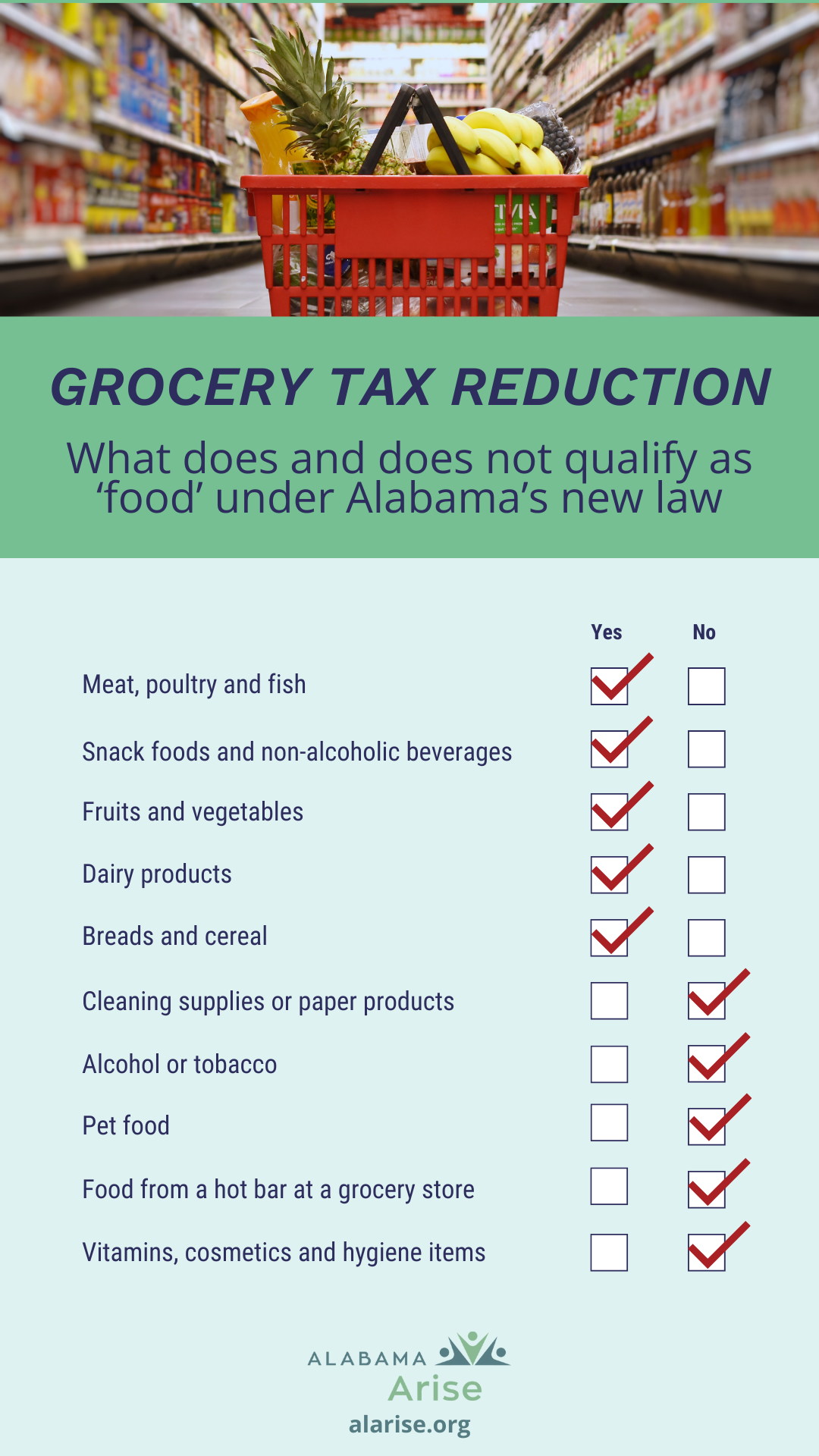
The new law reduces the sales tax on “food,” defined as anything eligible to be purchased with benefits under the Supplemental Nutrition Assistance Program (SNAP). This federal definition of “food” does apply to a broad range of foods and drinks, including:

  • Fruits and vegetables (fresh, frozen or canned)
  • Meat, poultry and fish
  • Dairy products
  • Breads and cereal
  • Snack foods and non-alcoholic beverages 

However, not everything qualifies for the grocery tax reduction. It does not apply to prepared meals served at restaurants or to most other hot, precooked foods. And it does not apply to many other items commonly purchased in a grocery store or the grocery section of “big box” stores like Walmart, Costco or Target. Items taxed at the new, lower rate do not include:

  • Foods that are purchased hot
  • Household cleaning supplies or paper products
  • Pet food
  • Alcohol or tobacco
  • Vitamins, cosmetics and hygiene items

Items not defined as “food” are still subject to the 4% state sales tax and the full local tax. This is true even if the items are sold at a grocery store or a retailer with a grocery section. Your receipts may show separate subtotals to reflect the different sales tax rates that apply to food and other items. (Look up your local sales tax rates here.)

What should happen next

Implementation of the grocery tax reduction ran into brief first-day hiccups at some stores, leading to some initial confusion. But one thing should be crystal clear and easy to understand: Reducing the sales tax on food will make life better for every Alabamian.

The new state grocery tax reduction will combat hunger and make it easier for Alabama families to afford food. And eventually eliminating the rest of the state grocery tax would help even more. Alabama Arise is committed to continue working to untax groceries responsibly and sustainably in future legislative sessions.
Alabama’s grocery tax reduction now in effect

Alabama has taken an important first step toward untaxing groceries. HB 479 took effect Sept. 1, reducing the state sales tax on groceries from 4% to 3%. The law will reduce the tax by another percentage point as soon as September 2024, as long as Education Trust Fund (ETF) revenues grow by at least 3.5% over the previous year. This policy change will help families keep food on the table and ease financial strain for Alabamians with low incomes.

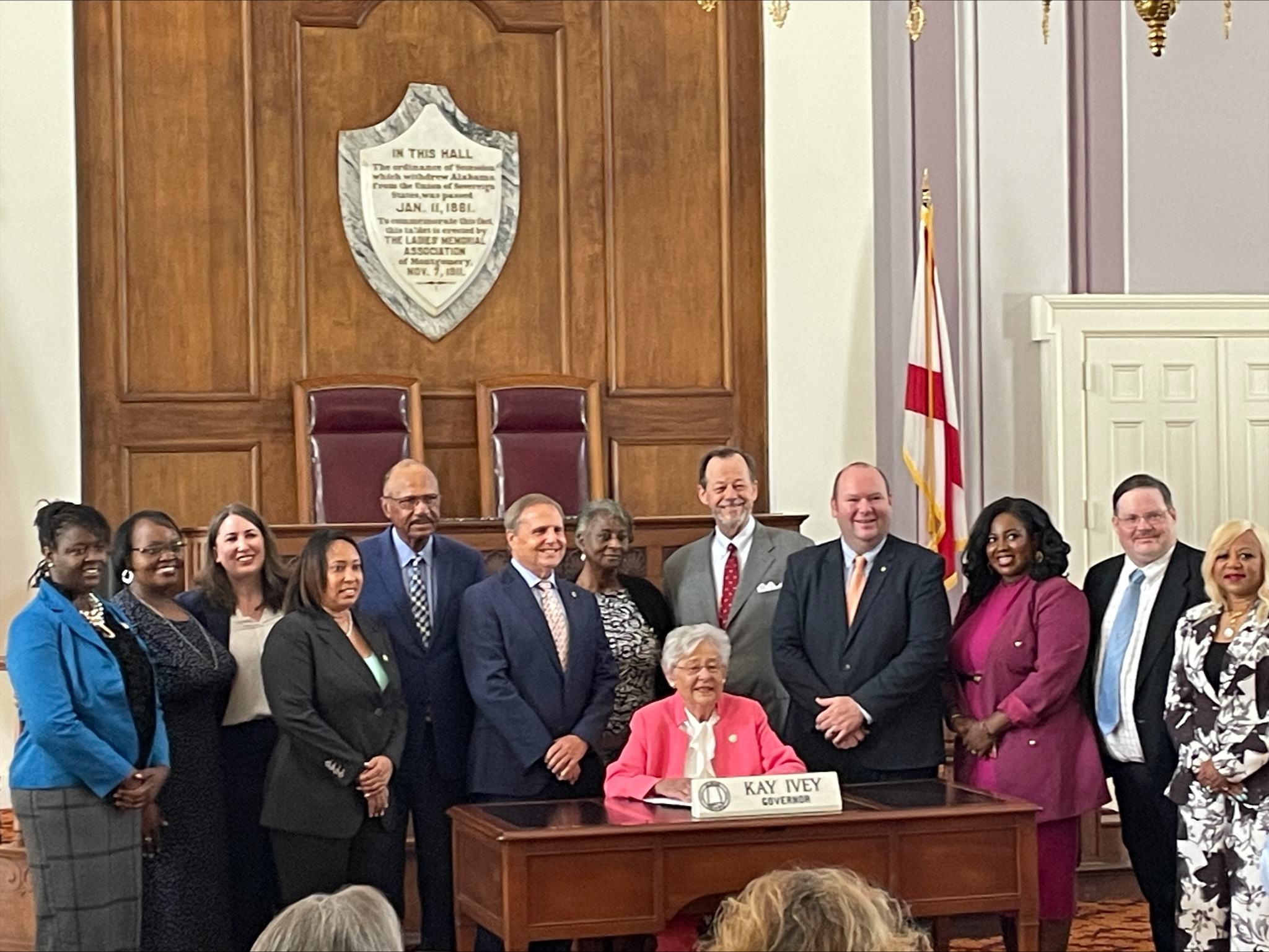
Smiling Alabama Arise staff members and current and former legislators stand behind and to either side of Gov. Kay Ivey, who is seated at a desk in the Old House Chamber in the State Capitol in Montgomery.
Alabama Arise staff participated in the signing ceremony for HB 479 on July 20 at the State Capitol in Montgomery. The law will cut the state grocery tax in half as soon as September 2024. From left to right: Rep. TaShina Morris, D-Montgomery; Arise organizing director Presdelane Harris; Arise executive director Robyn Hyden; Rep. Penni McClammy, D-Montgomery; former Rep. John Knight, D-Montgomery; Rep. Danny Garrett, R-Trussville; Rep. Mary Moore, D-Birmingham; Gov. Kay Ivey; Alabama Grocers Association representative Pat McWhorter; Sen. Andrew Jones, R-Centre; Arise policy and advocacy director Akiesha Anderson; Arise communications director Chris Sanders; and Rep. Rolanda Hollis, D-Birmingham.

The law’s enactment came after decades of persistent advocacy by Alabama Arise members. Several Arise staff members celebrated at a ceremonial bill signing July 20 at the State Capitol in Montgomery. Numerous legislative champions also attended the event, including Sen. Andrew Jones, R-Centre; Reps. Danny Garrett, R-Trussville, and Penni McClammy, D-Montgomery; and former Rep. John Knight, D-Montgomery.

Arise remains committed to eliminating the rest of the state grocery tax responsibly and sustainably. Those efforts will include working with policymakers to protect ETF funding by closing tax loopholes skewed in favor of wealthy households and highly profitable corporations.

At last: Alabama Arise members celebrate grocery tax reduction

The grocery tax bill passed. After more than three decades of persistent advocacy, Alabama Arise members turned that longstanding vision into reality this year. Every Alabamian will benefit as a result, and the benefits will be greatest for families struggling to make ends meet.

This breakthrough highlighted a 2023 regular session during which Arise members made a difference on numerous priorities at the Legislature. Our advocacy helped an important criminal justice reform become law and helped block efforts to undermine voting rights.

What the grocery tax bill will do

Alabamians will begin paying a lower state grocery tax this Labor Day weekend. HB 479, sponsored by Rep. Danny Garrett, R-Trussville, will cut the state sales tax on groceries from 4% to 2% in two steps. The reduction will apply to all items defined as food under the Supplemental Nutrition Assistance Program (SNAP). When fully implemented, the law will save Alabamians the equivalent of about a week’s worth of groceries every year.

The first step will take effect Sept. 1, when the state grocery tax will drop from 4% to 3%. The next reduction, from 3% to 2%, will come in September 2024, as long as Education Trust Fund (ETF) revenues have grown by at least 3.5% over the previous year. If they haven’t, the reduction will occur in the first year when revenue growth does meet that threshold.

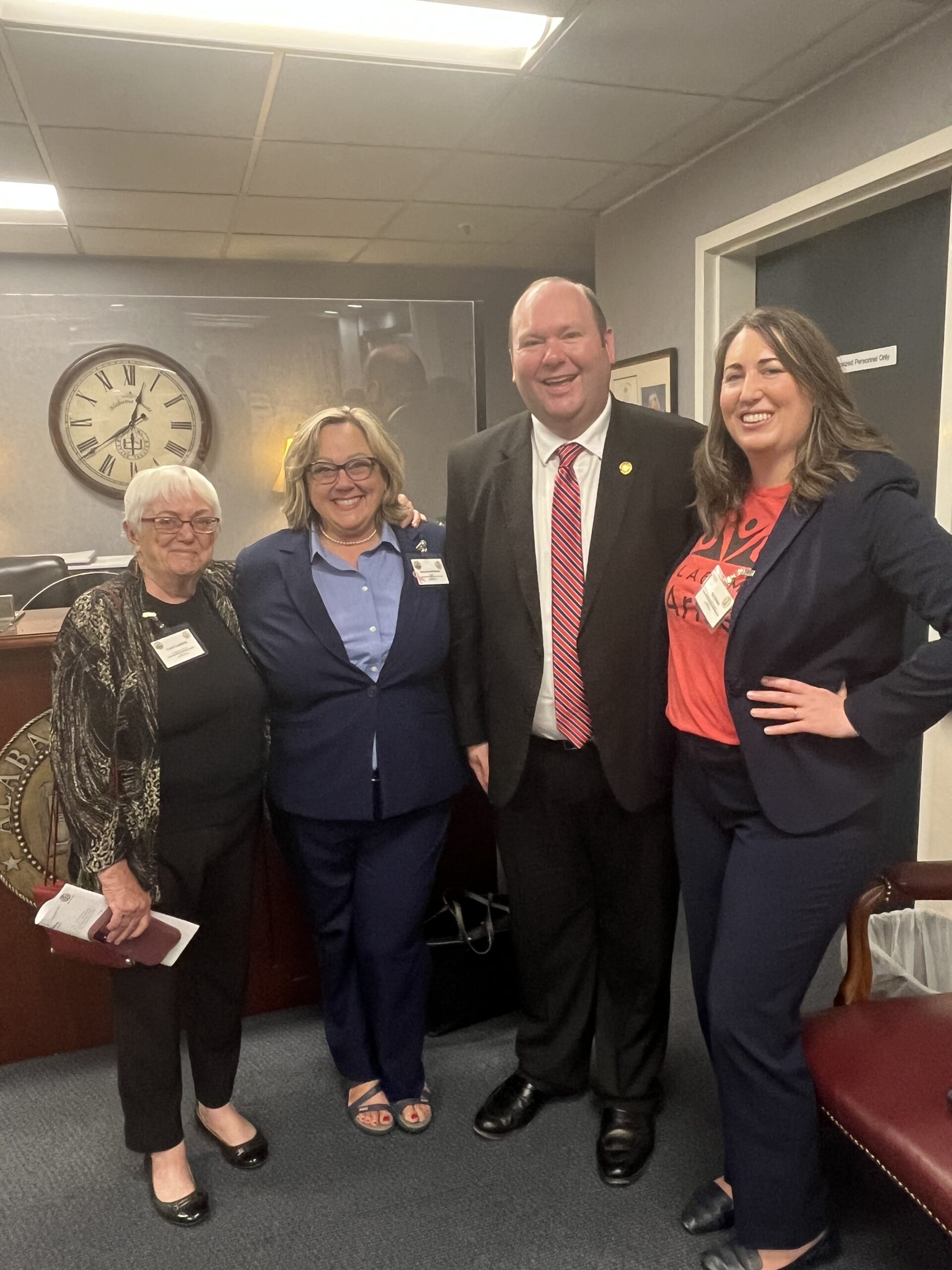
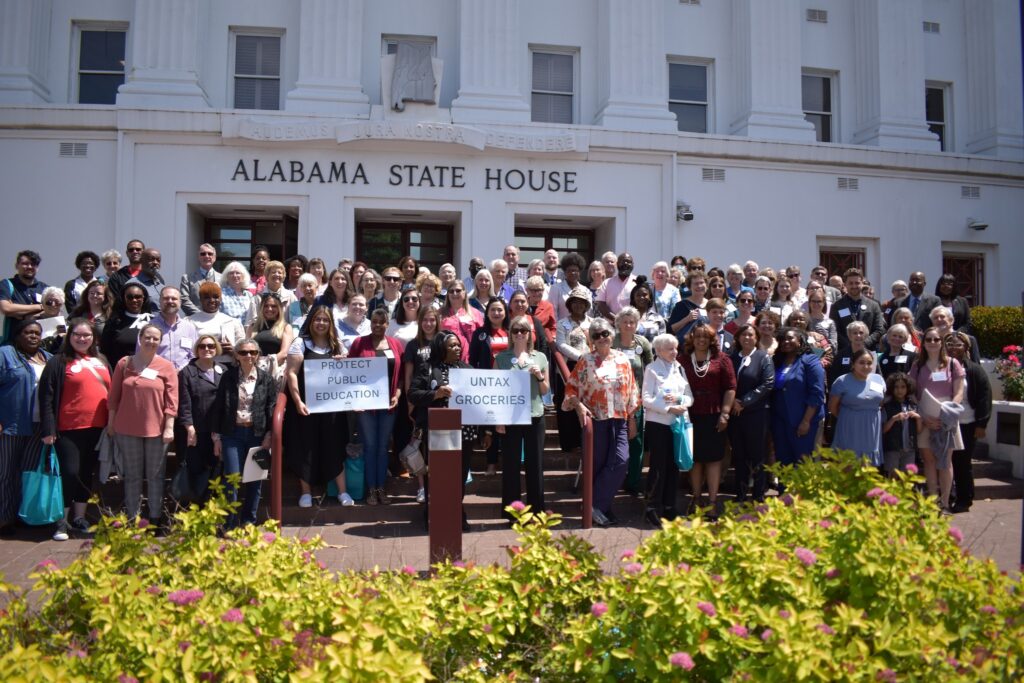
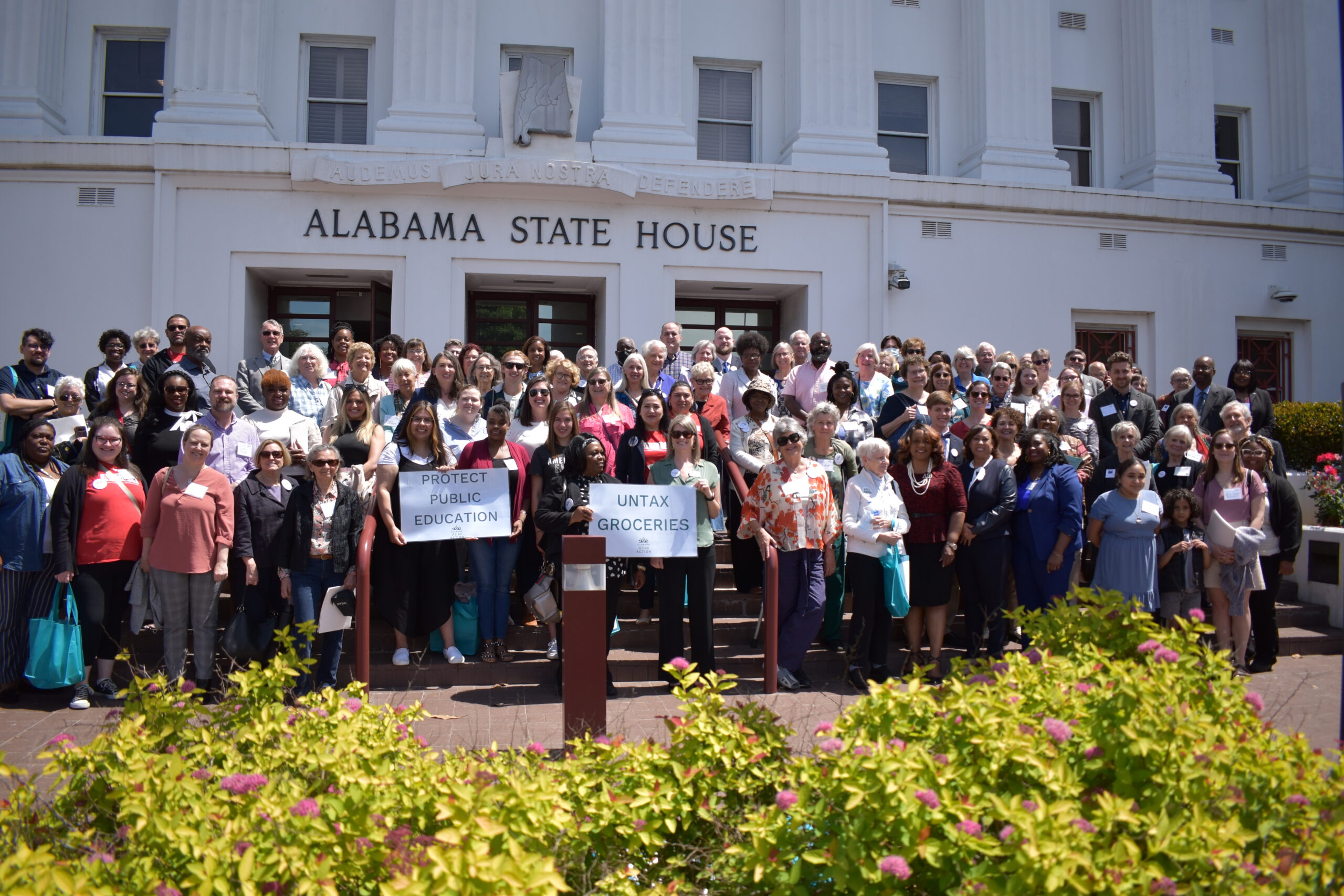
We were excited to see more than 120 people participating in Arise’s 2023 Legislative Day on April 11 in Montgomery. Arise’s longtime push to decrease the state sales tax on groceries took center stage, and our members’ energy was palpable. Our supporters’ passionate advocacy, this year and in so many previous years, got the bill across the finish line! Top photo: Arise members and supporters gather in front of the Alabama State House during our Legislative Day. Next: Arise’s McKenzie Burton (left) and Whitney Washington (right) pose for a photo with longtime Arise member Helen Rivas. Next: Policy analyst Mike Nicholson speaks about criminal justice reform. Next: Arise’s Robyn Hyden (right) and Carol Gundlach (left) and Anna Pritchett of AARP Alabama meet with Sen. Andrew Jones, R-Centre, to thank him for championing the fight to untax groceries.

HB 479 also allows (but does not require) cities and counties to reduce their sales taxes on groceries. The law allows localities that reduce their grocery tax to reverse some or all of that reduction later. But localities cannot increase local grocery taxes above their current rate.

Garrett’s bill emerged late in the session but quickly gained overwhelming bipartisan support. The House passed the bill 103-0 on May 25, and the Senate followed with a 31-0 vote June 1. Gov. Kay Ivey signed the bill into law June 15.

Garrett joined with Sen. Andrew Jones, R-Centre, and Lt. Gov. Will Ainsworth to guide HB 479 through the Legislature. But the bill’s passage also rests on the foundation laid by many other legislative champions through the years. They include former Rep. John Knight, D-Montgomery; former Sen. Hank Sanders, D-Selma; Sen. Merika Coleman, D-Pleasant Grove; and Reps. Laura Hall, D-Huntsville, Penni McClammy, D-Montgomery, and Mary Moore, D-Birmingham.

What comes next in our work to untax groceries

HB 479 is a watershed moment in Arise’s work for tax justice. That work will continue. The bill doesn’t eliminate the entire 4% state grocery tax, and it doesn’t replace the revenue. The state grocery tax is an important funding source for public education, bringing in about $600 million annually. That is about 7% of this year’s ETF budget.

“Revenues are strong enough for now to reduce the grocery tax without causing severe harm to education funding,” Arise executive director Robyn Hyden said. “But history tells us that good economic times won’t last forever.”

Legislators this year created a study commission to recommend sustainable ways to eliminate the rest of the state grocery tax. HJR 243, sponsored by McClammy, requires the commission to report its findings and recommendations by November 2026.

Arise will seize that opportunity to push lawmakers to close tax loopholes skewed in favor of wealthy people and highly profitable corporations. One such loophole is the state income tax deduction for federal income taxes (FIT). Alabama is the only state that still allows a full FIT deduction.

The state grocery tax is a cruel tax on survival that drives many Alabamians deeper into poverty. Arise is committed to building on this year’s success and ending this tax forever. With our members’ continued advocacy and support, that is another vision we’ll turn into reality together.

Arise legislative update: June 7, 2023

The Alabama Legislature’s 2023 regular session has come to a close. Arise’s Akiesha Anderson takes us through some big wins – including reducing the state’s grocery tax! – and other highlights from the session. We want to thank you for speaking out to support good bills and oppose harmful bills. Please visit alarise.org and follow us on social media as we continue to bring you updates throughout the year on our work for a better Alabama.

Grocery tax reduction bill’s passage is a win for every Alabamian

The Alabama Senate voted 31-0 Thursday to pass HB 479, a bill to reduce the state sales tax on groceries beginning Sept. 1. The bill now goes to Gov. Kay Ivey. Alabama Arise executive director Robyn Hyden released the following statement Thursday in response:

“Reducing the state sales tax on groceries will provide meaningful help for Alabamians who struggle to make ends meet. Alabama Arise is thrilled that legislators listened to the people by voting unanimously for this essential policy change. And we urge Gov. Kay Ivey to sign HB 479 into law quickly.

“Arise members from every corner of our state have advocated relentlessly for decades for Alabama to untax groceries. We cannot thank our members enough for their persistent efforts to make this bill’s passage a reality. Today is a testament to what’s possible when Alabamians of all races, genders, incomes and beliefs work together toward a vision of shared prosperity and a brighter future.

“This grocery tax reduction will benefit every Alabamian. And it is an important step toward righting the wrongs of our state’s upside-down tax system, which forces Alabamians with low and moderate incomes to pay a higher share of their incomes in state and local taxes than the wealthiest households.

“We appreciate Rep. Danny Garrett, Sen. Andrew Jones and Lt. Gov. Will Ainsworth for guiding HB 479 through the Legislature. We’re thankful for Rep. Penni McClammy and Sen. Merika Coleman for championing legislation on this issue this year. And we’re grateful for former Rep. John Knight, former Sen. Hank Sanders, Reps. Laura Hall and Mary Moore, and so many other legislators whose determined work over so many years laid the groundwork for this moment.

What should happen next

“Reducing the state grocery tax is a vital step toward the goal of ultimately eliminating it. The grocery tax is a cruel tax on survival, driving many families deeper into poverty. Quite simply, there are many better ways for Alabama to raise revenue than taxing a necessity of life.

Alabama Arise supporters gather outside the State House in Montgomery during Arise’s Legislative Day on April 11, 2023. More than 100 Alabamians came to urge their lawmakers to end the state sales tax on groceries.

“It will be important to ensure grocery tax elimination doesn’t harm our children’s education in the long term. The state grocery tax brings in more than $600 million a year for the Education Trust Fund. That’s about 7% of this year’s total ETF budget, making it a significant funding source for public schools.

“Revenues are strong enough for now to reduce the grocery tax without causing severe harm to education funding. But history tells us that good economic times won’t last forever. In the coming months, lawmakers should identify and agree to a sustainable solution to end the rest of the state grocery tax.

“Arise is open to numerous ideas for replacement revenue, and we look forward to working with the state’s new Joint Study Commission on Grocery Taxation to find a path forward. We continue to support our longstanding proposal to replace grocery tax revenue by capping or ending the state income tax deduction for federal income tax payments. Alabama is the only state to allow this full deduction, which overwhelmingly benefits the wealthiest households. Closing this skewed loophole would protect funding for public schools and ensure Alabama can afford to end the state sales tax on groceries forever.”

Arise legislative update: May 30, 2023

As the Alabama Legislature’s 2023 regular session begins to wind down, Arise’s Carol Gundlach looks at the House passage of HB 479, a major breakthrough on our longtime goal of reducing the state sales tax on groceries. She also discusses four major budget bills headed to the governor’s desk.

How will the grocery tax reduction law (HB 479) benefit every Alabamian?

HB 479 by Rep. Danny Garrett, R-Trussville, is a grocery tax reduction law that will benefit every Alabamian. Gov. Kay Ivey signed it into law June 15 after it passed the House 103-0 and the Senate 31-0. Below is a look at the principles that make a grocery tax reform bill good, what the new law does and what Alabamians need next.

Alabama Arise supporters gather outside the State House in Montgomery during Arise’s Legislative Day on April 11, 2023. More than 100 Alabamians came to urge their lawmakers to end the state sales tax on groceries.

What makes a grocery tax reform bill good for Alabamians

  • Provides a tax cut for families with low incomes across Alabama (not just wealthy households).
  • Protects education revenue to ensure our children’s classrooms are adequately funded in the years to come.
  • Is broad enough to have a meaningful and long-lasting impact.
  • Provides an immediate grocery tax reduction.

Provisions of the new law

  • Provides a tax cut for all Alabamians, cutting the current 4-cent tax in half as soon as September 2024.
  • Limits detrimental impacts to the Education Trust Fund (ETF) by making this tax cut contingent on projected growth to the ETF.
  • Is a broad, long-term tax cut on a wide range of foods, not just a limited subset.
  • Provides an immediate grocery tax reduction beginning Sept. 1, 2023.

What we need next

  • A complete elimination of the state grocery tax, rather than just part of it.
  • An active replacement of grocery tax revenue in the Education Trust Fund budget, such as elimination of the state deduction for federal income taxes (FIT) and other reforms of Alabama’s upside-down tax system.

Why is HB 479 a good plan to untax groceries?

  • It provides a tax cut on groceries for families with low incomes across Alabama (not just wealthy households).

    • The sales tax on groceries is a cruel tax on survival, driving struggling Alabamians deeper into poverty. The 4-cent state grocery tax costs a family of four about $600 a year, based on estimates using the moderate-cost food plan from the USDA’s cost of food at home reports.
    • This law will reduce Alabama’s 4-cent state sales tax on groceries to 2 cents in two steps. The cut will be 1 cent in 2023 and another 1 cent in 2024, assuming that projected ETF revenues grow by at least 3.5%. If they don’t, the reduction will occur in the first year when revenue growth does meet that threshold. This reduction will be an important step toward eliminating this regressive tax that makes it harder for families to make ends meet.
    • What’s missing? An ideal grocery tax proposal would eliminate the state’s entire 4-cent grocery tax, rather than just half of it. This is a cause for which Alabama Arise will continue to advocate.
  • It protects education revenue to ensure our children’s classrooms are adequately funded in the years to come.

    • Lawmakers should ensure proposals to untax groceries protect funding for public schools while making life better for struggling families across our state. 
    • The law specifies that the second half of the tax cut will occur on Sept. 1, 2024, if projected growth in total net ETF receipts for 2025 is at least 3.5%. If not, the cut will occur in the first year afterward when receipts do grow by that amount.
    • What’s missing? Alabama ultimately needs a concrete replacement for grocery tax revenues in the ETF budget to ensure we are good stewards of our children’s school funding.
      • Phasing out the federal income tax (FIT) deduction, a tax loophole that overwhelmingly benefits the richest 10% of Alabamians, would allow the state to eliminate the entire state grocery tax sustainably. This policy solution also would protect hundreds of millions of dollars’ worth of education funding each year.
  • It is broad enough to have a meaningful and long-lasting impact.

    • This tax cut applies broadly to eligible foods under the Supplemental Nutrition Assistance Program (SNAP), rather than only foods eligible under the Women, Infants and Children (WIC) program. The SNAP definition covers more food items and will make implementation clear. This is a long-term solution, not a one-time or temporary fix.
  • It provides an immediate grocery tax reduction.

    • Beginning Sept. 1, 2023, the state grocery tax will fall to 3 cents. This 1-cent reduction could provide a family of four with an immediate annual tax cut of about $150.
    • As prices continue to rise on many of the essentials that folks need to survive, every dollar helps families across Alabama who are struggling now to make ends meet.

This fact sheet was updated on June 16, 2023, to reflect the final text of HB 479 as enacted.

Alabama Arise testimony in support of untaxing groceries

Alabama Arise’s Robyn Hyden testified Wednesday before the House Ways and Means Education Committee in support of a bill to reduce the state sales tax on groceries. HB 479, sponsored by Rep. Danny Garrett, R-Trussville, would reduce the state grocery tax from 4% to 2% over time. It also would make this cut contingent on growth in the Education Trust Fund (ETF). Here’s the full text of Hyden’s prepared remarks:

Good morning! I’m Robyn Hyden, executive director of Alabama Arise. We’re a nonprofit coalition of 150 congregations, organizations and individuals promoting public policies to improve the lives of Alabamians who are struggling because of poverty. I want to say thank you to the 100 House co-sponsors and the 35 Senate co-sponsors who support HB 479 and its Senate companion bill.

For decades, Alabama Arise has hosted community conversations and listening sessions around to state to understand what we can do to build fairer opportunities for people to succeed and thrive. Untaxing groceries has always been at the top of the list for regular, everyday, working-class Alabamians, who spend a disproportionate amount of their income on sales taxes, like the grocery tax. Last month, we brought more than 125 grassroots advocates to the State House to ask you all to consider several ways to remove the grocery tax. And we are very pleased to see this bill receive your attention today.

Alabama Arise supporters gather outside the State House in Montgomery during Arise’s Legislative Day on April 11, 2023. More than 100 Alabamians came to urge their lawmakers to end the state sales tax on groceries.

An unjust burden

We believe that the grocery tax is an unjust burden on people who simply need to eat. While we had hoped that this bill would include a way to replace the revenue lost over the four years that we cut the tax in half, we are pleased to see that the bill offers a safeguard by limiting the tax cut if the ETF fails to grow.

We share concerns about cutting more revenue to support education. However, we believe that of all the proposals that have been introduced this year to divert ETF funds away from public schools, this bill provides a benefit to low-wage and working-class families who are struggling with the high cost of food. We urge this committee to consider additional ways to cut the full 4% state sales tax on food by finding ways to replace the lost revenue.

Arise appreciates the unprecedented levels of support for this bill from across the political spectrum. We support Rep. Garrett’s proposal and urge you to pass this bill promptly.

Arise legislative update: May 22, 2023

Arise’s Akiesha Anderson shares some good news from last week’s action at the Alabama Legislature. Those breakthroughs include the introduction of a House bill to reduce the state grocery tax, with nearly every representative joining as a co-sponsor. We also saw progress on several criminal justice reform bills, including the passage of SB 154, which will ensure far fewer Alabamians will have their driver’s licenses suspended due to inability to pay fines or fees.

Why Arise supports HB 479 / SB 257, a good plan to untax groceries in Alabama

SB 257 by Sen. Andrew Jones, R-Centre, and HB 479 by Rep. Danny Garrett, R-Trussville, are grocery tax reduction bills that would benefit every Alabamian. Below is a look at the principles that make a grocery tax reform bill good, what the bills do and what Alabamians need next.

What makes a grocery tax reform bill good for Alabamians

  • Provides a tax cut for families with low incomes across Alabama (not just wealthy households).
  • Protects education revenue to ensure our children’s classrooms are adequately funded in the years to come.
  • Is broad enough to have a meaningful and long-lasting impact.
  • Provides an immediate grocery tax reduction.

Provisions of the Jones/Garrett legislation

  • Provides a tax cut for all Alabamians, cutting the current 4-cent tax in half over the span of four years.
  • Limits detrimental impacts to the Education Trust Fund (ETF) by making this tax cut contingent on growth in the ETF.
  • Is a broad, long-term tax cut on a wide range of foods, not just a limited subset.
  • Provides an immediate grocery tax reduction beginning Sept. 1, 2023.

What we need next

  • A complete elimination of the state grocery tax, rather than just part of it.
  • An active replacement of grocery tax revenue in the Education Trust Fund budget, such as elimination of the state deduction for federal income taxes (FIT) and other reforms of Alabama’s upside-down tax system.

Why is HB 479 / SB 257 a good plan to untax groceries?

  • It would provide a tax cut on groceries for families with low incomes across Alabama (not just wealthy households).

    • The sales tax on groceries is a cruel tax on survival, driving struggling Alabamians deeper into poverty. The state sales tax on groceries costs the average Alabama family approximately $600 a year.
    • This bill would reduce Alabama’s 4-cent state sales tax on groceries to 2 cents over a multiyear period. The cut would be 1/2 cent per year and ultimately would give the average Alabama family an annual tax cut of about $300. This reduction would be an important step toward eliminating this regressive tax that makes it harder for families to make ends meet.
    • What’s missing? An ideal grocery tax proposal would eliminate the state’s entire 4-cent grocery tax, rather than just a fraction of it. This is a cause for which we will continue to advocate.
  • It would protect education revenue to ensure our children’s classrooms are adequately funded in the years to come.

    • Lawmakers should ensure proposals to untax groceries protect funding for public schools while making life better for struggling families across our state.
    • The bill specifies that the tax cut would occur only if the growth in total net receipts to the ETF in the immediately preceding fiscal year was at least 2% more than the prior fiscal year.
    • What’s missing? Alabama ultimately needs a concrete replacement for grocery tax revenues in the ETF budget to ensure we are good stewards of our children’s school funding.
      • Phasing out the federal income tax (FIT) deduction, a tax loophole that overwhelmingly benefits the richest 10% of Alabamians, would allow the state to eliminate the entire state grocery tax sustainably. This policy solution also would protect hundreds of millions of dollars’ worth of education funding each year.
  • It would be broad enough to have a meaningful and long-lasting impact.

    • This tax cut would apply broadly to eligible foods under the Supplemental Nutrition Assistance Program (SNAP), rather than only foods eligible under the Women, Infants and Children (WIC) program. The SNAP definition covers more food items and would make implementation clear. This is a long-term solution, not a one-time or temporary fix.
  • It would provide an immediate grocery tax reduction.

    • Beginning Sept. 1, 2023, the state grocery tax would be reduced to 3.5 cents. Though the immediate reduction is small, this 0.5-cent reduction would provide the average Alabama family an immediate $75 annual tax cut.
    • As prices continue to rise on many of the essentials that folks need to survive, every dollar helps families across Alabama who are struggling now to make ends meet.