More than 150 Alabama Arise member groups and nearly 2,000 individual members choose our legislative priorities each year. This process ensures that Alabamians most impacted by poverty have a seat at the table. Below are the priorities that our members selected for 2026.
For a PDF version of this document, click here or click the “Download” button above.
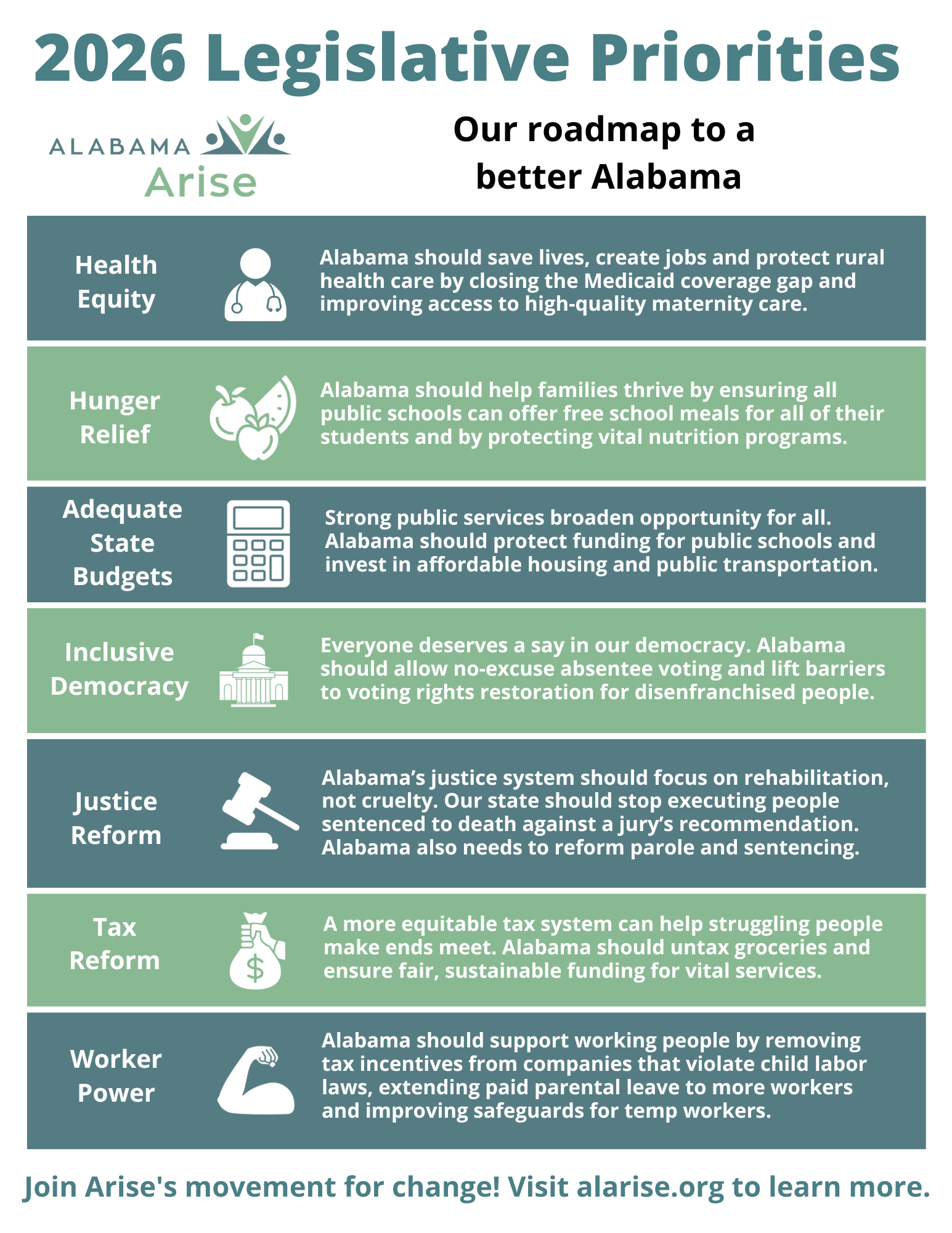
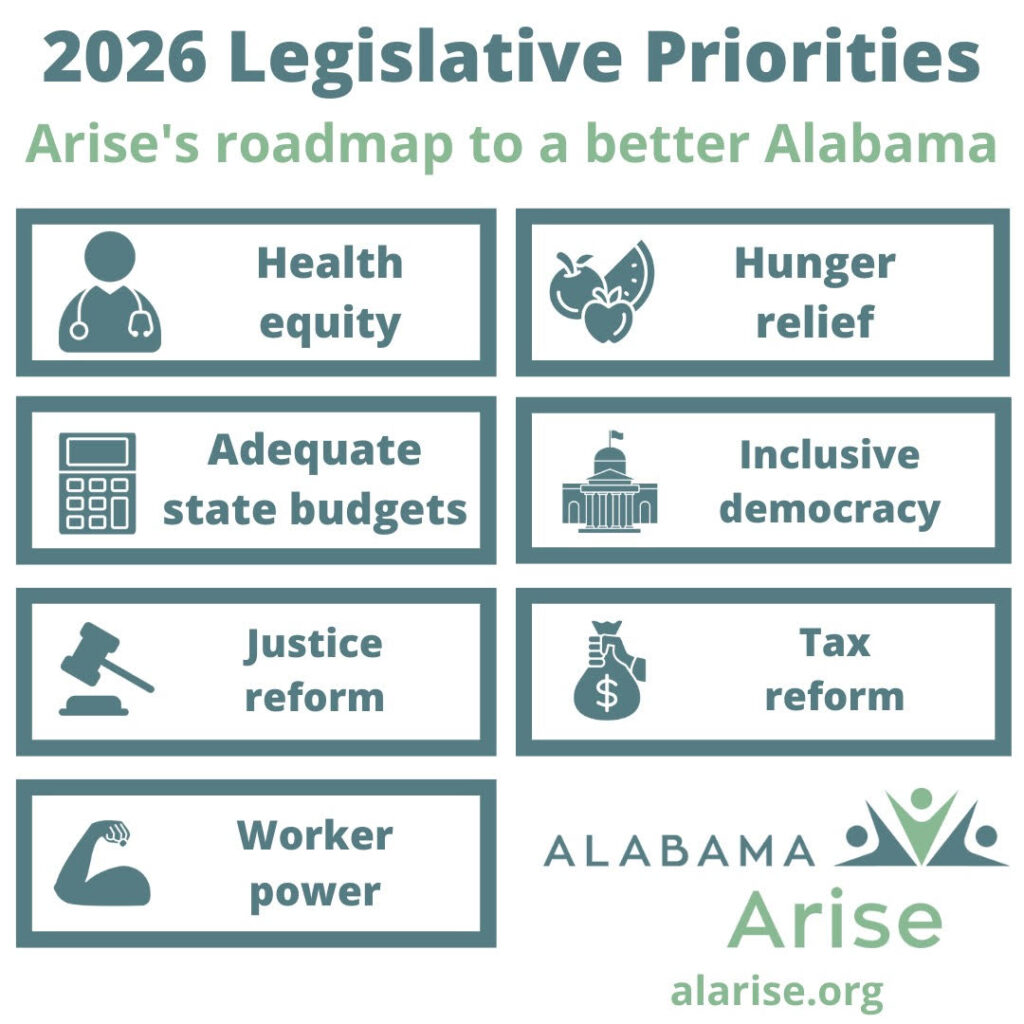
Health equity –Alabama should save lives, create jobs and protect rural health care by closing the Medicaid coverage gap and improving access to high-quality maternity care.
Hunger relief – Alabama should help families thrive by ensuring all public schools can offer free school meals for all of their students and by protecting vital nutrition programs.
Adequate state budgets – Strong public services broaden opportunity for all. Alabama should protect funding for public schools and invest in affordable housing and public transportation.
Inclusive democracy – Everyone deserves a say in our democracy. Alabama should allow no-excuse absentee voting and lift barriers to voting rights restoration for disenfranchised people.
Justice reform – Alabama’s justice system should focus on rehabilitation, not cruelty. Our state should stop executing people sentenced to death against a jury’s recommendation. Alabama also needs to reform parole and sentencing.
Tax reform – A more equitable tax system can help struggling people make ends meet. Alabama should untax groceries and ensure fair, sustainable funding for vital services.
Worker power – Alabama should support working people by removing tax incentives from companies that violate child labor laws, extending paid parental leave to more workers and improving safeguards for temp workers.
People should not have to choose between food, health care and other basic needs. But the White House’s decision to delay issuing food assistance benefits means millions of struggling families are about to be forced to make exactly that choice as the holidays approach.
The U.S. Department of Agriculture (USDA) last week officially notified Alabama and other states that it would not issue food assistance benefits under the Supplemental Nutrition Assistance Program (SNAP) at the beginning of November. These benefits, which for now are 100% federally funded, are sometimes referred to as food stamps. The Department of Human Resources (DHR) confirmed Monday that SNAP participants in Alabama will see their benefits delayed.
More than 750,000 Alabamians – 1 in 7 people in our state – participate in SNAP. Nearly 40% of SNAP participants are children, according to the Food Research and Action Center. Alabama provided an average of $194 each in SNAP assistance to each participant in July. That means an average Alabama family of three participating in SNAP will lose nearly $600 next month.
Withholding these benefits will increase hunger and hardship across our state. It also could be financially devastating for grocery stores and other retailers, especially those serving large numbers of SNAP participants.
What SNAP participants should know
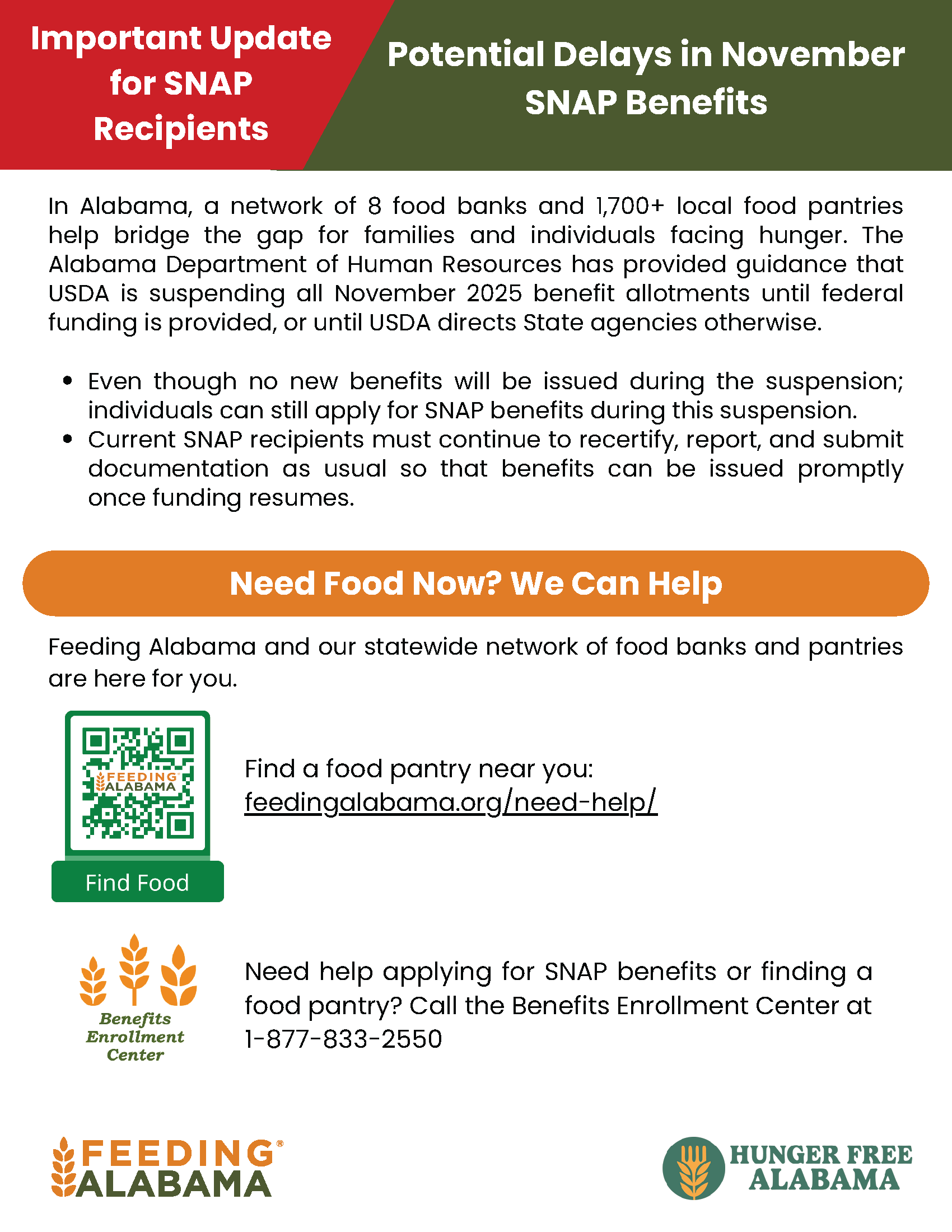
SNAP benefits still could be released later in November, either because the USDA changes its policy or because the budget standoff is resolved. If that happens, DHR will try to get November food assistance out as quickly as possible. But delays may occur, especially for people who get money added to their SNAP EBT cards early in the month.
If you are a SNAP participant, you still should be able to spend any money you already have on your EBT card after Nov. 1. But you will not see any additional money added to the card in November (or until this situation is resolved).
If you are scheduled to recertify your eligibility in November or to submit any paperwork to DHR, you should do that to avoid any further delays. And if you believe you are eligible for SNAP, you should go ahead and apply now. DHR is still processing applications, and eligible applicants will receive SNAP benefits retroactively to the date they applied once this situation is resolved.
USDA can and should fund SNAP benefits for November
The USDA is using SNAP as a bargaining chip in the debate over the federal budget. The agency blames its decision to delay November SNAP benefits on the federal government shutdown. But the truth is that the USDA maintains a SNAP contingency fund with enough money in it to cover most of the November benefits for the entire country.
The USDA already has dipped into some of its reserve funds to help farmers during the shutdown. While we support our farmers, we also support helping hungry families, especially with Thanksgiving approaching. Some states are scrambling to find enough state money to cover SNAP benefits through November. But the USDA has announced that, unlike in previous shutdowns and unlike for other federal programs, it will not reimburse states for any money spent for food assistance.
How you can fight hunger and speak out for change
Donate to a food bank or food pantry. Hunger is about to soar due to the SNAP benefit delay. Please consider generously donating to your local food bank or food pantry. Unlike most shoppers, food banks buy food in bulk and at a discount, so financial gifts can feed far more people than direct gifts of food. But food banks and food pantries appreciate every donation and will use them to help our neighbors and communities.
Demand action from your federal officials. Food banks play an essential role in relieving hunger, but they cannot replace SNAP. The USDA’s decision to delay November SNAP benefits will increase hardship for families across our country. This policy also is a part of an effort to pressure Congress to discontinue enhanced premium tax credits that make Marketplace health coverage more affordable for millions of Americans, including nearly 500,000 Alabamians.
You can speak out now to help protect food assistance and health care access for people across Alabama:
People and families need both food and health care. No one should have to make a choice between seeing a doctor and keeping food on the table, and Congress should support both food assistance and affordable health insurance.
Expanding health care access and improving maternal and infant health will remain top goals on Alabama Arise’s 2026 legislative agenda. The organization also will continue advocating for state funds to help public schools provide free school meals to every student.
Nearly 600 members voted in the last week to affirm Arise’s legislative priorities. The seven priorities chosen were:
Health equity, including policies to close Alabama’s health coverage gap for adults with low incomes and to protect access to maternity care.
Hunger relief, including legislation to allow more public schools to provide no-cost breakfast and lunch for all of their students.
Adequate state budgets, including equitable public education funding for every student and state funding for affordable housing and public transportation.
Inclusive democracy, including no-excuse early voting and removal of barriers to voting rights restoration for disenfranchised Alabamians.
Justice reform, including legislation to apply Alabama’s ban on judicial override of jury sentencing decisions in death penalty cases retroactively, as well as improvements to the state’s sentencing and parole systems.
Tax reform to build a more just and sustainable revenue system, including eliminating the rest of Alabama’s state sales tax on groceries and replacing the revenue equitably.
Worker power to advance the health and safety of Alabama families, including legislation to remove tax incentives from companies that violate child labor laws, as well as efforts to extend paid parental leave protections to more workers.
“Alabama Arise believes in dignity, equity and justice for everyone,” Alabama Arise executive director Robyn Hyden said. “Our legislative priorities seek to empower Alabamians of every race, income and background to reach their full potential. And they reflect our members’ commitment to building a healthier, more just and more inclusive Alabama for all.”
The urgent need to close Alabama’s coverage gap and protect affordable Marketplace plans
Arise members believe Medicaid expansion is a path toward a healthier future where all Alabamians can afford the health care they need. Expanding Medicaid would reduce racial health disparities and remove financial barriers to health care for adults with low incomes. Expansion also would support thousands of new jobs across the state. And most importantly, it would save hundreds of lives every year.
Alabama is one of only 10 states yet to expand Medicaid. Medicaid expansion would ensure health coverage for nearly 200,000 Alabamians caught in a coverage gap. Most of these residents earn too much to qualify for the state’s bare-bones Medicaid program but too little to afford private plans.
The number of Alabamians in the coverage gap could soar in 2026 if Congress fails to renew enhanced Premium Tax Credits for Marketplace plans under the Affordable Care Act. If lawmakers allow the credits to expire, about 130,000 Alabamians would lose their health coverage, and premiums for many others would nearly double.
“Everyone should be able to get the health care they need when they need it,” Hyden said. “Congress must act quickly to protect affordable Marketplace coverage for hundreds of thousands of Alabamians. And our state policymakers need to step up to close Alabama’s health coverage gap once and for all. This investment would pay off in the form of healthier families and stronger economic growth in communities across our state.”
No-cost school meals help Alabama children learn and thrive
Another key step toward a healthier Alabama is to ensure every public school can offer no-cost meals to every student. Hundreds of Alabama schools provide no-cost meals through the Community Eligibility Provision, but some schools cannot participate in the program.
Arise will advocate for additional state funding that local districts can use to match federal funds to offer no-cost meals. Legislators this year approved $17.3 million to expand school breakfast and continue Alabama’s participation in SUN Bucks, which provides $40 in food benefits per summer month for hundreds of thousands of Alabama children.
Stronger investment in school meals is more urgent amid threats to federal funding for the Special Supplemental Nutrition Program for Women, Infants and Children (WIC) and cuts to the Supplemental Nutrition Assistance Program (SNAP). Alabama and other states could run out of money for WIC in a few weeks if Congress does not renew its funding. And the federal budget law enacted in July will make fewer people eligible for SNAP while shifting more costs to states.
Children and communities across Alabama would enjoy immediate and long-term benefits from no-cost meals in public schools. No-cost meals would reduce child hunger in a state where nearly 1 in 4 children face food insecurity. Extending the reach of school meal programs would help reduce behavioral problems and improve attendance and test scores. Reducing food insecurity for children also can help improve their mental health and overall health as teenagers and adults.
“It’s hard for children to focus in school when they’re hungry,” Hyden said. “Lawmakers should ensure that WIC and SNAP continue to provide food assistance for families across our state. And our legislators should invest in no-cost school meals to reduce hunger and help every Alabama child succeed both in the classroom and throughout their lives.”
By Carol Gundlach, senior policy analyst, and Debbie Smith, Cover Alabama campaign director
While many Alabamians were celebrating July 4, Congress passed a sweeping budget reconciliation law that will hurt families across the country. To extend more than $1 trillion of tax cuts for the richest Americans, Congress slashed health care, food assistance and other vital services for ordinary people.
“It’s wrong to hurt people who are struggling to help people who are already far ahead,” Alabama Arise executive director Robyn Hyden said after the bill’s passage. “But Congress just passed legislation that will do exactly that. This budget bill is not only a moral failure. It’s bad policy, and it is a really bad deal for Alabama and our entire country.”
The biggest cuts nationally will be to Medicaid and to food assistance under the Supplemental Nutrition Assistance Program (SNAP). Alabama has not yet expanded Medicaid to cover adults with low incomes, but the harmful new budget law will make it harder for our state to improve and expand health care access. And the law’s SNAP cuts and barriers will increase hunger and hardship across Alabama.
SNAP cuts will make it harder to make ends meet
The SNAP cuts will threaten Alabama’s ability to fund essential state services. They also will impose red-tape barriers for SNAP participants and reduce the future buying power of SNAP.
Threats to state budgets: Beginning in 2026, the Alabama Legislature will have to appropriate an estimated $35 million a year in new funding for SNAP administration. Beginning in 2027, the Legislature also may have to appropriate an estimated $172 million annually in new funding to help cover SNAP benefits, which have been fully federally funded for decades. If Alabama lawmakers cannot or will not provide the required state share of funding, the state would have to reduce the number of SNAP participants or opt out of the program entirely. Eliminating SNAP would end food assistance for more than 750,000 Alabamians and send hunger rates soaring in a state where 1 in 4 children already struggle with food insecurity.
Changes that place time limits on more people who receive SNAP: Many older adults, families with teen children, veterans, people who are experiencing homelessness and young adults who were in foster care may face burdensome new work reporting requirements to receive food assistance. And beginning immediately, many people who are legally in the United States as refugees, asylum seekers or victims of domestic violence or sexual assault may no longer be eligible for SNAP.
Changes that likely will reduce the amount of SNAP assistance over time: The new law prohibits the federal government from making substantive changes to the USDA’s Thrifty Food Plan, on which the amount of SNAP benefits is based. This change will reduce the value of SNAP assistance over time.
Health care cuts will increase human suffering
Reconciliation cuts to Medicaid primarily targeted states that had expanded Medicaid, but the bill also will make it harder for Alabama to improve our Medicaid program. The law also failed to renew subsidies that make health coverage more affordable for hundreds of thousands of Alabamians.
The laweliminates key financial incentives that encouraged Alabama and other states to expand Medicaid. We no longer will be eligible for $619 million in additional federal funding on top of the 90% federal match, which would have helped pay for the startup costs of Medicaid expansion.
The law also includesrestrictions on provider taxes — a key tool Alabama uses to help fund its share of Medicaid. This will make it more difficult for Alabama to expand coverage going forward and could put a long-term limit on how our state finances Medicaid as health care costs rise.
Congress also failed to renewenhanced tax credits that have made Marketplace plans under the Affordable Care Act (ACA) more affordable since 2021. These subsidies have helped hundreds of thousands of Alabamians lower their monthly premiums. Now, those enhanced subsidies are going away at the end of 2025.
The cuts to healthcare.gov tax credits mean that Alabamians’ monthly premiums will increase and fewer people will qualify for financial help. About 130,000 Alabamians are expected to lose coverage because of these changes.
Where we go from here
Arise is taking numerous steps in response to this law’s passage. These actions include:
Analyzing the law’s long-term impact on SNAP, Medicaid and ACA financing.
Creating resources for partners, community organizations and the public to explain the changes and what they mean.
Meeting with state and local leaders to discuss options and ensure they understand the financial and human stakes of these changes.
Even in the face of harmful federal policies, Arise’s commitment to the people of Alabama remains strong. We are working every day to protect access to food and health care and make sure families have the information and support they need.
The federal One Big Beautiful Bill Act does not immediately cut or end food assistance benefits for people who now receive them. People who are now getting food assistance under the Supplemental Nutrition Assistance Program (SNAP) should continue receiving their monthly benefits normally for the foreseeable future, just as they have in the past. But the law likely will harm many participants and strain state budgets in coming years.
The act includes three major types of changes to SNAP. An overview of each category is below.
1. Changes that affect state budgets
Beginning in the 2026 regular session, the Alabama Legislature will have to appropriate an estimated $35 million in new funding for SNAP administration. This is because the act will require states to cover 75% of SNAP administrative costs, up from the current 50%.
Beginning in the 2027 regular session, the Alabama Legislature will have to appropriate an estimated $172 million in new funding for SNAP benefits. This amount could be smaller or larger each year based on annual changes in the state’s SNAP “error rate,” which includes both overpayments and underpayments of SNAP benefits. The error rate is not a measurement of fraud.
The act includes a sliding scale that requires states to pay for anywhere from 0% to 15% of SNAP benefits, depending on the state’s SNAP error rate. Based on Alabama’s most recent error rate, the state would have to cover 10% of the cost of SNAP benefits, or roughly $172 million.
If Alabama lawmakers could not or would not provide the required state share of funding, the state would have to reduce the number of SNAP participants or opt out of the program entirely. Eliminating SNAP would end food assistance for more than 750,000 Alabamians who participate in the program.
Deep SNAP cuts like those would send hunger rates soaring in a state where roughly 1 in 6 people – including nearly 1 in 4 children – already struggle with food insecurity, meaning they do not always have enough to eat or know where they are going to get their next meal.
Severe SNAP cuts also could be financially devastating for many grocery stores and other retailers. If those stores responded to the revenue loss by shutting down or reducing their hours of operation, that would decrease food access in communities across our state, particularly in rural areas.
2. Changes that place new requirements and limits on more people who participate in SNAP
Many veterans, people who are experiencing homelessness and young adults who were in foster care as children may have to comply with work reporting requirements.
Adults in a household with children aged 14 or older may have to comply with work reporting requirements. We don’t know exactly when this change will happen, but people who will be affected will get notice and an opportunity to ask for an exemption.
People who are between ages 55 and 64 may have to comply with work reporting requirements. We don’t know exactly when this change will happen, but people who will be affected will get notice and an opportunity to ask for an exemption.
Some people between 60 and 65 who have received special SNAP benefits for older adults under the Alabama Elderly Simplified Application Project (AESAP) may face additional barriers to participation.
Many people who are legally in the United States as refugees or asylum seekers may no longer be eligible for SNAP. We don’t know exactly when this change will happen, but people in these categories who are participating in SNAP now should continue to get their benefits until notified of a change.
3. Changes that likely will reduce the amount of SNAP assistance over time
The law will prohibit the federal government from changing the amount of SNAP assistance by updating the USDA’s “Thrifty Food Plan,” except to keep up with inflation. The Thrifty Food Plan is used as the basis for determining SNAP benefit amounts each year. This change will reduce SNAP assistance over time but won’t affect current benefit levels.
Alabama Arise executive director Robyn Hyden issued the following statement Thursday in response:
“It’s wrong to hurt people who are struggling to help people who are already far ahead. But Congress just passed legislation that will do exactly that. This budget bill is not only a moral failure. It’s bad policy, and it is a really bad deal for Alabama and our entire country. It also will undermine important bipartisan progress that state policymakers made this year on food affordability and maternal health care.
“This cruel budget plan will take away food assistance, health coverage and other vital services from tens of thousands of Alabama families who struggle to afford basic needs. And it will make those cuts in service of slashing taxes for billionaires and highly profitable corporations, with more than $1 trillion in tax cuts accruing to people in the top income brackets. Meanwhile, more than $1 trillion in funding cuts will impact essential services for people with low incomes.
SNAP cuts could send hunger soaring, undermine state grocery tax reduction
“Alabama likely will feel the worst effects from cuts to the Supplemental Nutrition Assistance Program. SNAP benefits have been fully federally funded for decades, but this plan will change that starting in October 2027. If this legislation were in effect now, Alabama would be on the hook for about $207 million a year in direct benefits and additional administrative costs for SNAP. That amount would be roughly the same as the state’s first-year cost to expand Medicaid to cover nearly 200,000 adults with low incomes, and it would not include the cost savings that Medicaid expansion would generate for other services.
“There is reason to worry that the Legislature would decide it can’t or wouldn’t provide the additional SNAP funding. In that case, Alabama would be forced to cut SNAP participation significantly – or even eliminate the program altogether for nearly 800,000 participants statewide. This federal cost shift would reduce our state’s ability to fund existing essential services and programs. And it could lead to deep SNAP cuts that would devastate grocery stores and other retailers in communities across Alabama.
“This bill will expand work reporting requirements to cover more SNAP participants, including veterans, people experiencing homelessness, and young adults aging out of foster care. Many of them likely will lose food assistance not because of a failure to work but because of a failure to complete complicated paperwork. These new red-tape barriers will increase hunger for struggling families while billionaires and corporations run off with a bigger slice of the pie.
“Federal SNAP cuts will leave more Alabamians unable to afford to keep food on the table. That is a step in the wrong direction, and it will undermine the benefits of the state grocery tax reduction that Alabama legislators enacted unanimously this year.
Health coverage cuts will increase human suffering, reduce health care access
“This budget plan will make health care inaccessible or less affordable for tens of thousands of Alabamians. It will allow enhanced Affordable Care Act subsidies to expire, increasing premium costs for marketplace plans. It also will remove the additional $619 million in federal incentives for the first two years of Medicaid expansion that Alabama left on the table. That increases the chances that our state will continue to refuse to expand Medicaid, leaving hundreds of thousands of our neighbors stuck in the health coverage gap with no options to afford life-saving care.
“In total, nearly 200,000 Alabamians could lose health coverage as a result of policy changes like these. Those coverage losses likely will increase hospitals’ uncompensated care costs and make health care even less accessible in rural areas. Fourteen rural hospitals in our state have closed since 2010, and more than 20 others are at risk of closing. When a hospital or clinic closes, it closes for everyone, regardless of their insurance status.
“The human toll of cutting health coverage is all too real. It might mean a later cancer diagnosis for your neighbor. Your pregnant friend might die when her preeclampsia isn’t caught or treated in time because she has to drive an hour longer to get to a doctor. Your son or daughter might experience a mental health crisis and have no way to access or pay for care. Funding for health coverage is not just a line on a spreadsheet. It is often literally a matter of life or death for people facing medical challenges.
Where we go from here
“It will be a few years before many of the federal budget bill’s worst provisions will take effect in full. Alabama Arise’s members and supporters will continue urging our state’s congressional delegation to reverse this bill’s harmful provisions. We also will continue working at the state level to advance public policies to improve the lives of Alabamians marginalized by poverty. That includes advocacy to close our state’s health coverage gap, to right the wrongs of our state’s upside-down tax system and to ensure that all Alabamians have the resources they need to survive and thrive.
“Alabama Arise believes in building an economy that works for everyone and a society where everyone has the opportunity to reach their potential. We will continue working in the years and decades ahead to make that vision a reality for our state.”
More resources
June 27: A news release on the Hands Off SNAP and Medicaid news conference at the State House in Montgomery.
June 5: A letter from 52 Cover Alabama coalition partners, including Alabama Arise, urging Ivey and legislators to oppose harmful cuts to Medicaid and health coverage under the Affordable Care Act.
May 23: A statement from Alabama Arise on numerous ways that the U.S. House budget bill would harm struggling Alabama families,
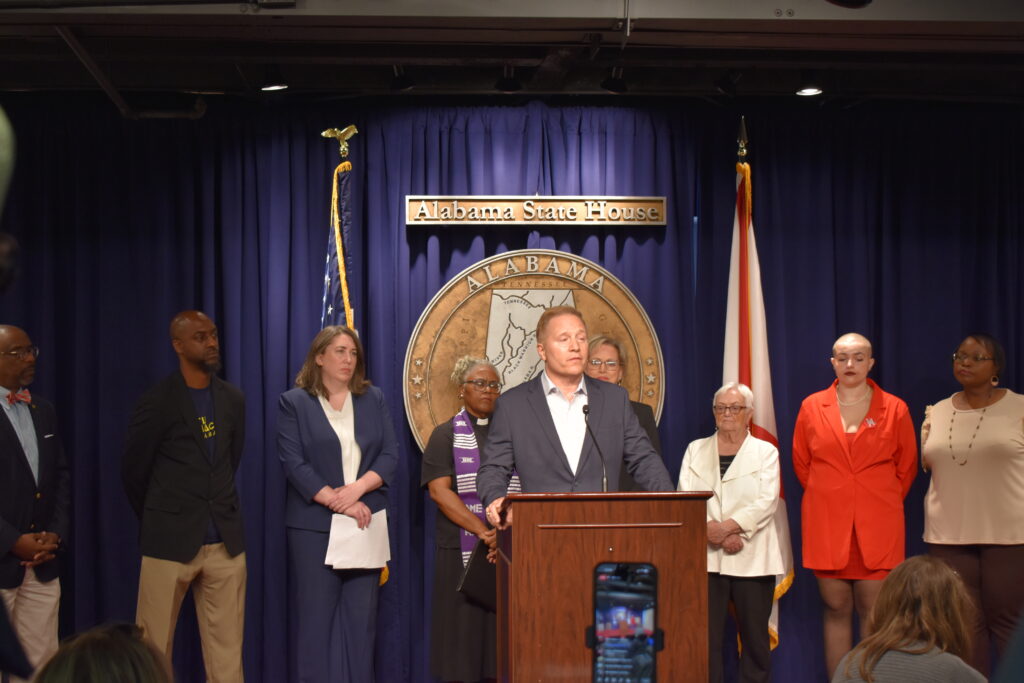
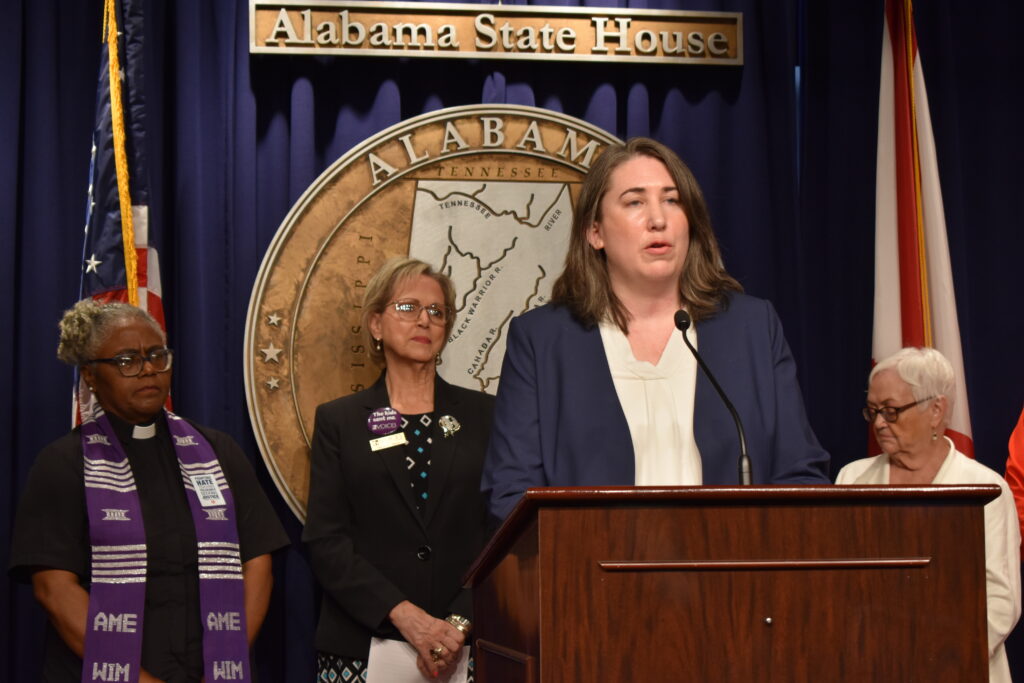
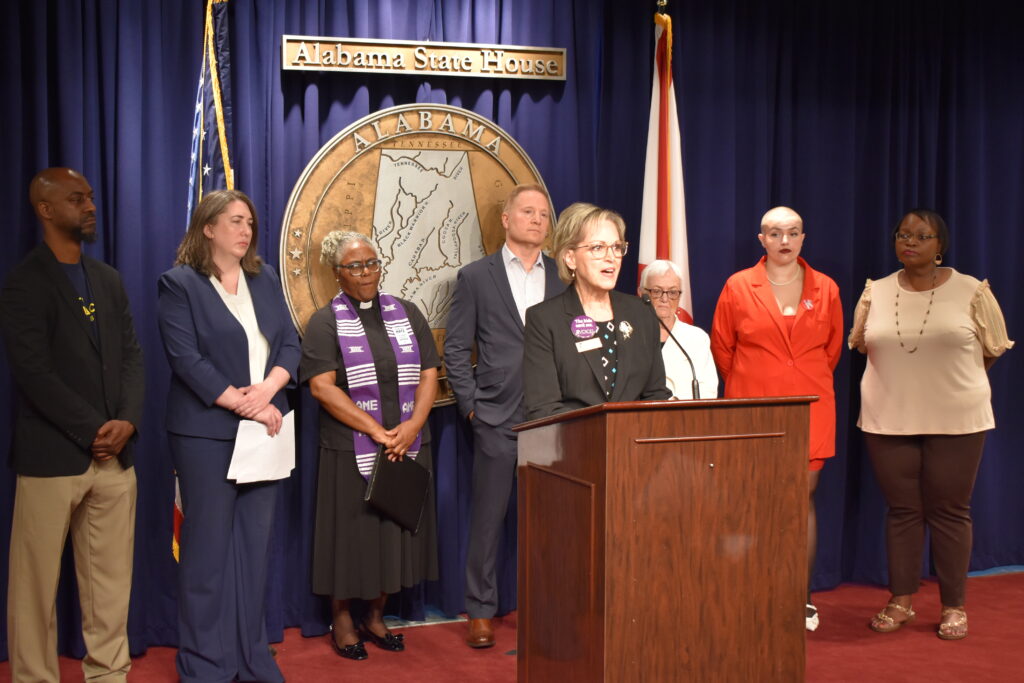
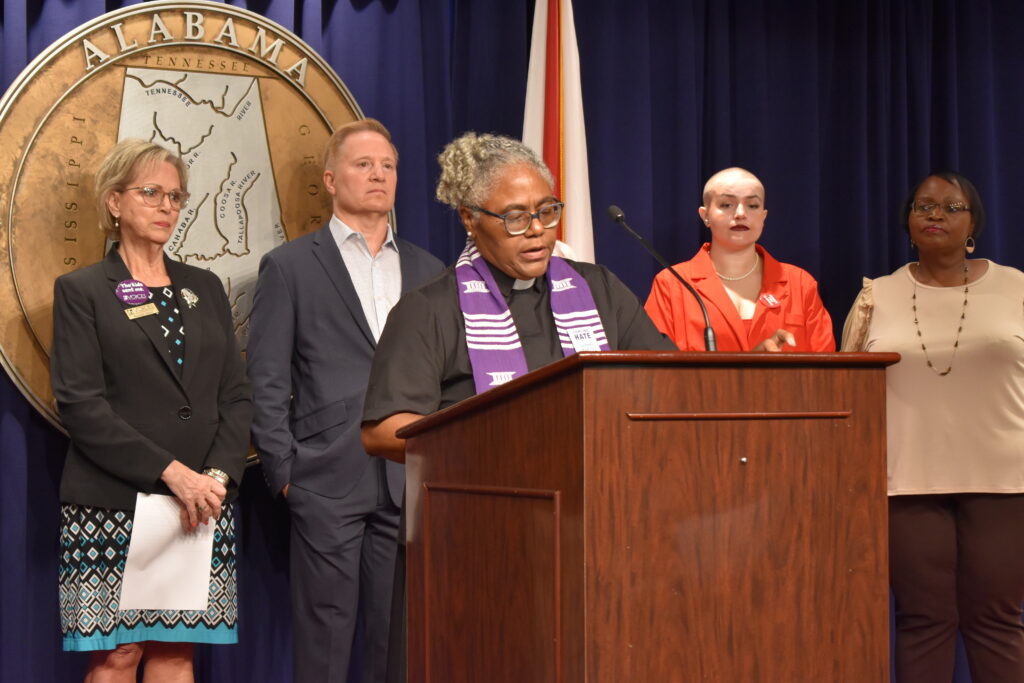
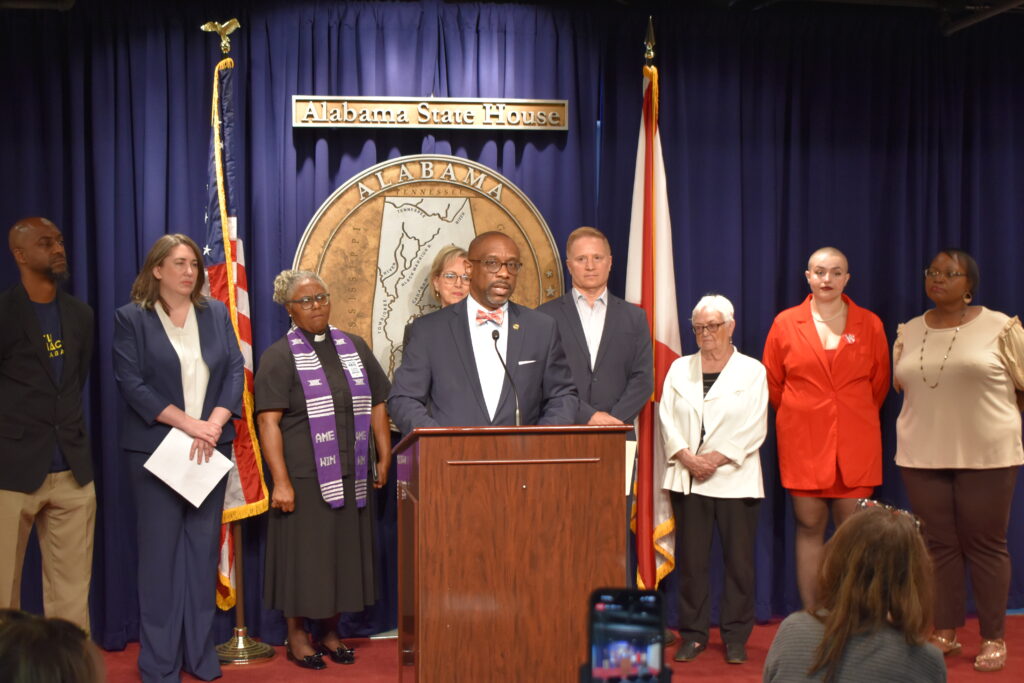
Alabama’s congressional delegation should oppose a harmful budget bill that would reduce or remove food assistance, health coverage and other vital services for hundreds of thousands of Alabamians who struggle to afford basic needs, Alabama Arise and other advocates said Thursday during a Hands Off SNAP and Medicaid news conference at the State House in Montgomery.
The U.S. Senate could vote on the bill, HR 1, as soon as this weekend. The U.S. House passed its version of the legislation by a narrow 215-214 vote in May. Both versions include deep cuts to the Supplemental Nutrition Assistance Program (SNAP) and to health coverage under Medicaid and the Affordable Care Act. And both versions also include large tax cuts for wealthy households and highly profitable corporations.
“It’s wrong to hurt people who are struggling just to help people who are already far ahead. That’s exactly what the Senate is debating right now,” Alabama Arise executive director Robyn Hyden said during the news conference. “The budget moving through Congress is not only a moral failure. It’s bad policy, and it is a really bad deal for our state.”
Photos from the news conference are available here. A video of the news conference is available here. (Remarks start at the 2:00 mark.)
SNAP cuts would send hunger soaring, imperil local retailers
For every meal that food banks provide in Alabama, SNAP provides nine. But if state lawmakers could not or would not provide new SNAP funding required under the bill, Alabama could be forced to cut SNAP benefits significantly – or even eliminate the program altogether for nearly 800,000 participants statewide.
Deep SNAP cuts could leave food banks with a “perhaps insurmountable” challenge, said Michael Ledger, president and CEO of Feeding the Gulf Coast, a food bank serving southwestern Alabama, southern Mississippi and western Florida.
“We’re worried that SNAP reductions are going to have a dramatic impact on our ability to help our neighbors,” Ledger said. “We’ve seen so many people who would have never dreamed they’d be in that position, in that position. I think as a community, it’s our responsibility to make sure we help these people through those struggles. If we don’t, where do they go?”
Michael Ledger, president and CEO of Feeding the Gulf Coast, speaks at a news conference at the State House in Montgomery on June 26, 2025. (Photo by Matt Okarmus)
Rhonda Mann, executive director of VOICES for Alabama’s Children, said nearly 5,000 retailers statewide redeemed more than $2 billion in SNAP benefits in 2023. She said the wreckage of harmful SNAP cuts would reach far beyond program participants.
“SNAP is incredibly important to the economy of our state. So when you don’t think this affects you because you don’t receive SNAP benefits, think again,” Mann said. “What you’re going to see are the closings of food retailers, and that will hurt everybody. Access to food in some areas of our state is already a problem, and it could become a problem in every area of our state.”
SNAP cost shift would strain state budgets
The federal budget bill could add severe strain to Alabama’s General Fund budget. Under the House-passed bill, states would have to pay for a portion of SNAP benefits, which have been 100% federally funded for decades, according to a sliding scale. The bill also would require states to pay for 75% of SNAP administrative costs, up from the current 50%.
Those cost shifts could leave Alabama on the hook for more than $120 million a year in direct benefits and additional administrative costs. For a sense of scale, that amount would be almost identical to the state’s Education Trust Fund (ETF) budget appropriations next year for both Jacksonville State University and the University of North Alabama combined. In a worst-case scenario, the state could be forced to find nearly $300 million a year for SNAP. That would be more than the 2026 ETF appropriation for either the University of Alabama or Auburn University.
Alabama Arise executive director Robyn Hyden speaks at a news conference at the State House in Montgomery on June 26, 2025. (Photo by Matt Okarmus)
While increasing Alabama’s cost to administer SNAP, the bill also would expand work reporting requirements to cover many more participants. Hyden said these changes would harm many veterans, people experiencing homelessness, and young adults aging out of foster care. She also warned that many families could lose food assistance not because of a failure to work but because of a failure to complete complicated paperwork.
“These cuts will see hunger skyrocket while our state government, churches and charities and everyday working families are struggling to get by, and we’re all going to pay for that,” Hyden said. “It’s going to reduce our ability to fund existing essential services and programs. And we are going to be left on the hook to pick up the slack while billionaires and corporations run off with a bigger slice of the pie.”
Medicaid, ACA cuts would increase health care costs across Alabama
The Senate bill also would make health coverage more expensive or less accessible for tens of thousands of Alabamians. The legislation would allow the expiration of extra financial help for health coverage through HealthCare.gov and would block Alabama from receiving an additional $619 million in federal incentives to expand Medicaid to cover adults with low incomes. In total, nearly 200,000 Alabamians could lose health coverage as a result of the bill’s changes.
Rhonda Mann, executive director of VOICES for Alabama’s Children, speaks at a news conference at the State House in Montgomery on June 26, 2025. (Photo by Matt Okarmus)
These coverage losses could make health care even less accessible in rural areas of Alabama, Mann said. Fourteen rural hospitals in the state have closed since 2010, and more than 20 others are at risk of closing.
“Medicaid dollars are for services and resources we all use, and cuts to Medicaid are going to result in increased health care costs for all of us,” Mann said.
Hyden underscored the human toll that losing health coverage could take on families and communities across Alabama.
“Cutting Medicaid and cutting the enhanced HealthCare.gov tax credits is going to mean one less early cancer diagnosis for your neighbor,” she said. “Your pregnant friend might die when her preeclampsia isn’t caught or treated in time because she has to drive over an hour to get to her doctor. Your daughter might experience a mental health crisis and have no way to access and pay for care.”
Rev. Valtoria Jackson, the Montgomery lead organizer for the Alabama Poor People’s Campaign, speaks at a news conference at the State House in Montgomery on June 26, 2025. (Photo by Matt Okarmus)
Rev. Valtoria Jackson, the Montgomery lead organizer for the Alabama Poor People’s Campaign, called the bill’s proposed cuts to food assistance and health care “a war on the poor.”
“This is not just bad policy. It is a moral sin,” Jackson said. “We know that when people lose access to health care, they die. When food stamps are cut, hunger rises.”
‘Do something better for our state’
State Sen. Kirk Hatcher, D-Montgomery, said he sees up close the struggles that people living in poverty face, both as a legislator and in his role as Head Start director in Montgomery County. Passing legislation to make life even harder for struggling families would be “an absolute moral abomination,” he said.
“I do know what this particular bill and many of the things in it will do to damage the lives of so many,” Hatcher said. “Every life – and I do mean every life – has value. … We can do better.”
State Sen. Kirk Hatcher, D-Montgomery, speaks at a news conference at the State House in Montgomery on June 26, 2025. (Photo by Matt Okarmus)
Jackson said the federal budget bill would cause significant harm to “the least of these” and urged Congress to reject it.
“Budgets are moral documents, not just numbers. And this budget is morally bankrupt,” Jackson said. “The budget will not reduce poverty at all; it will increase it. It will not help seniors live with dignity; it will push them deeper into despair. It will not uphold Alabama’s moral values; it will betray them.”
Hyden closed by urging U.S. Sens. Katie Britt and Tommy Tuberville to oppose cuts to food assistance and health care and to focus instead on policies that would improve the well-being of every Alabamian.
“We have time to ask Congress to do something better for our state,” Hyden said. “We ask you to protect essential services like SNAP and Medicaid to help us build strong, healthy communities. For the future of our state, for our children and families, for all of us who struggle and anyone who might struggle, please vote no on HR 1.”
More resources
Thursday: A photo gallery and a video livestream from the Hands Off SNAP and Medicaid news conference at the State House in Montgomery.
June 5: A letter from 52 Cover Alabama coalition partners, including Alabama Arise, urging Ivey and legislators to oppose harmful cuts to Medicaid and health coverage under the Affordable Care Act.
May 23: A statement from Alabama Arise on numerous ways that the U.S. House budget bill would harm struggling Alabama families.
The letter, initiated by Alabama Arise, asks state policymakers to contact members of Congress and express concerns about the bill’s negative impact on Alabama’s families and budgets.
“More than 750,000 Alabamians receive food assistance through SNAP, including 500,000 families with children,” the letter said. “The SNAP cuts being considered would increase hunger for every one of these Alabamians and would transfer significant financial obligations from the federal government to Alabama.”
SNAP cost shift would add enormous strain to Alabama budgets
U.S. House members voted 215-214 on May 22 for a budget bill that would reduce food assistance for tens of millions of Americans, including hundreds of thousands of Alabamians. The Senate is expected to consider the bill later this month.
The bill would require states to pay for a portion of SNAP benefits, which have been 100% federally funded for decades. States would be responsible for covering anywhere from 5% to 25% of SNAP benefit costs. The bill also would shift a larger share of SNAP administrative costs to states.
“At our best estimate, Alabama would become responsible for up to $258 million in direct benefit costs, plus an additional $35 million in administrative costs annually,” the groups’ letter said.
If state lawmakers could not or would not provide that funding, Alabama would be forced to cut SNAP benefits significantly – or even eliminate the program altogether for nearly 800,000 participants statewide. For a sense of scale, an additional $293 million in state expenses would be more than the state’s Education Trust Fund budget appropriation to either the University of Alabama ($266.2 million) or Auburn University ($287.9 million) for 2026.
New SNAP barriers could increase food prices, harm local economies
The House bill would limit future growth in the value of SNAP benefits, effectively cutting food assistance over time even as food prices continue to increase. The legislation also would add more red tape for SNAP participants, the letter says. These new barriers would include expanding the scope of current time limits and creating new work reporting requirements for 165,000 Alabamians, including parents with children over age 7, the groups’ letter said.
“Changes of this magnitude would create additional burdens for Alabama’s already stretched child care and child welfare systems and potentially would leave thousands of Alabama children and families without food on their tables,” the letter said.
SNAP provides vital, federally funded nutrition assistance to about 1 in 7 Alabamians — more than 750,000 people. More than 2 in 3 households that participate in SNAP are families with children. Many other participants are older adults or people with disabilities.
SNAP’s role in reducing hunger is especially important in Alabama and other states with high poverty rates. Nearly 1 in 4 Alabama children face food insecurity, meaning they do not always have enough to eat or know where they will get their next meal.
Funding cuts or other new barriers to SNAP enrollment would increase hunger and hurt local retailers, the groups’ letter said. That could mean higher food prices for everyone and even longer trips to the grocery store for many rural Alabamians.
“Deep SNAP cuts could force layoffs or closures at grocery stores and other retailers across our state,” the letter said. “A reduction or loss of SNAP benefits is a threat to our economy and the local communities where we all live and shop.”
Potential SNAP cuts would help fund tax breaks for the wealthiest households
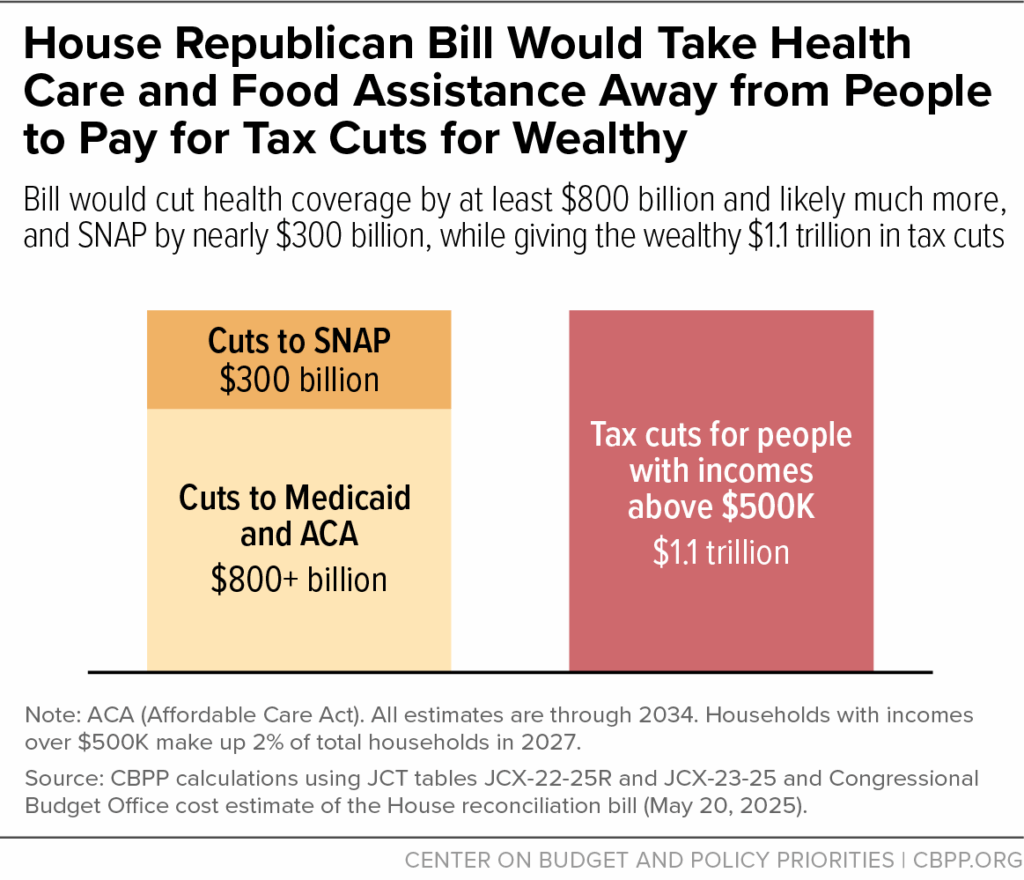
Congressional leaders are considering these cuts to food assistance and other human services in a push to offset the cost of tax cuts for wealthy households. The amount of potential SNAP and health care cuts in the House bill would be roughly equal to the cost of extending tax breaks for the wealthiest 2% of households, according to the Center on Budget and Policy Priorities, a nonprofit research and policy institute in Washington, D.C.
The Tax Cuts and Jobs Act, enacted in 2017, increased federal deficits while lavishing tax cuts on the country’s wealthiest households. Many of the law’s provisions are set to expire this year, including numerous tax breaks that disproportionately benefit wealthy people. These include higher estate tax exemptions and a cut to the top marginal income tax rate.
June 5: A letter from 52 Cover Alabama coalition partners, including Alabama Arise, urging Ivey and legislators to oppose harmful cuts to Medicaid and health coverage under the Affordable Care Act.
May 23: A statement from Alabama Arise on numerous ways that the U.S. House budget bill would harm struggling Alabama families.
Congressional leaders are considering cuts to food assistance and other human services in a push to offset the cost of tax cuts for wealthy households. The amount of potential SNAP and health care cuts in the budget reconciliation bill that the U.S. House passed in May would be roughly equal to the cost of extending tax breaks for the wealthiest 2% of households, according to the Center on Budget and Policy Priorities.
Alabama Arise joined 49 partner groups in a letter asking Gov. Kay Ivey and state legislators to speak out against the devastating budgetary and humanitarian effects of proposed federal food assistance cuts. The full text of the letter is below.
Letter text
Dear Governor Ivey, members of the Legislature and Finance Director Bill Poole:
We, the undersigned Alabama organizations, are writing to raise our concerns about the devastating negative impacts that the Supplemental Nutrition Assistance Program (SNAP) provisions in the federal budget reconciliation bill would have on Alabama.
More than 750,000 Alabamians receive food assistance through SNAP, including 500,000 families with children, 300,000 families with older adults or disabled people, and 24,000 Alabama veterans. The SNAP cuts being considered would increase hunger for every one of these Alabamians and would transfer significant financial obligations from the federal government to Alabama.
The reconciliation bill would shift tens of millions of dollars of costs for SNAP administration and benefits from the federal government to Alabama each year. At our best estimate, Alabama would become responsible for up to $258 million in direct benefit costs, plus an additional $35 million in administrative costs annually.
Congress is considering expanding the scope of current time limits and adding more work verification red tape for an additional 165,000 Alabamians, including parents with children over age 7. Changes of this magnitude would create additional burdens for Alabama’s already stretched child care and child welfare systems and potentially would leave thousands of Alabama children and families without food on their tables.
Congress also is considering limiting future growth in the value of SNAP benefits. Over time, this would reduce SNAP benefits for nearly 800,000 SNAP participants in Alabama, including more than 300,000 children, even as food costs continue to grow.
Potential cuts to SNAP would damage Alabama’s economy. More than 5,000 stores in Alabama are authorized SNAP retailers, many in small towns and rural communities. The USDA estimates that every $1 in SNAP benefits can generate $1.50 in economic activity. Deep SNAP cuts could force layoffs or closures at grocery stores and other retailers across our state. A reduction or loss of SNAP benefits is a threat to our economy and the local communities where we all live and shop.
We urge you strongly to help protect federal funding for SNAP in Alabama and to communicate your concerns with the members of the Alabama congressional delegation. If you have any questions, please do not hesitate to contact us. We appreciate your service to Alabama.
Signatories
Sincerely,
Alabama Arise
A Beautiful Life Enterprises, LLC (Birmingham)
Alabama Appleseed Center for Law & Justice
Alabama Childhood Food Solutions, Inc. (Sylacauga)
Alabama Dietetic Association
Alabama Institute for Social Justice
Alabama Network of Family Resource Centers
Alabama Poor People’s Campaign
Alabama Possible
Alfred Saliba Family Services Center (Dothan)
All Nations Church of God (Montgomery)
Athens-Limestone County Family Resource Center
Auburn United Methodist Church
Baptist Church of the Covenant (Birmingham)
Bay Area Women Coalition, Inc. (Mobile)
Birmingham Indivisible
Bread for the World, Alabama Chapter
Children and Family Connection of Russell County
Coffee County Family Services Center
Community Food Bank of Central Alabama (Birmingham)
Dallas County System of Services
Family Services of North Alabama (Albertville)
Family Support Center (Prattville)
Feeding Alabama
Feeding The Gulf Coast
First Christian Church of Montgomery, Alabama
Food Bank of East Alabama
Grace Presbyterian Church (Tuscaloosa)
Greater Birmingham Ministries
Great I Am Ministries Outreach International (Birmingham)
Growing Essence Nutrition, LLC (Montgomery)
Heart of Alabama Food Bank (Montgomery)
Hispanic and Immigrant Center of Alabama (¡HICA!)
Jefferson County Family Resource Center
Mary Hill Family Service Center (Ozark)
Mary’s House Catholic Worker (Birmingham)
National Lawyers Guild – Alabama Chapter
Next Step Community Development Center (Tuscaloosa)