The State of Working Alabama 2021, Section 4 – Praised but underprotected: Front-line workers in the pandemic

State of Working Alabama logo

Where are we now?

Since the COVID-19 pandemic began, we’ve grown used to seeing, and applauding, signs in front of hospitals, fire departments, police stations and other emergency service providers saying “Heroes work here.” And we’ve learned to say “thank you” to people serving their communities’ needs at grocery, drug and convenience stores.

We’ve learned to call these folks “essential workers” and “front-line heroes,” recognizing they are putting themselves at elevated COVID-19 risk to provide the rest of us with essential needs during a frightening pandemic. But Alabama’s actions on wages, health coverage and worker protections do not live up to the promise of those words.

How did we get here?

Front-line workers include tens of thousands of people working in public-facing jobs that put them at increased COVID-19 risk. Alabamians working in grocery stores, hospitals and pharmacies perform necessary tasks to keep our communities functioning during the pandemic. But their jobs often tend to pay less and offer fewer benefits.

The physical and financial burdens on the front-line workers facing those health risks are unevenly distributed. Alabamians in jobs like health care, food service and child care are disproportionately likely to be people of color and women. And state and national policy failures on COVID-19 are more likely to hit them the hardest.

Nearly two-thirds of Alabama’s front-line workers are women, according to the Center for Economic and Policy Research, though women comprise just under half of the state’s total workforce.[1] And women make up an even larger share of workers in some crucial front-line industries. Women comprise 81% of Alabama’s health care workers and 89% of child care and social services workers.[2] These jobs often involve consistent exposure to large numbers of people and thus greater risk of contracting COVID-19.
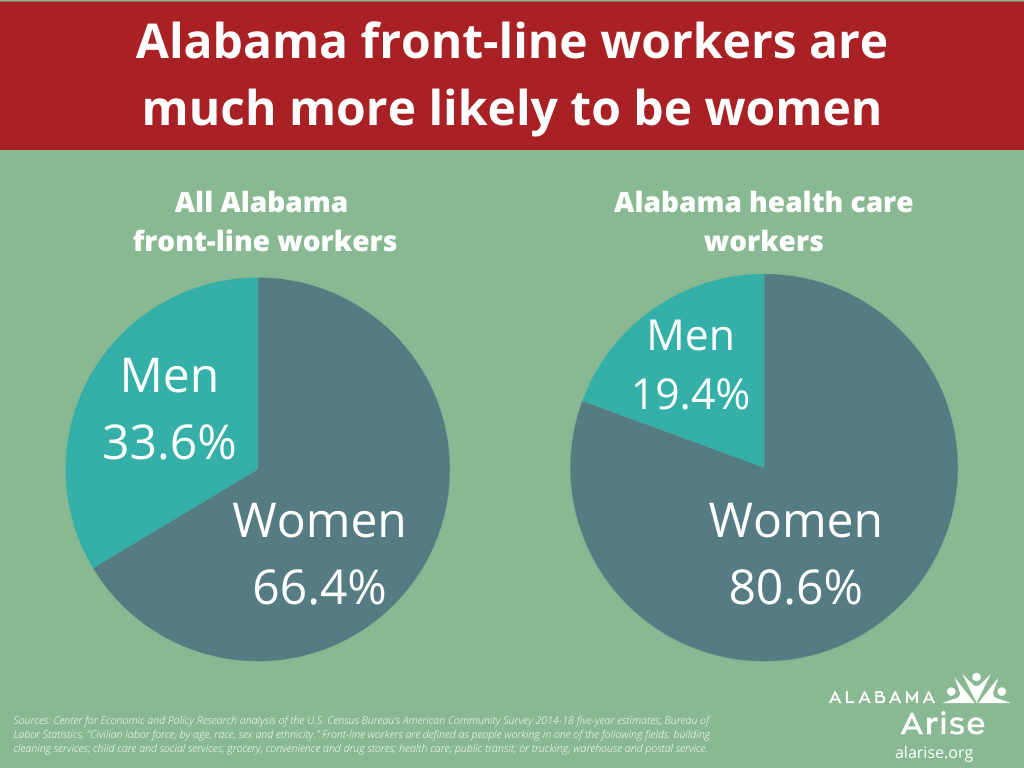
Alabama front-line workers are much more likely to be women. Women make up 66.4% of all Alabama front-line workers and 80.6% of Alabama health care workers.

PPE shortages endanger health care workers

Health care accounts for more than one in 10 jobs in Alabama.[3] And the higher proportion of women in this field contributes to an overall gender-based disparity for coronavirus exposure. In many facilities – especially early in the pandemic – personal protective equipment (PPE) like masks, gloves and face shields has run short for doctors, nurses and other health care professionals.

This structural failure has forced many workers to reuse PPE, posing potentially severe health risks. Get Us PPE, a grassroots organization founded by emergency physicians, reports that it received nearly 300 requests for PPE from Alabama businesses and health care providers between March and October.[4] Nationally, the group was able to provide only 12% of the total PPE requested.[5] Production and supply chain problems continue to cause PPE shortages, even for many health care facilities.

Low pay abounds in critical front-line industries

The wages and work conditions for front-line workers often don’t reflect the importance of their work. And that is especially true in fields where women predominate. Child care workers in Alabama for example, have a median wage of $9.19 an hour.[6] For home health workers, the median hourly wage is $11.89, and for cashiers, it is only $9.81.[7] By contrast, more predominantly male jobs like production and construction have median wages beginning at $15.11 per hour.[8]

Many workers received higher hourly wages early in the pandemic, but some employers began eliminating hazard bonuses as early as May. In the retail sector – already filled with low-wage jobs with sparse benefits – major employers like Amazon[9] and Kroger[10] ended wage bonuses before July 4, 2020.

UI cutoffs, eviction risk add to economic pressure

Returning to work at unsustainably low wages amid a pandemic isn’t the only way many hard-working Alabamians are being squeezed. The state also placed workers at risk of homelessness with an ill-timed, one-two policy punch. First came a wave of unemployment insurance (UI) benefit cutoffs beginning in May 2020.[11] A month later, Alabama lifted its two-month moratorium on evictions for nonpayment of rent.[12] Adding to the squeeze, a federally funded $600 weekly UI benefit increase lapsed at the end of July 2020, and Congress has renewed only half of that amount through March 14, 2021.[13]

The Biden administration has extended the Centers for Disease Control and Prevention (CDC)’s eviction moratorium through March.[14] But that moratorium does not cover all renters affected by COVID-19 and requires unnecessary paperwork. Alabama should reimplement its own eviction moratorium rather than relying on the more limited federal version.

Lack of health coverage increases risk for many people of color in Alabama

Structural factors leave Black and Hispanic/Latinx people at increased risk from COVID-19. Together, they account for a disproportionate share of workers in front-line jobs.[15] And because of long-term, systemic racism that creates barriers to regular health care,[16] Black Alabamians are more likely to have underlying conditions that worsen coronavirus outcomes.
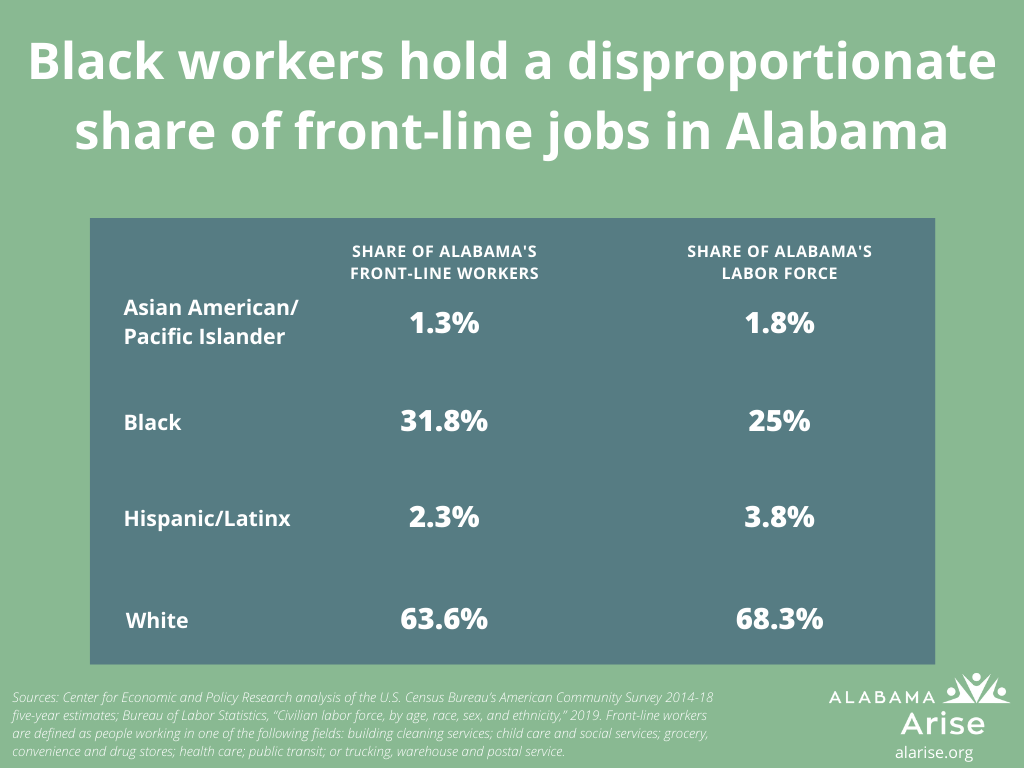
Black workers hold a disproportionate share of front-line jobs in Alabama. Black people are 25% of Alabama's labor force but 31% of front-line workers. The corresponding shares for white Alabamians are 68.3% and 63.6%. For Hispanic/Latinx workers: 3.8% and 2.3%. For Asian American/Pacific Islander workers: 1.8% and 1.3%.

Even among front-line workers, people of color are more likely to face heightened exposure in certain public-facing industries. In Alabama, the share of Black people working in grocery or convenience stores is two and a half times larger than in the U.S. workforce overall.[17] The share of Asian Americans and Pacific Islanders who work in grocery and convenience stores is double their percentage of Alabama’s overall population.[18]

Despite these elevated risks, Black and Hispanic/Latinx Alabamians are far more likely than white people to lack health insurance coverage. And because Alabama hasn’t expanded Medicaid, Black and Hispanic/Latinx residents are more likely to fall into the health coverage gap, earning too much to qualify for Medicaid but too little to afford insurance. People of color make up 34% of Alabama’s population but comprise 49% of uninsured Alabamians with low incomes.[19]

Data on the composition of front-line workers cannot account for differing exposure rates based on specific jobs within those career fields. But given that women in medical fields often face bias inhibiting their promotion into supervisory roles, women are likely at greater risk of coronavirus infection than their high proportion in the health care industry indicates. And overall, people of color are more likely to work non-supervisory jobs with higher public exposure in many front-line fields.

A choice no one should have to make

As a result, many older adults, cancer survivors and immunocompromised people face a stark choice between their lives and livelihoods. They must either subject themselves to a higher chance of death from COVID-19 or risk hunger and homelessness when they leave dangerous jobs or when the state cuts off UI benefits. Black and Hispanic/Latinx people, women and struggling families bear the brunt of this front-line risk.

What should we do now?

The pandemic has shined a light on many of Alabama’s policy mistakes. The state and nation can take this opportunity to fix harsh, shortsighted policies that devalue and harm working people by taking the following steps:

  • Expand Medicaid to cover low-paid Alabama adults. Expansion would ensure that front-line workers who lack health insurance can access treatment for COVID-19 and other health risks.
  • Allocate a share of the state’s federal COVID-19 relief funds to cover increased pay and benefits for front-line workers. This could and should include hazard pay for health care workers and direct service providers in long-term care during the pandemic.
  • Include workers’ compensation for illnesses related to COVID-19 among front-line workers as a key component of fair pay policy.
  • Guarantee permanent paid sick leave for all working Alabamians, regardless of employer size, so that no one has to choose between earning a paycheck and going to work sick.
  • Encourage workforce diversity and equal employment opportunities so more women and people of color can enter higher-paying jobs. Workforce development programs should develop inclusive trainee recruitment plans that prioritize women and people of color. Employers also should engage actively in efforts to expand child care and other work support programs that facilitate workforce diversity.
  • State and federal policymakers should aggressively address wage and employment discrimination based on gender and race to reduce occupational segregation and wage disparities.
  • Congress should increase the federal minimum wage to at least $15 per hour. A crucial way to honor “front-line heroes” is to ensure they are paid enough to make ends meet.
  • The Biden administration should bring procurement and distribution of PPE under federal control. This step would help increase front-line workers’ access to the protective equipment they need for the duration of this pandemic.
In focus

Tens of thousands of front-line workers left out of paid sick days protections

Like most states, Alabama does not require employers to provide paid sick, family, parental or personal leave. Long-standing government hostility to workers’ rights and Alabama’s origin as a plantation economy have made progress on workers’ issues difficult. This dearth of public policy protections for working people is a major reason Alabama is in an unsustainable position amid the pandemic. And other traditional methods of gaining economic security for working-class people, like unionization, are less robust here than elsewhere.

Early in the COVID-19 pandemic, the federal government provided the first paid leave provision available in many states. The Families First Coronavirus Response Act (FFCRA) provided 80 hours of paid sick leave, paid at full wages for workers infected with COVID-19 and two-thirds wages for family caregiving.[20] For Alabamians, total amounts paid through Feb. 16, 2021, to workers who lacked paid leave before the FFCRA would have been $1.26 billion.[21]

Unfortunately, Congress exempted companies with more than 500 employees from the FFCRA’s paid leave requirements. And further exceptions existed for businesses with fewer than 50 workers if a business could not pay a worker’s child care leave, or if lack of an employee would place the business at risk of failure, potentially requiring workers to work while having COVID-19 for the survival of their employer.[22]

Due to these exclusions, far too many Alabamians lack paid sick leave in the midst of the pandemic. Almost 840,000 people employed by major employers lack guaranteed coverage, and as many as another 421,000 Alabamians employed by small businesses could lose access as well because of the small business waiver.[23] All told, four in five workers in Alabama lack access to paid sick days thanks to loopholes in the FFCRA.[24]

Why Alabama should enact a paid leave law

Widespread lack of paid sick leave for Alabama’s low-wage jobs lessens job security and raises Alabamians’ health care costs. Paid sick leave and health insurance are two sides of the same coin. One benefit without the other forces working people to go to work while sick, exposing their coworkers to illness. It also forces people to take off work only when symptoms are severe, requiring more expensive care and longer recovery time. In a pandemic, this dilemma is literally a matter of life and death.

To fix this shortcoming, Alabama should implement the core of the FFCRA at the state level. But the state should remove the large-employer exception and reimburse small employers contemporaneously for emergency child care leave. This would avoid unnecessary strain on small employers’ finances and relieve major stressors on working Alabamians.

Alabama should lead the way for the South by taking these important steps on comprehensive family and sick leave. These policies would increase stability for working people and promote greater resilience in the face of health-related setbacks.


The State of Working Alabama 2021

The State of Working Alabama 2021: Executive summary
Introduction: The high cost of failing to protect the common good (Section 1)
Unequal by design: COVID-19 and Alabama’s policy legacy (Section 2)
Assessing the damage: COVID-19 and Alabama’s labor market (Section 3)


Why coverage matters: Health care in the time of COVID-19 (Section 5)
The ugly reality: Alabama’s hunger problem during the pandemic (Section 6)
No place to call home: Housing insecurity amid COVID-19 (Section 7)


Footnotes

[1] Hye Jin Rho, Hayley Brown & Shawn Fremstad, “A Basic Demographic Profile of Workers in Frontline Industries,” Center for Economic and Policy Research (April 7, 2020), https://cepr.net/a-basic-demographic-profile-of-workers-in-frontline-industries.

[2] Ibid.

[3] Ibid.

[4] Amanda Peery-Wolf, Ali Hickerson & Stephanie Zeller, Get Us PPE Shortage Index (December 2020), https://v9b3g8f2.stackpathcdn.com/wp-content/uploads/2021/01/PPE-Shortage-Index-December-2020-Get-Us-PPE.pdf.

[5] Ibid.

[6] Bureau of Labor Statistics, Occupational Employment Statistics, May 2019 State Occupational Employment and Wage Estimates – Alabama (March 31, 2020), https://www.bls.gov/oes/current/oes_al.htm.

[7] Ibid.

[8] Ibid.

[9] Isobel Asher Hamilton, “Amazon Drops $2 Coronavirus Pay Rise for Warehouse Workers As Jeff Bezos’ Fortune Nears $150 Billion,” Business Insider (June 3, 2020), https://www.businessinsider.com/amazon-cuts-2-dollar-hazard-pay-bezos-150-billion-2020-6.

[10] Dan Monk, “Kroger CEO: No more hazard pay for grocery workers,” WCPO 9 News (June 25, 2020), https://www.wcpo.com/news/local-news/i-team/kroger-ceo-no-more-hazard-pay-for-grocery-workers.

[11] Sarah Whites-Koditschek, “Alabama begins cutting unemployment for thousands for ‘refusal to work,’” AL.com (June 23, 2020), https://www.al.com/news/2020/06/alabama-begins-cutting-employment-for-thousands-for-refusal-to-work.html.

[12] Moriah Mason, “The federal eviction moratorium has been extended, but is it enough?,” Alabama Political Reporter (Jan. 28, 2021), https://www.alreporter.com/2021/01/28/the-federal-eviction-moratorium-has-been-extended-but-is-it-enough.

[13] Jennifer Liu, “Millions of unemployed Americans will get a $300 per week federal UI boost through March with new stimulus bill,” CNBC (Dec. 21, 2020), https://www.cnbc.com/2020/12/21/new-stimulus-provides-300-per-week-11-weeks-enhanced-unemployment.html.

[14] Mason, supra note 12.

[15] Celine McNicholas & Margaret Poydock, “Who are essential workers? A comprehensive look at their wages, demographics and unionization rates,” Economic Policy Institute (May 19, 2020), https://www.epi.org/blog/who-are-essential-workers-a-comprehensive-look-at-their-wages-demographics-and-unionization-rates.

[16] See, e.g., Grace Segers, “Fauci says he knows of no order to slow down coronavirus testing,” CBS News (June 23, 2020), https://www.cbsnews.com/news/fauci-coronavirus-testing-house-committee-testimony (quoting Dr. Anthony Fauci on the public health effects of institutional racism).

[17] Center for Economic and Policy Research analysis of U.S. Census Bureau, Community Population Survey 2014-18 five-year estimates; Bureau of Labor Statistics, “Civilian labor force by age, race, sex and ethnicity,” 2019.

[18] Annette Jones Watters, “Diversity in Alabama,” University of Alabama, Center for Business and Economic Research (Aug. 7, 2019), https://cber.culverhouse.ua.edu/2019/08/07/diversity-in-alabama.

[19] Alabama Arise, Medicaid Matters: Charting the Course to a Healthier Alabama, “Section 4 – How can we make Alabama healthier?” (June 17, 2020), https://alabama-arise.web-site-preview.com/resources/medicaid-matters-section-4-how-can-we-make-alabama-healthier.

[20] Kellie Moss, Lindsey Dawson, Michelle Long, Jennifer Kates, MaryBeth Musumeci, Juliette Cubanski & Karen Pollitz, “The Families First Coronavirus Response Act: Summary of Key Provisions,” Kaiser Family Foundation (March 23, 2020), https://www.kff.org/global-health-policy/issue-brief/the-families-first-coronavirus-response-act-summary-of-key-provisions.

[21] Alabama Arise analysis of Bureau of Labor Statistics data, available at https://www.bls.gov/news.release/archives/laus_03272020.pdf, https://www.bls.gov/opub/ted/2019/access-to-paid-and-unpaid-family-leave-in-2018.htm and https://www.bls.gov/oes/current/oes_al.htm.

[22] Moss, et al., supra note 20.

[23] Alabama Arise analysis of U.S. Census Bureau, Quarterly Workforce Indicators, Q4 2019.

[24] Ibid.

The State of Working Alabama 2021, Section 5 – Why coverage matters: Health care in the time of COVID-19

State of Working Alabama logo

Where are we now?

While the COVID-19 pandemic has slammed all segments of Alabama’s economy and society in one way or another, the health care industry is where most of these effects converge. By the end of 2020, more than 350,000 Alabamians had tested positive or were considered likely positive for the virus, 72% of them in the working-age range of 18 to 64.[1] More than 4,500 Alabamians had died of COVID-19 by Christmas.[2]

The pandemic’s toll has continued to mount in 2021. Alabama had the 11th highest COVID-19 death rate among states in mid-February 2021.[3] That means a higher share of Alabamians have died from the virus than in most other parts of the country. By mid-February, Alabama’s COVID-19 deaths in less than a year had surpassed 9,200,[4] far more than the number of Alabamians who died in World War II and all subsequent wars.[5] The average risk of death from the virus remains low, but:

  • The risk is not distributed evenly across age, racial/ethnic and economic groups.
  • Complications can be long-lasting and debilitating.
  • Everyone with a positive diagnosis has a new preexisting condition. This could affect their access to health coverage if Congress seeks to remove Affordable Care Act protections in the future.

Pandemic’s burden heavier on women, Black Alabamians

As COVID-19 swept across the country in spring 2020, the virus’s disproportionate impact on Black Americans quickly became apparent in emergency rooms, ICUs and death data, where that information was available.[6] When the Alabama Department of Public Health (ADPH) began daily COVID-19 data reporting in early April, Black people accounted for 52.1% of confirmed deaths,[7] while comprising only 26.6% of the population. Americans of color are more likely to have chronic health problems than their white counterparts for numerous reasons. These factors include barriers to health care, transportation, adequate nutrition and other basic necessities.

Other sections of this report highlight Alabama’s disproportionate reliance on women and people of color in various jobs that pose high risk of coronavirus exposure. Health care workers are a special case in this regard. For these workers, contact with infected individuals is not just a risk but a job requirement. And the Alabamians meeting this challenge are overwhelmingly women, at 80.6% of the health care workforce.[8] Black people make up 31.2% of Alabama’s health care workers, as compared to their 25% share of the state workforce overall.[9]

As providers of costly health services, doctors’ offices, clinics, hospitals and nursing homes are businesses, too. They can’t operate without keeping their personnel safe, functional and paid, without essential supplies on hand, and without keeping the doors open – challenges for any business during a pandemic. While many retail, manufacturing and hospitality businesses have seen their customer bases shrink dramatically during the shutdown, many health care providers have experienced waves of increased demand. Alabama’s failure to expand Medicaid to cover adults with low incomes has placed economic strain on providers serving these patients.

How did we get here?

The lifeblood of all this activity is the health insurance coverage that, for most Alabamians, pays much of the bill. While 55.9% of Alabama workers had employer-sponsored coverage in 2019, this overall rate masked wide disparity by race and ethnicity.[10] Among white workers, 62.2% had health insurance through their jobs, while the same was true for only 46.4% of Black workers and just 35.5% of Hispanic/Latinx workers in our state.[11]

Prior to COVID-19, almost 300,000 Alabamians with low incomes were caught in the state’s health coverage gap.[12] They earn too much to qualify for Medicaid under the state’s stringent eligibility limits but too little to afford private plans. Working-age Alabama parents are generally ineligible if their income is above 18% of the federal poverty line – just $3,960 a year for a family of three.[13] And virtually all Alabama adults without children are ineligible regardless of income.[14]

COVID-19 deepens coverage disparities by race, income

Working Alabamians make up the majority of those in the coverage gap, along with people who are caring for family members, going to school or awaiting disability determinations.[15] And the racial coverage disparity is stark: Forty-nine percent of uninsured Alabamians with low incomes are people of color, even though people of color make up just one-third of the state’s population.[16]

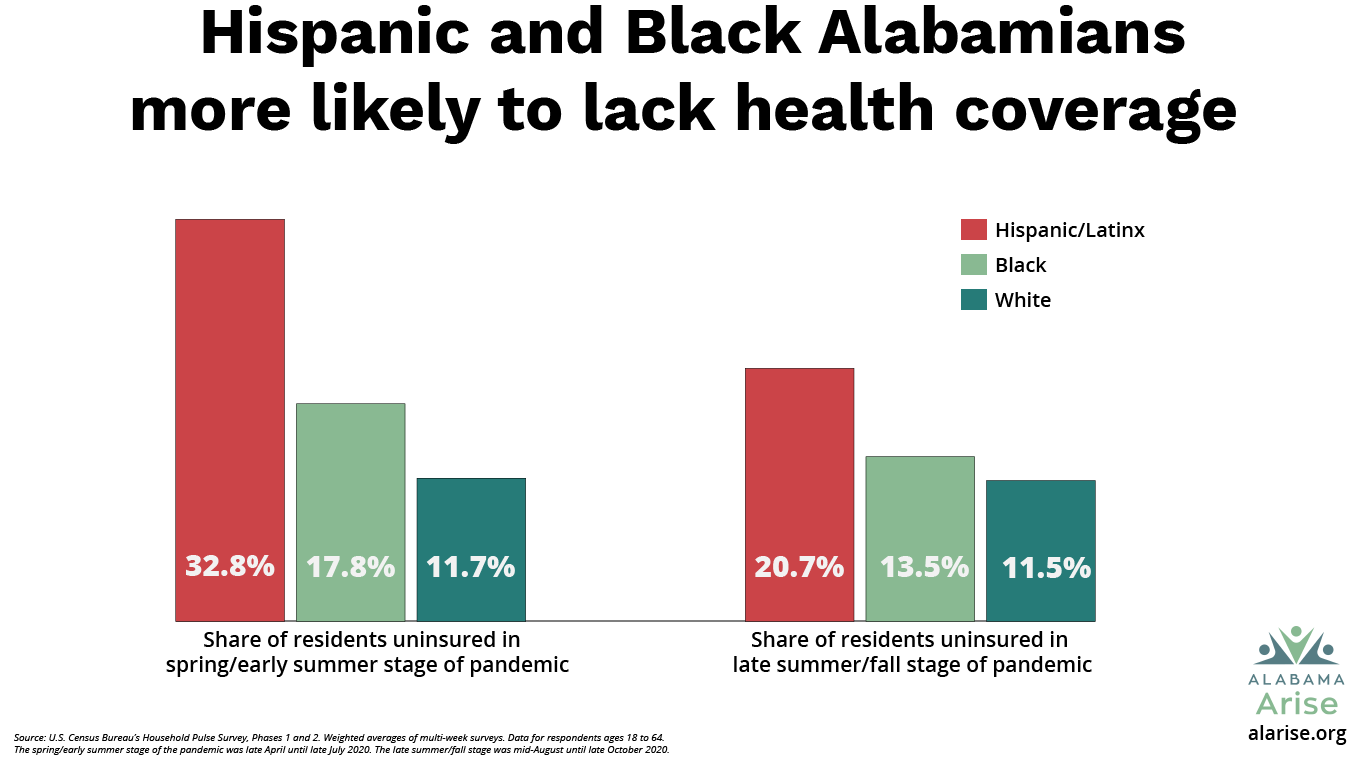
Job losses during the pandemic have reinforced racial disparities in health coverage. The initial impact during spring and early summer fell particularly hard on working-age Hispanic/Latinx Alabamians, who reported being uninsured at a rate of 30.3%. That was nearly twice the rate for Black people (15.7%) and nearly three times the rate for white people (10.3%).[17] Despite some gains, by late summer and early fall, Hispanic/Latinx Alabamians still reported being uninsured at twice the rate for white people.[18]


Hispanic and Black Alabamians are more likely to lack health coverage. 32.8% of Hispanic/Latinx residents were uninsured in the spring/early summer stage of the pandemic, and 20.7% were uninsured in the late summer/fall stage. The corresponding rates for Black residents were 17.8% and 13.5%. For white residents, the rates were 11.7% and 11.5%.

An analysis of uninsured rates by income level reveals even more striking disparities. During both the spring/early summer and late summer/fall stages of the pandemic, uninsured rates were highest by far for workers earning below $35,000 a year, and the rates decreased consistently as income increased.[19] In the first stage, Alabamians earning below $35,000 reported an uninsured rate of 27.2%, while those earning $100,000 and above showed a rate of just 3.8%.[20] In the second stage, those rates dropped to 22.9% and 1.8%, respectively.[21] Broadly speaking, the higher the income, the more likely workers are to have either employer-based health insurance or the means to purchase private plans.


Alabamians with lower incomes are more likely to lack health coverage. 27.2% of residents with an annual household income below $35,000 were uninsured in the early spring/summer stage of the pandemic, while 22.9% were uninsured in the late summer/fall stage. The corresponding rates for residents with incomes between $35,000 and $75,000 were 9.8% and 10.9%. For residents with incomes between $75,000 and $100,000, the rates were 3.5% and 4.9%. For residents with incomes above $100,000, the rates were 3.8% and 1.8%.

Expand Medicaid to save lives, advance racial equity

The most direct solution to these coverage gaps is Medicaid expansion. A 2019 UAB study estimated that expansion would enroll more than 346,000 Alabamians – most of the eligible uninsured, plus some people who are paying for insurance they can’t afford.[22] Alabama’s high uninsured rate for low-wage workers underscores the fact that Medicaid expansion is a pro-worker policy. And given the disproportionate share of people of color in the coverage gap, expanding Medicaid is the biggest step Alabama can take to advance racial equity in our health care system.

It’s been hard to break through with numerous policy solutions to remove Alabama’s barriers to health care. For example, Alabama Medicaid was unwilling to cover most telehealth services for people who lack reliable transportation – until the COVID-19 shutdown made remote services imperative. And though nutritional supports like vouchers for healthy groceries are available through Medicaid in some states, they’re not in Alabama.

Alabama also has refused to remove the 4% state sales tax on groceries,[23] which would make nutritious food more affordable and give all state households the equivalent of two weeks of free groceries every year. And most notably, Alabama has yet to join 38 other states (plus the District of Columbia) in covering working people with low incomes through Medicaid expansion,[24] a policy change that would directly address Alabama’s racial/ethnic health disparities.

As noted elsewhere in this report, many Alabama lawmakers have expressed more interest in protecting businesses from COVID-19 liability claims than in protecting working people from health risks and economic hardship. A balanced approach to corporate immunity would include expanding health coverage and workers’ compensation for the working Alabamians who have enabled companies to stay in business during the pandemic.

What should we do now?

Just as a hurricane or earthquake tests the strength of buildings and provides a template for improving durability, a health crisis like COVID-19 offers clear lessons for strengthening worker health protections and services. The following measures would help Alabama be better prepared for the next pandemic. They also would promote a healthier workforce and an economy in which everyone has an equal opportunity to thrive. Alabama should:

  • Provide health coverage for adults with low incomes by expanding Medicaid. This single step would facilitate more COVID-19 testing, treatment and vaccination; increase worker health and productivity; and strengthen Alabama’s health care system, especially rural hospitals. Lawmakers’ rush to immunize businesses against pandemic-related claims only makes the need for worker protections like health coverage more urgent.
  • Expand use of telehealth services by means of universal broadband access and provider incentives.
  • Identify and address health disparities. Adopt a rigorous data collection program across state agencies to identify health outcome disparities related to race/ethnicity, income and geography. Engage research universities and state health agencies in developing and implementing a strategic plan for reducing targeted health disparities.
  • Support community health. Develop and implement a strategic plan for linking underserved communities with health care by means of community health workers. Alabama is one of just three states that have not defined a role for community health workers in the state health care system, according to the National Academy for State Health Policy. Our state’s failure to act is depriving underserved communities not only of improved health services and outcomes but also job creation and economic development.
  • Promote community-based participatory research to increase chronic and infectious disease awareness, preventive behaviors and health equity.
In focus

Powering up for recovery: The vaccine trust factor

If we’re smart, the links between social justice and health that the pandemic is exposing will improve our chances for beating it. All eyes are on vaccine distribution. Immunizing Alabama against COVID-19 is a matter not just of coordinating vaccine delivery and covering costs, but also building trust.

Alabama had mixed success with the adoption of protective equipment and protocols to mitigate COVID-19’s spread during most of 2020. Similar resistance to accepting the vaccine could delay our state’s economic recovery even further.

Understanding the relative influences of skepticism and lack of information and access on vaccine participation warrants further research. But Alabama’s public health legacy – and living memory – adds a painful dimension to this issue. In the home state of the racist and deadly Tuskegee syphilis experiment,[25] public health officials have a long way to go to win the full confidence of communities long betrayed.[26]

Nationally, Black Americans are significantly less likely than white people to get the annual flu vaccine.[27] This fact raises the stakes for a new vaccination campaign. A 2020 CDC study found that Hispanic/Latinx adults had lower flu vaccine uptake than any other racial/ethnic group.[28] People with disabilities also have shown lower flu vaccine participation.[29] And a recent study found that unemployed Americans were less likely to receive the flu vaccine and also less likely to say they would accept a COVID-19 vaccine.[30]

We have to make sure – and make clear – that Alabama’s response to the COVID-19 pandemic and our plans for recovery take all segments of our population into equal account. The ADPH deserves applause for its efforts to account for racial inequities by partnering with historically Black colleges and universities and other Black-led institutions and networks in its COVID-19 vaccination planning.

Public health funding cuts haunt Alabama

Despite this collaborative approach, though, the state’s vaccination rollout got off to a troubled start. Inadequate vaccine supplies only compounded the challenge of conducting a massive public health campaign with a system undermined by chronic budget cuts. In 2019, Alabama’s state-administered county health departments operated at 65% of the professional staffing they had in 2010.[31]

The ADPH’s phased vaccine distribution plan places front-line health care workers, first responders and support personnel (e.g., hospital janitorial and medical transportation services) at the “head of the line” in Phase 1a for receiving the vaccine, along with residents and staff of nursing facilities.[32] These initial target populations are easy to identify, but some of the targets for Phases 1b and 1c – people with age- and health-related risk factors – will be more challenging to reach.

Community outreach and referral will play a critical role in successful implementation of these phases. Phase 1b also targets front-line essential workers, who are comparatively easy to identify and reach. But both this phase and the later Phases 1c and 2 include industries and general population groups that will require diversified and sustained communications and engagement.

Medicaid expansion would help ensure Alabama is prepared for the next pandemic

The COVID-19 vaccine will pose numerous logistical and economic challenges. Getting ahead of those challenges will be a key part of strengthening Alabama’s workforce as our state recovers. Let’s bring more than 340,000 Alabamians into a health care system that can provide them with accurate information, encourage them to get vaccinated and pay the cost when they do. And let’s make sure the pandemic and its associated recession don’t break our hospitals and our communities.

That’s the kind of heavy lifting Medicaid expansion was made for. Medicaid expansion is a tool for removing barriers, improving health outcomes and saving lives. Now, of all times, why aren’t we using it?


The State of Working Alabama 2021

The State of Working Alabama 2021: Executive summary
Introduction: The high cost of failing to protect the common good (Section 1)
Unequal by design: COVID-19 and Alabama’s policy legacy (Section 2)
Assessing the damage: COVID-19 and Alabama’s labor market (Section 3)


Praised but underprotected: Front-line workers in the pandemic (Section 4)
The ugly reality: Alabama’s hunger problem during the pandemic (Section 6)
No place to call home: Housing insecurity amid COVID-19 (Section 7)


Footnotes

[1] Alabama Department of Public Health, Alabama’s COVID-19 Data and Surveillance Dashboard, https://alpublichealth.maps.arcgis.com/apps/opsdashboard/index.html#/6d2771faa9da4a2786a509d82c8cf0f7.

[2] Ibid.

[3] John Elflein, “Death rates from coronavirus (COVID-19) in the United States,” Statista (accessed Feb. 16, 2021), https://www.statista.com/statistics/1109011/coronavirus-covid19-death-rates-us-by-state.

[4] Bama Tracker, Alabama COVID-19 Deaths, https://bamatracker.com/chart/deaths (reflecting cumulative + probable COVID-19 deaths).

[5] Congressional Research Service, American War and Military Operations Casualties: Lists and Statistics (updated July 29, 2020), https://fas.org/sgp/crs/natsec/RL32492.pdf; Statista, “U.S. military fatalities in Iraq and Afghanistan, by state” (accessed Feb. 16, 2021), https://www.statista.com/statistics/303472/us-military-fatalities-in-iraq-and-afghanistan.

[6] Centers for Disease Control and Prevention, “Health Equity Considerations and Racial and Ethnic Minority Groups” (updated July 24, 2020), https://www.cdc.gov/coronavirus/2019-ncov/community/health-equity/race-ethnicity.html.

[7] Alabama Department of Public Health, Laboratory-Confirmed COVID-19 Case Characteristics (April 7, 2020), https://www.alabamapublichealth.gov/covid19/assets/cov-al-cases-040820.pdf.

[8] Hye Jin Rho, Hayley Brown & Shawn Fremstad, “A Basic Demographic Profile of Workers in Frontline Industries,” Center for Economic and Policy Research (April 7, 2020), https://cepr.net/a-basic-demographic-profile-of-workers-in-frontline-industries.

[9] Ibid.

[10] Kaiser Family Foundation, “Employer-Sponsored Coverage Rates for the Nonelderly by Race/Ethnicity” (2019), https://www.kff.org/other/state-indicator/nonelderly-employer-coverage-rate-by-raceethnicity/?currentTimeframe=0&sortModel=%7B%22colId%22:%22Location%22,%22sort%22:%22asc%22%7D.

[11] Ibid.

[12] David J. Becker, “Medicaid Expansion in Alabama: Revisiting the Economic Case for Expansion,” University of Alabama at Birmingham School of Public Health, Department of Health Care Organization and Policy (Jan. 31, 2019), https://docs.wixstatic.com/ugd/72a465_8f37c24eeccf4e15bc6b2b97c00c3922.pdf.

[13] Alabama Arise, Medicaid Matters: Charting the Course to a Healthier Alabama, “Section 1 – How does Medicaid work in Alabama?” (June 17, 2020), https://alabama-arise.web-site-preview.com/resources/medicaid-matters-section-1-how-does-medicaid-work-in-alabama.

[14] Ibid.

[15] Alabama Arise, Medicaid Matters: Charting the Course to a Healthier Alabama, “Section 3 – Who’s still left out of health coverage in Alabama?” (June 17, 2020), https://alabama-arise.web-site-preview.com/resources/medicaid-matters-section-3-whos-still-left-out-of-health-coverage.

[16] Alabama Arise, Medicaid Matters: Charting the Course to a Healthier Alabama, “Section 4 – How can we make Alabama healthier?” (June 17, 2020), https://alabama-arise.web-site-preview.com/resources/medicaid-matters-section-4-how-can-we-make-alabama-healthier.

[17] U.S. Census Bureau, Household Pulse Survey, Phase 1, April 23 – July 21, 2020, https://www.census.gov/programs-surveys/household-pulse-survey/data.html#phase1.

[18] Alabama Arise analysis of U.S. Census Bureau, Household Pulse Survey, Phase 2, Aug. 19 – Oct. 26, 2020, https://www.census.gov/programs-surveys/household-pulse-survey/data.html#phase2.

[19] Alabama Arise analysis of U.S. Census Bureau, Household Pulse Survey, https://www.census.gov/programs-surveys/household-pulse-survey/data.html.

[20] Arise analysis of U.S. Census Bureau, supra note 17.

[21] Arise analysis, supra note 18.

[22] Becker, supra note 12.

[23] Carol Gundlach, “How the state grocery tax hurts struggling Alabamians,” Alabama Arise (Feb. 22, 2019), https://alabama-arise.web-site-preview.com/resources/how-the-state-grocery-tax-hurts-struggling-alabamians.

[24] Kaiser Family Foundation, “Status of State Medicaid Expansion Decisions: Interactive Map” (updated Feb. 12, 2021), https://www.kff.org/medicaid/issue-brief/status-of-state-medicaid-expansion-decisions-interactive-map.

[25] Tuskegee University, “About the USPHS Syphilis Study,” https://www.tuskegee.edu/about-us/centers-of-excellence/bioethics-center/about-the-usphs-syphilis-study.

[26] Reuben C. Warren, Lachlan Forrow, David Augustin Hodge, Sr. & Robert D. Truog, “Trustworthiness before Trust – Covid-19 Vaccine Trials and the Black Community, New England Journal of Medicine (Nov. 26, 2020), https://www.nejm.org/doi/full/10.1056/NEJMp2030033.

[27] Sandra Crouse Quinn, “African American adults and seasonal influenza vaccination: Changing our approach can move the needle,” National Center for Biotechnology Information (Nov. 17, 2017), https://www.ncbi.nlm.nih.gov/pmc/articles/PMC5861789.

[28] Centers for Disease Control and Prevention, “Influenza (Flu) General Population Vaccination Coverage” (Oct. 1, 2020), https://www.cdc.gov/flu/fluvaxview/coverage-1920estimates.htm.

[29] Jenny O’Neill, Fiona Newall, Giuliana Antolovich, Sally Lima & Margie Danchin, “Vaccination in people with disabilities: a review,” National Center for Biotechnology Information (July 24, 2019), https://www.ncbi.nlm.nih.gov/pmc/articles/PMC7012164.

[30] Amyn A. Malik, SarahAnn M. McFadden, Jad Elharake & Saad B. Omer, “Determinants of Covid-19 vaccine acceptance in the US,” The Lancet (Aug. 12, 2020), https://www.thelancet.com/journals/eclinm/article/PIIS2589-5370(20)30239-X/fulltext.

[31] Arian Campo-Flores, “Why Alabama Has the Worst Covid-19 Vaccination Rates,” Wall Street Journal (Feb. 11, 2021), https://www.wsj.com/articles/why-alabama-has-the-worst-covid-19-vaccination-rates-11613048418.

[32] Alabama Department of Public Health, Alabama COVID-19 Vaccination Allocation Plan (updated Jan. 29, 2021), https://www.alabamapublichealth.gov/covid19vaccine/assets/adph-covid19-vaccination-allocation-plan.pdf.

The State of Working Alabama 2021, Section 6 – The ugly reality: Alabama’s hunger problem during the pandemic

State of Working Alabama logo

The COVID-19 pandemic has contributed to widespread hunger in Alabama. We all have seen the pictures – lines of cars stretching for blocks waiting to receive an emergency food box, desperate appeals from food banks that distributed as much food in the first six months of the pandemic as they did in the prior year, school buses filled with lunches for delivery to hungry children unable to go to school in person. Facebook pages have sprung up to offer desperately needed peer advice on how to navigate the food assistance system.

Hunger is an ugly public face of this pandemic and its associated recession. Amid persistent job and income losses, hundreds of thousands of Alabama families are struggling to keep food on the table.

Where are we now?

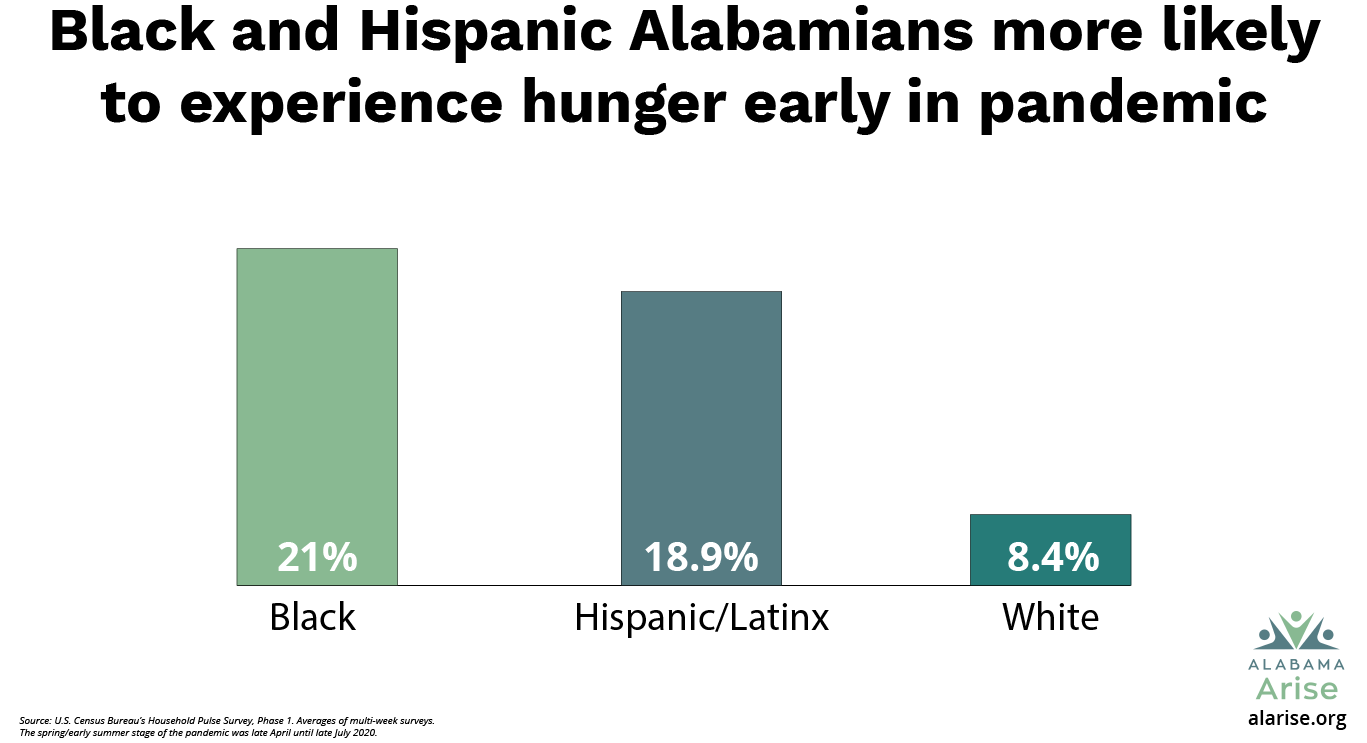
In the spring/early summer stage of the pandemic (late April until late July 2020), 12% of all Alabama families and 13% of Alabama families with children either sometimes or often didn’t have enough food to eat, according to the U.S. Census Bureau’s Household Pulse Survey.[1] And the hunger challenges were much more serious in communities of color. Nearly 19% of Hispanic/Latinx Alabamians and 21% of Black Alabamians said they didn’t have enough food, compared to slightly more than 8% of white Alabamians.[2]


Black and Hispanic Alabamians were more likely to experience hunger early in the pandemic. In the spring/early summer stage, 21% of Black residents and 18.9% of Hispanic/Latinx residents said they didn't have enough food, compared to 8.4% of white residents.

How did we get here?

Unequal job losses have led to increased hunger. Between mid-August and late October (the late summer/fall stage of the pandemic), one in five Alabamians who reported income loss said they either sometimes or often didn’t have enough to eat.[3] This includes a third of the people who reported losing their jobs due to pandemic-related layoffs, plus another third – mostly women – who wanted to return to work but couldn’t because they were caring for children whose schools or day cares were closed due to the pandemic.[4]

The Household Pulse Survey shows both the value and the limitations of critical safety net programs. Nearly three in four (or 74%) of Alabamians who used unemployment insurance (UI) benefits were able to afford their basic food needs during the late summer/fall stage of the pandemic, as were 78% of people who used federal stimulus payments to make ends meet.[5] Two in three Alabamians who received food assistance through the Supplemental Nutrition Assistance Program (SNAP) said they had enough food.[6]

High demand at food banks shows need to strengthen nutrition assistance

These and other safety net programs have eased suffering for hundreds of thousands of Alabamians during the pandemic. Even so, significant numbers of people still reported they didn’t have enough to eat.

Revealing the limitations of the safety net, tens of thousands of Alabamians also used emergency food programs and free school meals to feed their families. The week before Thanksgiving, 10% of Pulse Survey respondents in Alabama said they still relied on free groceries in the last week.[7] The largest share of people who relied on emergency food received it from Alabama’s food banks or faith-based and community food pantries (61%), followed by school-based or other programs that provided food to children (31%) and family or friends (27%).[8]

Food banks and other sources of emergency food play a vital role feeding hungry families. But these programs simply cannot meet the scale of need that the COVID-19 recession has caused.

What should we do now?

The state and federal governments can make a number of important public policy changes to help feed Alabama families during this difficult time and beyond:

  • Alabama lawmakers should abandon efforts to slash the state’s safety net. The COVID-19 recession has taught many painful lessons about the critical role that safety net programs play during a crisis. Legislators should resist the temptation to introduce and pass bills restricting access to SNAP and other safety net programs. If enacted in past years, these bills would have made the recent hunger and hardship in Alabama even more dire.
  • The state departments of Education and Human Resources should move quickly to implement P-EBT for the 2020-21 school year. When schools closed, Congress created the Pandemic EBT (P-EBT) program, which provided debit-like cards with enough money on them to replace the value of lost school meals. Lawmakers later expanded this program in a continuing resolution in September. Now Alabama needs to distribute these desperately needed benefits rapidly to families whose children are going to school remotely or who are in hybrid classrooms.
  • Eligible schools in Alabama should reduce childhood hunger by participating in the Community Eligibility Provision for the 2021-22 school year. Community eligibility allows eligible schools to serve meals at no cost to all enrolled students, streamlining the usual paperwork. Participation in community eligibility automatically makes children eligible for P-EBT. And it eases logistical barriers for schools to provide free meals to children who are attending school remotely.
  • Congress should move quickly to pass another COVID-19 relief bill that further increases federal UI benefits and SNAP assistance. The bill also should provide additional cash assistance for struggling families, including relief payments, a fully refundable Child Tax Credit and an increased Earned Income Tax Credit.

The State of Working Alabama 2021

The State of Working Alabama 2021: Executive summary
Introduction: The high cost of failing to protect the common good (Section 1)
Unequal by design: COVID-19 and Alabama’s policy legacy (Section 2)
Assessing the damage: COVID-19 and Alabama’s labor market (Section 3)


Praised but underprotected: Front-line workers in the pandemic (Section 4)
Why coverage matters: Health care in the time of COVID-19 (Section 5)
No place to call home: Housing insecurity amid COVID-19 (Section 7)


Footnotes

[1] Alabama Arise analysis of U.S. Census Bureau, Household Pulse Survey, Phase 1, April 23 – July 21, 2020, https://www.census.gov/programs-surveys/household-pulse-survey/data.html#phase1.

[2] Ibid.

[3] Alabama Arise analysis of U.S. Census Bureau, Household Pulse Survey, Phase 2, Aug. 19 – Oct. 26, 2020, https://www.census.gov/programs-surveys/household-pulse-survey/data.html#phase2.

[4] Ibid.

[5] Ibid.

[6] Id.

[7] Alabama Arise analysis of U.S. Census Bureau, Week 19 Household Pulse Survey: Nov. 11 – Nov. 23, Food Sufficiency and Food Security Table 2b, https://www.census.gov/data/tables/2020/demo/hhp/hhp19.html.

[8] Ibid.

The State of Working Alabama 2021, Section 7 – No place to call home: Housing insecurity amid COVID-19

State of Working Alabama logo

Where are we now?

More than 800,000 job losses in the first eight months of the pandemic caused Alabamians severe economic damage and heightened insecurity. Thousands of Alabamians face potential eviction and homelessness as a result of the pandemic. And unfortunately, the state’s recent scattershot approach to eviction policy has resulted in inconsistent protection for renters across Alabama.

Gov. Kay Ivey’s initial eviction emergency order provided broad protections against eviction, directing all law enforcement personnel to cease “enforcement of any order that would result in the displacement of a person from his or her place of residence.”[1]

This proclamation faced immediate attempts to chip away its broad protections. A second emergency proclamation on May 8 limited the protections significantly by allowing evictions for all reasons except nonpayment of rent specifically.[2] This modification was a major limitation that cut against the original order’s basic purpose: to reduce health risks to Alabamians by preventing homelessness and forced moves into crowded group housing settings with many other people.

Further, allowing evictions for all reasons except nonpayment allowed landlords to put people on the streets for reasons unrelated to public safety, even though the stated reason for limiting protections was to ensure public safety. For example, a person could be evicted for allowing family members not named on the lease to move in after those family members had themselves lost housing.

State eviction safeguards gone; housing instability remains

The near-shutdown of state courts in early spring 2020 greatly slowed the pace of eviction proceedings for months in Alabama.[3] But administrative difficulties are not a reliable brake on policies designed to punish poverty. And worse, Ivey’s eviction protection order expired in June, leaving no state-level eviction protections in place thereafter.[4]

Alabamians have high rates of housing instability. As recently as the week before Thanksgiving, nearly 13% of Alabamians who responded to the Household Pulse Survey said they either missed their previous rent or mortgage payment or had little confidence they would make their next payment.[5]


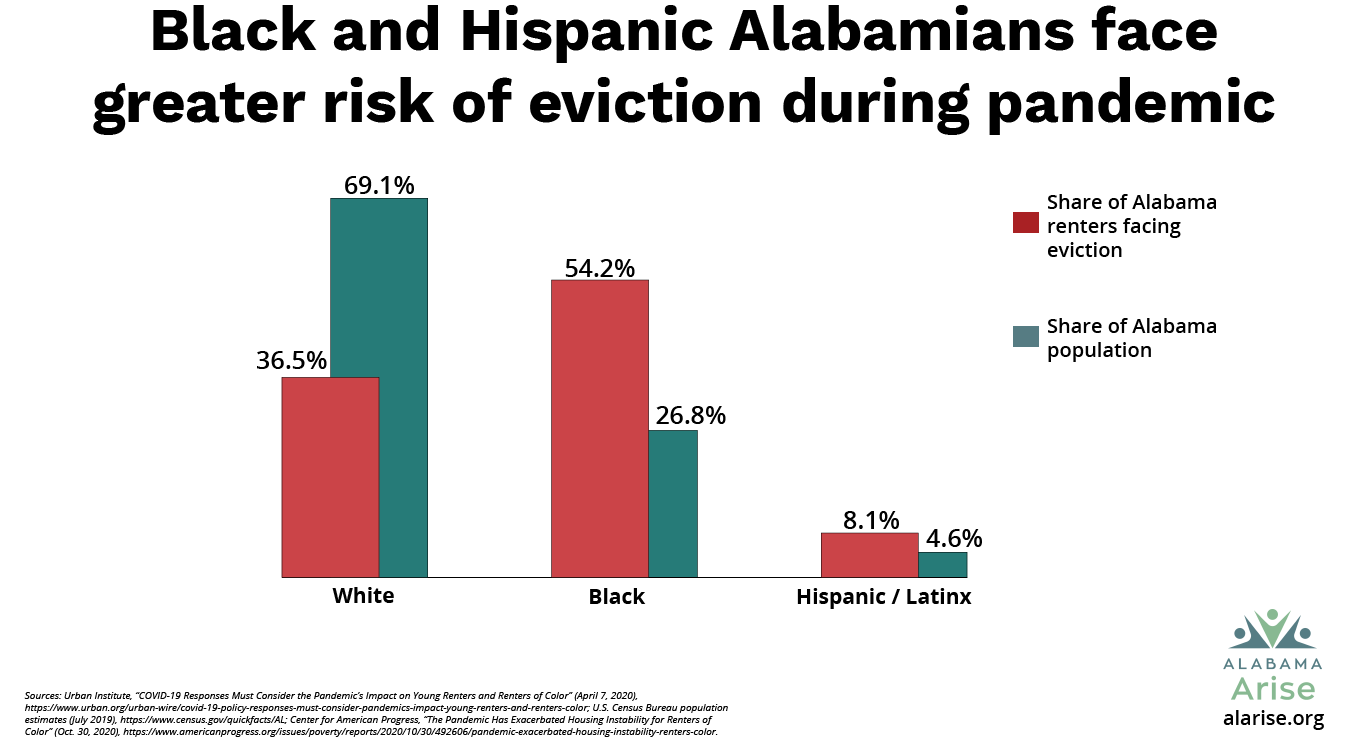
Black and Hispanic Alabamians face greater risk of eviction for inability to pay rent during the pandemic. Black residents are 26.8% of Alabama's population but are 54.2% of the Alabama renters facing eviction. For Hispanic/Latinx residents, the corresponding rates are 4.6% and 8.1%. For white residents, the rates are 69.1% and 36.5%.

How did we get here?

Housing costs are a heightened burden for Alabamians with low incomes even in more normal times. Full-time work at the minimum wage is insufficient to afford a two-bedroom apartment anywhere in the state.[6] A minimum-wage worker would need to work 12 hours a day, seven days a week to afford such an apartment.

Alabama’s shortage of affordable housing causes significant harm for tens of thousands of state residents. The state lacks nearly 80,000 affordable homes for people with extremely low incomes, defined as 30% of area median income or lower.[7] More than three in four of these Alabamians are seniors, people with disabilities and/or in the workforce.[8]

Long-term failure to invest in affordable housing has brought Alabama to this point. The state has a mechanism, created in 2012, to address the housing shortage: the Alabama Housing Trust Fund (AHTF).[9] But the Legislature has never appropriated funding for the AHTF. During the pandemic-shortened 2020 regular session, a bill to fund the AHTF through a small increase in the mortgage recording fee for housing purchases advanced out of committee. But the Legislature adjourned without passing the bill.

What should we do now?

Alabama can take steps to fix this policy shortcoming quickly. And addressing the state’s housing shortage would bring significant benefits. State investment in affordable housing would create jobs with good wages. Construction workers in Alabama make about $43,000 per year, just $5,000 short of the median household wage.[10]

Even though the federal moratorium on many evictions has been extended through March 2021,[11] a state-level eviction moratorium is still needed to ensure the well-being of thousands of Alabamians. The Centers for Disease Control and Prevention (CDC) eviction moratorium requires renters to file paperwork with their landlords attesting to their inability to pay because of COVID-19. This requirement is readily abusable by unscrupulous landlords, who could make themselves unavailable for service and assert failure to provide notice. Those landlords also could falsely claim not to have received the notice.

A blanket state eviction moratorium (with an exception for people posing serious danger to others) would be a better solution. It would avoid an administrative burden on renters already experiencing financial hardship. And it would prevent rental companies from potentially abusing the CDC’s notice requirement.

A policy path to keep Alabamians housed

To ensure everyone has a place to call home during the pandemic and beyond, Alabama should:

  • Reinstitute eviction protections for the duration of the pandemic for all people who are not a danger to others.
  • Provide direct housing subsidies to renters impacted by COVID-19. This assistance would help people remain in their homes and help smaller landlords cover their mortgages and other expenses.
  • Provide adequate appropriations to support affordable housing in Alabama. The state should dedicate a substantial source of funding, such as the recently proposed increase in the mortgage recording fee, to providing affordable housing. At current housing prices, a mortgage recording fee increase of just 15 cents per $100 financed would provide more than $14 million yearly toward addressing the housing needs of Alabamians.
  • Halt utility cutoffs and begin reporting data on shutoffs for nonpayment. Cutting off water and power to people during a pandemic because of nonpayment is cruel and counterproductive. These cutoffs increase human suffering and limit people’s ability to protect themselves against the spread of coronavirus. Alabama needs to collect more data about the scope of these shutoffs and craft policies to make them less prevalent.

The State of Working Alabama 2021

The State of Working Alabama 2021: Executive summary
Introduction: The high cost of failing to protect the common good (Section 1)
Unequal by design: COVID-19 and Alabama’s policy legacy (Section 2)
Assessing the damage: COVID-19 and Alabama’s labor market (Section 3)


Praised but underprotected: Front-line workers in the pandemic (Section 4)
Why coverage matters: Health care in the time of COVID-19 (Section 5)
The ugly reality: Alabama’s hunger problem during the pandemic (Section 6)


Footnotes

[1] State of Alabama, Proclamation by the Governor (April 3, 2020), https://www.alabamapublichealth.gov/legal/assets/proclamation-covid19-040320.pdf.

[2] State of Alabama, Proclamation by the Governor (May 8, 2020), https://www.alabamapublichealth.gov/legal/assets/soe-covid19-various-050820.pdf.

[3] Supreme Court of Alabama, Administrative Order Suspending All In-Person Court Proceedings for the Next Thirty Days (March 13, 2020), https://www.alacourt.gov/docs/COV-19%20order%20FINAL.pdf.

[4] Moriah Mason, “The federal eviction moratorium has been extended, but is it enough?,” Alabama Political Reporter (Jan. 28, 2021), https://www.alreporter.com/2021/01/28/the-federal-eviction-moratorium-has-been-extended-but-is-it-enough.

[5] Alabama Arise analysis of U.S. Census Bureau, Week 19 Household Pulse Survey: Nov. 11 – Nov. 23, https://www.census.gov/data/tables/2020/demo/hhp/hhp19.html.

[6] National Low Income Housing Coalition, Out of Reach 2020, Alabama data sheet, https://reports.nlihc.org/sites/default/files/oor/files/reports/state/AL-2020-OOR.pdf.

[7] National Low Income Housing Coalition, Housing Needs by State – Alabama (2020), https://nlihc.org/housing-needs-by-state/alabama.

[8] Ibid.

[9] Carol Gundlach, “Home at last: The Alabama Housing Trust Fund (2015 update),” Alabama Arise (Nov. 3, 2015), https://alabama-arise.web-site-preview.com/resources/home-at-last-the-alabama-housing-trust-fund-2015-update.

[10] Bureau of Labor Statistics, Occupational Employment Statistics, May 2019 State Occupational Employment and Wage Estimates – Alabama (March 31, 2020), https://www.bls.gov/oes/current/oes_al.htm.

[11] Mason, supra note 4.

How Alabama Arise is working to build a brighter future after the pandemic

After a year of darkness, the light at the end of the tunnel is finally in sight. Promising vaccine news offers hope that public health officials can rein in COVID-19 in the coming months. And as our state and nation seek policy solutions to rebuild from the pandemic’s health and economic devastation, Alabama Arise will seek to advance equity and shared prosperity for Alabamians who are marginalized and excluded.

That vital work won’t be fast or easy. In the meantime, the pandemic’s harrowing toll continues to grow. COVID-19 has killed more than 1.5 million people worldwide, including more than 3,900 Alabamians, and sickened tens of millions. It has fueled a deep recession, caused millions of layoffs and left more than 40% of U.S. children living in households struggling to make ends meet. It has stretched hospitals to the breaking point and disrupted education, commerce and social interactions in every community.

The Alabama Legislature will begin its 2021 regular session Feb. 2. As the health and economic tolls of the COVID-19 pandemic continue to mount, Alabama Arise will keep working hard to empower people who live in poverty and to lift up their voices in state policy debates.

COVID-19 has created suffering on a staggering scale. It also has highlighted long-standing economic and racial disparities and underscored the urgency of ending them. A new legislative session and a new presidency will offer new opportunities to right those wrongs in 2021 and beyond.

The federal and state work ahead

The most immediate needs will require federal action. Congress must extend state aid and additional unemployment insurance (UI) benefits before they expire this month. But those extensions should be just a down payment on a more comprehensive response.

Arise will urge further UI benefit increases and more federal relief to help states avoid layoffs and damaging cuts. We also will advocate for emergency rental and mortgage assistance and a 15% boost to food assistance under the Supplemental Nutrition Assistance Program (SNAP). And we’ll support regulatory efforts to lift harmful Medicaid and SNAP barriers created in recent years.

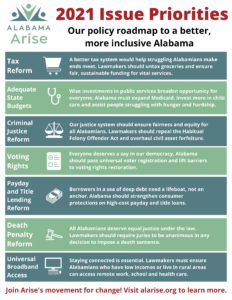
Flyer on Alabama Arise's 2021 issue priorities. For more information, visit https://alabama-arise.web-site-preview.com/news-releases/alabama-arise-unveils-members-2021-roadmap-for-change.

We’ll also keep working for better state policies when the Legislature returns in February. Our top focus will be Medicaid expansion, which we’ll pursue along with partners in the Cover Alabama Coalition. Expansion would cover more than 340,000 Alabamians with low incomes and ease the financial strain on rural hospitals. It also would attack structural health care disparities that led COVID-19 to take a disproportionate toll on Black Alabamians.

Arise’s work won’t stop there. We’ll support legislation to expand voting rights and ensure broadband internet access for all Alabamians. We’ll seek to increase consumer protections and overhaul the state’s criminal justice system. And we’ll fight to untax groceries once and for all.

Breakthroughs on many of these issues won’t be fast or easy. But together, we’ll emerge from dark times into the light of a brighter, more inclusive future for Alabama.

Pandemic EBT renewal a good first step, but families still need comprehensive COVID-19 relief

The U.S. Senate this week approved a continuing resolution that extended Pandemic EBT (P-EBT) benefits through September 2021. The resolution was enacted Thursday. Alabama Arise policy analyst Carol Gundlach issued the following statement Friday in response:

“The extension of Pandemic EBT through September 2021 is welcome news for families struggling to make ends meet. P-EBT has been a powerful, flexible tool to fight child hunger during an era of remote learning. The program has helped feed more than 400,000 Alabama children while school buildings are fully or partially closed. Its renewal will help tens of millions of American families keep food on the table.

“P-EBT’s renewal was an important step to help struggling parents afford food during a deep recession and high unemployment. But families still need and deserve a comprehensive relief bill that truly meets the size and scope of suffering that the COVID-19 pandemic has inflicted across Alabama and across our country.

“An adequate relief package would provide enough federal relief to help states avoid cuts to vital services like education and Medicaid. It would renew the $600 weekly federal increase to unemployment insurance benefits. And it would boost nutrition and housing assistance to help millions who are at risk of hunger and homelessness. The House passed legislation that would do those things months ago, and the Senate should do the same.

“The pandemic won’t go away anytime soon. Struggling families need a relief bill that takes meaningful, long-term action to address this health crisis and ease financial suffering. Senators should pass such a bill quickly, and their constituents should accept nothing less.”

Town Hall Tuesdays 2020: What we heard from Arise supporters

Listening is often an underdeveloped skill, yet it is critical for mutual understanding and working together for meaningful change. That’s why Arise is committed to listening to our members, to our allies and most importantly, to those directly affected by the work we do together. We depend on what we hear from you to guide our issue work and our strategies.

This year’s COVID-19 pandemic challenged us to be creative in finding ways to listen. Instead of our usual face-to-face meetings around the state, we hosted a series of six statewide online Town Hall Tuesdays. We held events every two weeks, starting in June and ending Sept. 1. We averaged 65 attendees at each session. Here’s some of what we heard from members and supporters:

  • Affirmation for Medicaid expansion, untaxing groceries and other current Arise issues as important for achieving shared prosperity.
  • Empathy for those who were already living in vulnerable circumstances further strained by the pandemic.
  • Concern about ongoing, intentional barriers to voting, especially during the pandemic.
  • Desire to see more resources to meet the needs of our immigrant neighbors.
  • Alarm about payday and title lending and its impact on people’s lives and our communities.
  • Passion and concern about many other issues, including housing; living wages and pay equity; prison and sentencing reform; gun safety; juvenile justice reform; defunding the police; the Census; environmental justice; quality and funding of public education; and food insecurity and nutrition.
  • Willingness to take informed actions to make a difference in the policies that impact people’s lives.
  • Hope that Alabama can be a better place for all our neighbors to live despite systemic issues and ongoing challenges.

Notes from each town hall

Overviews of the town halls are below. Click the title for a PDF of the notes from the breakout sessions at each town hall.

June 23 – Money talks
We examined how to strengthen education, health care, child care and other services that help Alabamians make ends meet. And we explored ways to fund those services more equitably.

July 7 – Justice for all
We discussed Alabama’s unjust criminal justice system and how to fix it.

July 21 – Getting civic
Discussion focused on protecting voting rights and boosting Census responses during a pandemic.

Aug. 4 – Shared prosperity
We looked at policy solutions to boost opportunity and protect families from economic exploitation.

Aug. 18 – Feeding our families
We explored ways to increase household food security during and after the recession.

Sept. 1 – Closing the coverage gap
Discussion focused on how everyone can help expand Medicaid to ensure coverage for hundreds of thousands of struggling Alabamians. We also heard about the expansion campaign strategies of the Cover Alabama Coalition, headed by Arise campaign director Jane Adams.

Get in touch and stay in touch with Arise

Remember, we didn’t stop listening because the town halls ended. We want to hear from you, and we encourage you to contact the Arise organizer in your area:

We hope to see you at Arise’s online annual meeting Oct. 3!

U.S. Senate still needs to do its job and pass meaningful COVID-19 relief

The U.S. Senate on Thursday failed to advance an inadequate COVID-19 relief plan. Alabama Arise executive director Robyn Hyden issued the following statement Thursday in response:

“The bill that failed in the Senate this week was wholly inadequate to meet the size and scope of suffering that the COVID-19 pandemic has inflicted across Alabama and across our country. Lawmakers shouldn’t leave Washington without approving an adequate, long-term deal to help struggling Americans make ends meet.

“This plan offered nowhere near enough federal relief to help states avoid cuts to vital services like education and Medicaid. It would have cut the previous $600 weekly federal increase to unemployment insurance benefits in half, even though jobs remain hard to find. And it included no nutrition or housing assistance to help millions who are at risk of hunger and homelessness.

“Congress needs to step up and do its job by protecting people from harm. Last month’s executive actions were nothing more than a Band-Aid over a gaping economic wound. And any so-called relief bill that doesn’t help people keep food on the table and a roof over their heads is no relief bill at all.

“The pandemic isn’t going away anytime soon. Struggling families need a relief bill that takes meaningful, long-term action to address this health crisis and ease financial suffering. Senators should pass such a bill quickly, and their constituents should accept nothing less.”

Groups urge Dismukes’ resignation, ask Legislature to dismantle white supremacy through policy change

Alabama Arise logo     Alabama NAACP logo    Greater Birmingham Ministries logo

The following is a joint statement from Alabama Arise, the Alabama State Conference of the NAACP and Greater Birmingham Ministries:

Our elected officials and appointed leaders should respect the full dignity, worth and humanity of all people they represent. We urge all political parties and public officials to acknowledge the harm that white supremacy continues to inflict upon Alabama. And we call upon them to dismantle white supremacist structures through intentional policy changes.

The cause of white supremacy permeates our state’s fundamental governing document. When the president of the 1901 constitutional convention, John Knox, was asked why Alabama needed a new constitution, his answer was clear: “to establish white supremacy in this state.”

Any celebration of Nathan Bedford Forrest of the Ku Klux Klan – a white supremacist terrorist organization – is contrary to the values that Alabamians expect from our leaders, elected officials and neighbors. In celebrating Forrest, Rep. Will Dismukes revealed he is unable or unwilling to represent the best interests of his constituents and his state. We condemn his actions in the strongest possible terms. We also understand this is not the first time Dismukes has celebrated the Confederacy or Forrest in such a manner. Therefore, we join with many other individuals and organizations across Alabama in calling for Dismukes to resign immediately.

Racial equity requires action, not just words

Alabama’s need for racial justice and healing reaches far beyond any one individual. All elected officials must take a hard look at both their actions and the impacts of their policy decisions. Most lawmakers claim to support racial equality, but the results of their policy choices often do not match this claim.

Examples of this mismatch are unfortunately common in our state. The 2017 Memorial Preservation Act prevents localities from removing statues that “honor” the Confederacy without paying a steep fine or getting approval from a panel of legislators that to our knowledge has not approved a removal since the law was enacted. Lawmakers’ failure to expand Medicaid leaves a disproportionate share of African Americans without health insurance during a pandemic. And the absence of racial impact data prevents communities and legislators from evaluating the full effects of state policy choices.

The harsh reality of racial disparities in Alabama

While Dismukes dismisses the need for racial reconciliation in today’s society, we cannot remain ignorant of the truth. We all must reckon with these disparities created and maintained by structural policy barriers:

It’s time for more than talk. Denouncing and rejecting white supremacy is only the beginning. Lawmakers also must enact meaningful policy changes to break down institutional barriers to opportunity and justice for all Alabamians.

You’re invited to Arise’s Town Hall Tuesdays!

Arise’s statewide online summer listening sessions are a chance to hear what’s happening on key state policy issues and share your vision for our 2021 policy agenda. Register now to help identify emerging issues and inform our work to build a better Alabama.

We’d love to see you at any or all of these sessions! Registration is required, so please register at the link under each description.

June 23rd, 6 p.m. Money talks

How can we strengthen education, health care, child care and other services that help Alabamians make ends meet? And how can we fund those services more equitably? Click here to register for this session.

July 7th, 6 p.m. Justice for all

We’ll discuss Alabama’s unjust criminal justice system – and how to fix it. Click here to register for this session.

July 21st, 6 p.m. Getting civic

How can we protect voting rights and boost Census responses during a pandemic? Click here to register for this session.

August 4th, 6 p.m. Shared prosperity

Policy solutions can boost opportunity and protect families from economic exploitation. Click here to register for this session.

August 18th, 6 p.m. Feeding our families

How can we increase household food security during and after the recession? Click here to register for this session.

September 1st, 6 p.m. Closing the coverage gap

Join the Cover Alabama Coalition to discuss how you can help expand Medicaid. Click here to register for this session.