We deeply value the input we get from Alabama Arise members, our allies and most importantly, those directly affected by the work we do together. We depend on what we hear to help guide our issue work and our strategies.
Despite the ongoing challenges of connecting in person, we kept working at finding ways to listen. We did another series of three statewide online Town Hall Tuesdays. And we held seven additional listening sessions around the state, engaging about 200 people.
The town halls happened every two weeks, starting July 12 and ending Aug. 9. Other meetings took place throughout the summer. Below are summaries of what we heard in those meetings.
Town Hall Tuesdays
Food and health
Most participants deeply cared about Medicaid expansion. They discussed how it would help many people, including rural communities struggling with access to care. Many were frustrated that Gov. Kay Ivey has not yet expanded Medicaid in Alabama. Others discussed the connection between health and access to healthy food and nutrition. Some participants noted that other barriers like transportation also directly impact health, nutrition and employment.
Related issues raised were the needs to address the racial wealth gap and increase wages for front-line workers. Many people expressed appreciation for food banks and pantries but acknowledged that they cannot meet all food security needs. Participants encouraged Arise to remain vigilant about the threat to impose stringent work requirements for Medicaid and SNAP food assistance. Many participants also mentioned untaxing groceries as a way to improve food security.
Democracy and justice
Many participants expressed concerns about legislative attempts to suppress voting rights and said Election Day should be a state holiday. Others also expressed concerns about ballot access for people with disabilities, limited numbers of voting precincts and gerrymandering. Bottom line: We should make it easier to vote, as ballot access is key to a strong democracy.
Several participants expressed concerns about the need for more services for people leaving incarceration. We need to expand community corrections programs, enact real prison reform and get rid of unjust fines and fees.
Some participants identified language accessibility as a potential barrier to receiving many services and participating fully in our democracy. Others were concerned about allocation of American Rescue Plan Act funds and wanted more funding for the Housing Trust Fund.
The path forward
This town hall was an opportunity to talk about any issues of concern people wanted to highlight. Participants raised the following needs and concerns:
- Expand Medicaid in Alabama now and address health disparities, including women’s health issues.
- Untax groceries and improve our regressive tax system.
- Improve voting access, including restoration of voting rights for people who were formerly incarcerated.
- Address environmental issues, including working to improve air quality in schools.
- Improve affordable housing access and language access, fully fund the child home visitation program and address gun violence.
Group and regional listening sessions
Session participants around the state strongly affirmed Arise’s work on the current 2022 issue priorities. They also emphasized the ongoing work to be done in those areas. Current issues highlighted were Medicaid expansion, criminal justice reform (particularly in the area of unjust fines and fees), more funding for child care and first class pre-K, public transportation and death penalty reform.
Session participants also discussed issues that aren’t on the Arise agenda but are of concern to them and their communities. Some of those issues include:
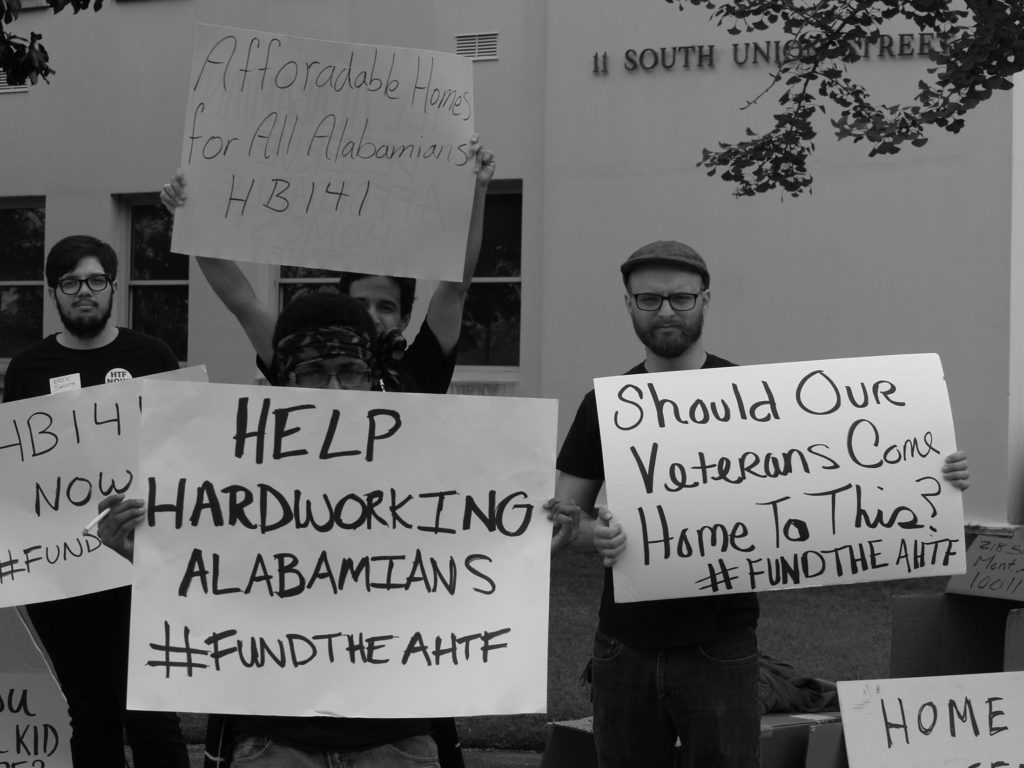
- Affordable housing, with a focus on increased funding and availability. One example was discussion of whether to limit the number of vacation rental properties one person could own in an area, as this can contribute to the shortage of affordable housing. Many renters also discussed the soaring prices of rent.
- Automatic organ donor registration linked to getting and renewing driver’s licenses.
- Broadband internet extension to reach more rural households and Alabamians with low incomes.
- Constitutional reform.
- Government intrusion on private medical decisions. One example shared was concern over lawmakers interfering with rights of transgender teens to seek medical care. Another concern raised was doctors being able to provide medical care during pregnancy and decide the right time to intervene on a pregnancy that threatens the life of the mother.
- Gun violence prevention.
- Marijuana sentencing reform.
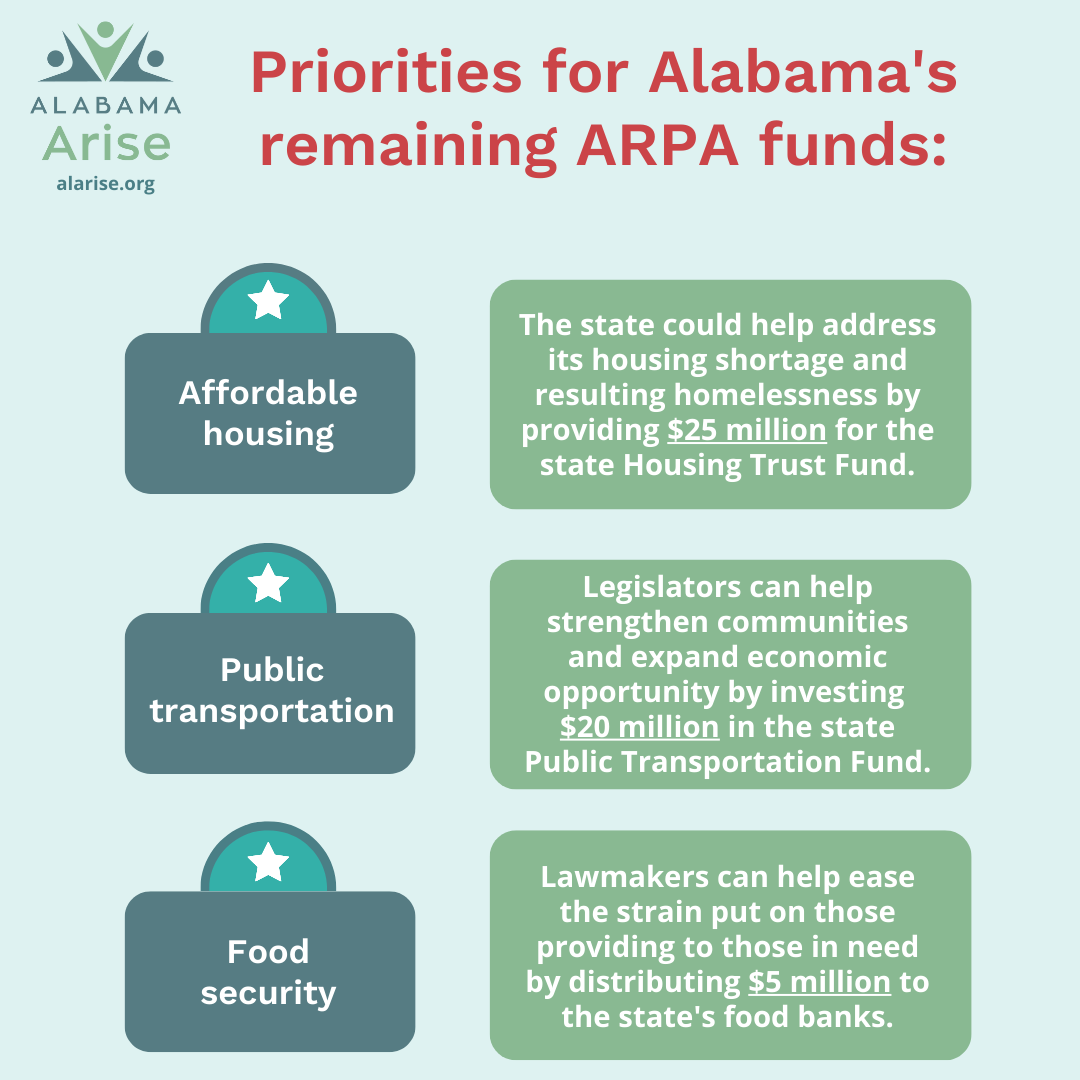
 ARPA investments should focus on the most underserved areas and most underserved Alabamians. Communities of color and communities with low incomes, particularly in the Black Belt, have
  A major lesson from the COVID-19 recession was that Alabama’s technology infrastructure is totally inadequate for remote access to services. Suddenly unemployed people desperately tried to apply for unemployment insurance (UI) benefits, food assistance, COVID-19 tests and other services on overwhelmed state computer and telephone systems. People who had never before applied for public assistance couldn’t find one-stop sources of information about services for which they might be eligible. And when new federal programs were created, they were hard to implement. That’s because Alabama’s computer systems didn’t talk to each other and couldn’t share information needed to help people get assistance.
 Alabama has failed for decades to invest adequately in our health care infrastructure, including Medicaid. The devastating toll of the COVID-19 pandemic has made the consequences of that failure apparent to everyone in the state. We need to invest now in a health care infrastructure that will improve the delivery of health services to underserved individuals and communities.
 Hunger was already a large and perpetual problem across Alabama even before the pandemic. But the COVID-19 recession and its aftermath
  The COVID-19 recession has caused a wave of evictions and foreclosures across Alabama. This has occurred as the cost of housing has been driven up amid supply chain issues and fewer available workers.
 Alabama’s elected leaders, including Gov. Kay Ivey in her State of the State address, have celebrated the state’s low unemployment rate. But they also are bemoaning our state’s associated low rate of labor force participation. For more Alabamians to return to work during and after the pandemic, the state must ensure they have essential work supports. Not the least of these is transportation to and from a job or school.