Special sessions set stage for fast-paced 2022 regular session

The Alabama Legislature’s two special sessions this fall brought mixed results on Alabama Arise issue priorities. Lawmakers improved the state’s post-incarceration reentry policies in the first special session in September. And in the second session, which ended in November, they allocated $80 million of federal American Rescue Plan Act (ARPA) funds for costs related to COVID-19. Hospitals and nursing homes will split that amount.

But the first session ended with a misguided appropriation of $400 million – nearly a fifth of Alabama’s ARPA money – toward prison construction. And the second session saw a rush to pass bills that will slow COVID-19 vaccinations in a state with one of the nation’s lowest vaccination rates.

The second session’s primary purpose was to draw new districts for the Legislature, U.S. House and state school board. Lawmakers approved maps after little debate, in part because they understand litigation is nearly certain. Concerns about diluting Black voters’ power will be a major aspect of those suits.

Federal funds to be major topic in 2022 session

Next up is the 2022 regular session, beginning Jan. 11. One pressing issue the state faces is ensuring equitable, transformative use of federal funds. That includes remaining ARPA money, plus funds from the infrastructure package and potentially the Build Back Better (BBB) Act. The U.S. House passed BBB in November, and the Senate may vote on it later this month.

That money could advance several Arise issue priorities. Public transportation, Medicaid expansion and adequate emergency relief for people facing eviction are a few ways those funds could improve life for every Alabamian.

Alabama also faces a U.S. Department of Justice lawsuit over atrocious conditions in the state’s broken prison system. Arise will advocate for expanded safe releases for older and severely ill people, alongside sentencing and death penalty reforms. And we will continue beating back attacks on voting and democratic participation.

Legislators’ desire to hit the campaign trail means this session likely will be fast-paced. Advocates must act quickly to move policy decisions toward an Alabama that works for everyone.

Funding boosts bring opportunity to invest in Alabama’s future

Alabama’s broken tax system usually starves our state of money to fund basic responsibilities adequately. But 2022 may be different. Record tax revenues and a surge of federal recovery dollars could allow lawmakers to address longstanding state needs and inequities – if they have the political courage.

State revenues that pay for our schools, including income taxes earmarked for teacher salaries, went up 16% in 2021, according to the Legislative Services Agency. Internet sales taxes and other revenues for non-education programs grew more than 11% in 2021. Alabama also has received federal funds under the American Rescue Plan Act (ARPA) to aid recovery from the COVID-19 recession. Alabama has $580 million remaining in 2021 ARPA funds, plus another $1.06 billion coming in 2022.

Coming fast behind ARPA are federal infrastructure dollars for roads, bridges and public transportation. And if the U.S. Senate passes it, the Build Back Better Act will include new funds for child care, health care and senior services.

Transformative changes for a better Alabama

Legislators already have begun talking about how to spend this money. Alabama Arise believes wise use of these funds can make Alabama a better place for generations to come. Many of our recommendations are in our statement of principles for spending recovery dollars. A few key Arise recommendations include:

  • Untax groceries. Tax cuts should help struggling Alabamians who already pay a disproportionate share of state taxes. Ending the state grocery tax is a good place to start.
  • Expand Medicaid. Federal recovery dollars can help free up state money for Medicaid expansion. This would save hundreds of lives and ensure affordable health coverage for more than 340,000 Alabamians every year.
  • Make the criminal justice system more just. Legislators just made a misguided decision to spend $400 million of ARPA money on new prison construction. They now should invest in meaningful policy changes like sentencing reform and other alternatives to incarceration.

Alabama lawmakers have a chance to make far-reaching and lasting changes in 2022. Arise and our members will work hard to ensure they seize this opportunity.

Arise keeps up advocacy to prevent evictions

Emergency rental assistance programs are falling short in Alabama even as tens of thousands of renters remain at risk of eviction. The Alabama Housing Finance Authority (AHFA) has received more than 70,000 applications for federal rental assistance. But fewer than 4,000 households had been helped as of Oct. 31. The AHFA has distributed only about 17% of the state’s federal rental aid dollars.

Horne LLP, the AHFA’s third-party application processor, stated on Sept. 24 that bank account verification was the only step necessary to bring Alabama’s number of assisted households from 3,300 to more than 10,000. But the delays have continued. Problems have plagued the state since the AHFA signed its no-bid contract with Horne. As of Sept. 24, the company had received more than $2 million for administration while paying out less than $20 million in assistance.

Alabama’s statewide payout rates lag significantly behind neighboring states. Alabama Arise and partner groups are building public and legislative pressure on the AHFA to speed fund distribution. We have driven news coverage on the issue, and we testified at a legislative oversight hearing in September.

Several local ERA programs have performed much better than the statewide program. Jefferson and Mobile counties have done particularly well, distributing more than 80% of their available funds. AHFA distribution also increased significantly in October after a troubling slowdown in September. These increases must continue to reduce the application backlog ‒ and to keep Alabamians housed during a pandemic winter.

Join Alabama Arise today!

This year, Alabama Arise deepened our commitment to ensuring we center those most impacted by poverty as we forge a new path toward a more equitable Alabama. This means we must be intentional about expanding the demographics of our membership base to be more reflective of the populations we serve.

On Giving Tuesday (Nov. 30), we launched a gift membership campaign to realize this vision. We were blown away by our members’ generosity. Together, we raised more than 1,200 gift memberships to bring in more young people, people of color and people with low incomes.

As you know, so much is at stake for families with low incomes in Alabama. But these challenges are not insurmountable. When we come together across lines of difference to demand fair and just policies for all Alabamians, we can hold our lawmakers accountable. It means we can make a difference, together.

I hope you will consider renewing your membership today. Your contribution makes you eligible to vote during our annual meeting, where members choose our issue priorities. But more importantly, your gift allows us to sustain our efforts to promote better policies to alleviate poverty.

One of Arise’s generous partners will match all new or increased gifts, DOUBLING your impact this year. Please use the enclosed envelope or donate at alarise.org to join or renew your membership!

A year to strengthen our communities

We can’t even begin to summarize all the momentous federal policy advances realized in 2021 in one newsletter. This year brought passage of the American Rescue Plan Act (ARPA) and the infrastructure package. It brought expansion of the Child Tax Credit. And we hope it will bring the forthcoming passage of the Build Back Better (BBB) Act. That means 2022 will be a year of working diligently to advocate for fair, equitable implementation of these new investments in Alabama.

ARPA provided millions of new dollars in incentive funding to support Medicaid expansion. It also provided $2.1 billion for state COVID-19 relief and $1.9 billion for local governments. Check out our ARPA toolkit at alarise.org for resources to ensure ARPA funding goes to the priorities we all share to strengthen our communities.

If the Senate passes BBB this month, we anticipate more than 220,000 Alabamians gaining immediate access to no-cost health insurance via healthcare.gov for the next three years. Then the work of enrollment will begin! It’s not a permanent solution to our state’s health care coverage gap, but it would be a major step forward for Alabamians with low incomes. Stay tuned for alerts and ways you can support – and celebrate! – when the time comes.

Arise legislative recap: Nov. 9, 2021

Arise policy analyst Dev Wakeley looks back at the Alabama Legislature’s second special session, which ended last week. Dev discusses lawmakers’ actions related to redistricting and COVID-19 vaccinations, as well as federal relief funding for hospitals and nursing homes.

Recovering from Alabama’s costly mistake on COVID-19 recovery funds

This post originally appeared on the Economic Policy Institute’s blog.

When the Alabama Legislature gathered for a special session in September, it made a shortsighted and costly mistake. Lawmakers chose to allocate $400 million in American Rescue Plan Act (ARPA) money ‒ about 20% of Alabama’s federal COVID-19 relief funds ‒ to help finance a $1.3 billion prison construction plan.

Alabama prisons are decrepit, dangerous and massively overcrowded. The U.S. Department of Justice (DOJ) has sued the state over the unconstitutional conditions in the institutions. Moreso, raiding funds designed to help people and communities recover from pandemic-related economic distress will do nothing to make Alabama more humane and inclusive. That is particularly true when Black Alabamians are three times more likely to be incarcerated than white Alabamians due to discriminatory practices in policing and incarceration.

The state has a better path to build a more sensible criminal justice system and avert a looming federal takeover. New buildings to house the same old problems won’t get us there. Real change will require meaningful changes to sentencing and reentry policies.

Sentencing reform is vital to build a more humane criminal justice system in Alabama

Alabama’s sentencing scheme still relies on outdated ideas about punishment and limits availability of services shown to improve reentry. One example is the state’s Habitual Felony Offender Act (HFOA), which increases sentences for even minor offenses. Like other mandatory minimum laws, it is a relic of earlier racially motivated “tough on crime” practices and leads to higher rates of incarceration throughout the South.

The Legislature made minor improvements to the HFOA in 2015 but refused to make them retroactive. That failure has left hundreds of Alabamians still serving sentences for convictions that today would result in less time under current presumptive sentencing guidelines.

Alabama Arise supports full repeal of the broken HFOA. Until then, the state at minimum should ensure people aren’t serving wildly different sentences for the same conviction.

Those efforts have been an uphill battle for reform advocates. During September’s special session, lawmakers failed to pass a bill to allow some people to petition for resentencing under current standards. Legislators also have failed in recent years to expand medical release and releases for older people who have aged out of reasonable likelihood of recidivism. Efforts to expand and improve diversion programs have stalled as well.

All of these policies would save Alabama money in the long run. They also would demonstrate respect for the humanity of incarcerated people. But legislators have chosen not to act.

This persistent refusal to engage in meaningful reform may cost Alabama dearly. Failure to take even small steps to reduce overcrowding and improve atrocious conditions may spur the DOJ to conduct a wholesale takeover of the state’s prison system. If that happens, the Legislature will have only its own inaction to blame.

How federal aid should help Alabamians

The consequences of prioritizing bad spending go beyond federal intervention in the broken prison system. ARPA relief funds represent an opportunity to move Alabama forward in many areas that would increase opportunity and stability for people across the state.

Provide health care to hundreds of thousands of uninsured Alabamians

More than 220,000 Alabamians live in a Medicaid coverage gap. They make too much to qualify for Medicaid under the state’s bare-bones eligibility limits but too little to qualify for subsidized coverage through the Affordable Care Act. Another 120,000 Alabamians have stretched their finances seriously to pay for coverage they can’t truly afford.

Federal ARPA funds would allow Alabama to expand Medicaid. Alabama could use these dollars to meet other critical spending priorities. This would free up state funds to pay for the startup of an expanded Medicaid program to cover adults left out of coverage.

Update infrastructure and invest in equity

Alabama should use ARPA funds to update and expand infrastructure and support services. Economic fallout from the COVID-19 pandemic has placed a disproportionately heavy burden on women, Black Alabamians and communities with few resources upon which to fall back. Investments in child care, expanded early childhood education and long-term postpartum health coverage would deliver major improvements in quality of life for people hit hardest during the pandemic.

Federal relief should be used both to lessen the pandemic’s immediate harm and to break the pattern of long-term, intentional disinvestment in the Black Belt and other areas. Community-based organizations offer valuable connections and expertise to guide investment to where it is needed. The state should ensure these groups have the capacity and pathways to provide input on best uses for relief money.

Finish implementing solutions on housing and public transportation

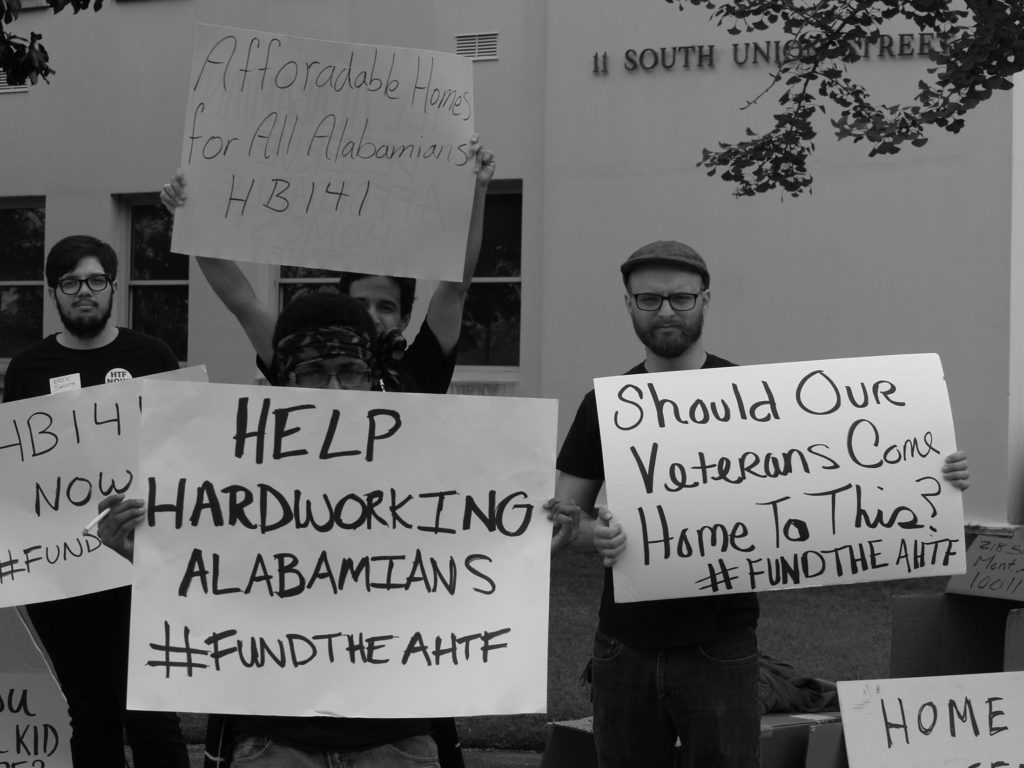
ARPA funds also represent an opportunity to take steps forward where lack of political will has hindered full implementation of state solutions. Within the past decade, the Legislature created both the Public Transportation Trust Fund and the Affordable Housing Trust Fund (AHTF). It also has failed to provide a single dollar for either.

Transportation investment would improve quality of life for everyone. Robust public transit creates long-term, high-wage jobs and enables people to get to work reliably and inexpensively. It is a vital public good that helps older people and people with disabilities fully participate in public life.

Housing investment would help alleviate the state’s severe affordable housing shortage. State AHTF funding would increase community resilience by allowing struggling families to spend less of their incomes to keep a roof over their heads. It also could help speed up rental assistance and prevent evictions during future recessions.

Increase transparency and modernize technology

Alabama’s technological infrastructure has lagged behind contemporary standards. Early in the pandemic, this resulted in major delays of unemployment insurance payments. The patchwork of IT systems at all levels of state government has contributed to public confusion and delays. Technology investments would reduce duplication of effort and increase public access to the public’s information.

A new path forward

ARPA provides a generational opportunity to begin remedying policy shortcomings that have held back progress, perpetuated inequality and furthered Alabama’s history of racist policy choices. This chance is too valuable to waste by doubling down on past failures like foolish and overly punitive criminal justice policy.

The Legislature’s recent misuse of $400 million is inexcusable, but this bad decision has not blocked the path forward. The remaining ARPA funds are a chance to invest in adequate resources and transparent, responsive government. Our state must seize this opportunity to improve life significantly for every Alabamian.

Arise legislative update: Oct. 6, 2021

Alabama legislators passed a reentry reform bill during last week’s special session, but they declined to approve sentencing reform. Lawmakers also allocated $400 million of federal COVID-19 relief funds to new prison construction. Arise’s Dev Wakeley breaks down what 2021’s first special session meant for the future of Alabama’s corrections system and talks about how we’ll continue our criminal justice reform work in 2022 and beyond.

Alabama Arise keeps listening. Here’s what we heard in 2021!

Listening is a core value of Alabama Arise. We deeply value the input we get from our members, our allies and most importantly, those directly affected by the work we do together. We depend on what we hear to help guide our issue work and our strategies.

The ongoing COVID-19 pandemic continued to challenge us to be creative in finding ways to listen. We did another series of three statewide online Town Hall Tuesdays. This year, we also held 12 individual group listening sessions for a total of 15 listening sessions in all.

What we heard this summer

The town halls happened every two weeks, starting June 15 and ending July 13. The individual meetings took place throughout the summer. Here is some of what we heard in those town halls and in the individual group sessions:

Health care, voting, criminal justice
    • In addition to strong support for Medicaid expansion, we heard several people express the need to address hospital costs, the lack of adequate equitable access to health services and significant concern for prescription drug prices (for seniors in particular). Many people highlighted the need for mental health reforms, and several pointed out the mental health connection to issues of homelessness.
    • We heard concerns about ongoing, intentional barriers to voting. Many raised the need to improve voter access by making it easier, not more difficult, for people to vote. They said we need reforms like automatic voter registration, no-excuse and simplified absentee voting, a better process for restoring voting rights of people who were formerly incarcerated, an Election Day holiday and curbside voting. Issues about term limits for legislators and rank choice voting also were raised. While related to voting, but distinct, redistricting was also a concern.
    • People voiced passionate support for many criminal justice reforms. Several highlighted a desire to abolish the Habitual Felony Offender Act and the death penalty. They also raised their voices for reforms around juvenile justice, gun violence, community sentencing options and programs to build social and job skills of people who were formerly incarcerated. There was much discussion about the need for prison reform beyond just building new prisons. Some participants also mentioned police reforms, specifically people advocating for public access to police body cam footage.
Housing, education, child care, transportation, language barriers
  • We heard much discussion about the need for quality affordable housing, living wages and adequate funding of public education, including early childhood education and child care. Many also emphasized the connections between most of the issues of concern. Deficits in one area lead to insufficiency in many others.
  • We also heard concern about the need to improve public transportation in the state. Many were interested in environmentally friendly public transportation solutions and securing a funding source for the Public Transportation Trust Fund created a few years ago.
  • Among our Spanish-speaking members, many noted concerns with access to health care. These included eligibility concerns and disparities with information shared regarding documents and verification needed to receive the COVID-19 vaccine. They also requested a statewide Spanish-language hotline for addressing day-to-day inquiries surrounding public service benefits.

Notes from each town hall

For details about what we heard in the town hall series, click here to read breakout session notes from each of the 2021 Town Hall Tuesday events. Those sessions were as follows:

June 15 ‒ A better Alabama for all: Participants discussed the question: If you could wave a magic wand and fix one issue that addresses poverty in Alabama, what would that issue be?

June 29 ‒ Health care for all: Participants discussed ways to close the health coverage gap by expanding Medicaid in Alabama.

July 13 ‒ Justice for all: Participants discussed their priorities for improving access to voting and reforming our criminal justice system.

Stay in touch with Arise

We didn’t stop listening because the town halls ended. We want to hear from you, and we encourage you to contact the Arise organizer in your area:

We hope to see you at Arise’s online annual meeting Sept. 25!

Thousands in Alabama at risk of homelessness after Supreme Court overturns eviction moratorium

Affordable housing advocates rally outside the Alabama State House in Montgomery in 2015.

Tens of thousands of Alabamians are at risk of losing their homes after the U.S. Supreme Court overturned the new Centers for Disease Control and Prevention (CDC) eviction moratorium on Aug. 27. This moratorium — the latest in a series at the state and federal level — would have allowed renters harmed by the COVID-19 recession more time to apply for and receive federal rental assistance funds through local agencies.

The moratorium’s end has increased the urgency for Alabama to ramp up distribution of that money. The state had distributed less than 3% of its federal rental assistance funds as of Aug. 30, according to the National Low Income Housing Coalition (NLIHC).

In Baldwin County, a COVID-19 hot spot, 86% of vetted applicants have been determined eligible for assistance. But only 5.8% of total applicants have received money. More than 1,000 households in that county alone now face eviction if their funds do not arrive before the eviction cases are heard. Removing the moratorium will fuel a harmful, avoidable increase in evictions leading into winter. This decision will put thousands of Alabamians at risk of homelessness or force people into already-crowded shelters while the delta variant rages through the state.

The full resumption of the eviction crisis magnifies the need for Gov. Kay Ivey to renew state-level eviction protections like those she instituted in April 2020. Alabama Arise also has asked courts to direct renters and landlords to available rental assistance when a landlord files for eviction. These steps could prevent many evictions even if Congress and state authorities continue their failure to protect renters.

Resources for immediate assistance

To seek help paying rent, check Arise’s rental assistance resource guide or the NLIHC’s website at nlihc.org/rental-assistance to find the local agency serving your area. If your landlord serves you an eviction notice, call Legal Services Alabama at 866-456-4995. If you become homeless due to eviction or another reason, call 2-1-1 for shelter referral and rehousing assistance.